Beyond 8K: Future of Display Technology in 2026 Flagship TVs
Anúncios
The future of display technology in 2026’s flagship TVs will move beyond conventional 8K, integrating groundbreaking innovations like MicroLED, advanced QD-OLED, and sophisticated AI to deliver an unparalleled immersive viewing experience.
Are you ready for a visual revolution? The landscape of home entertainment is constantly evolving, and by 2026, the concept of television will have transcended mere resolution. We’re moving Beyond 8K: Exploring the Future of Display Technology with 2026’s Flagship TVs, where innovation isn’t just about more pixels, but about entirely new ways to experience content. This article delves into the groundbreaking advancements poised to redefine our living room screens, promising a future where displays are not just windows, but portals to unimaginable worlds.
Anúncios
The Evolution Beyond Pixel Count: What’s Next After 8K?
While 8K resolution has become a benchmark for premium displays, the industry is already looking beyond raw pixel count. The focus is shifting towards enhancing every aspect of the visual experience, from color accuracy and contrast to refresh rates and form factors. This next wave of innovation aims to create displays that are not only sharper but also more vibrant, lifelike, and seamlessly integrated into our environments.
Manufacturers are investing heavily in technologies that offer superior performance in areas where traditional LCD and even current OLED panels face limitations. This includes addressing brightness levels, panel longevity, and the ability to create truly bezel-less or even transparent designs. The pursuit of perfection in display technology is relentless, driven by consumer demand for ever more immersive and realistic viewing.
MicroLED: The Ultimate Self-Emissive Technology
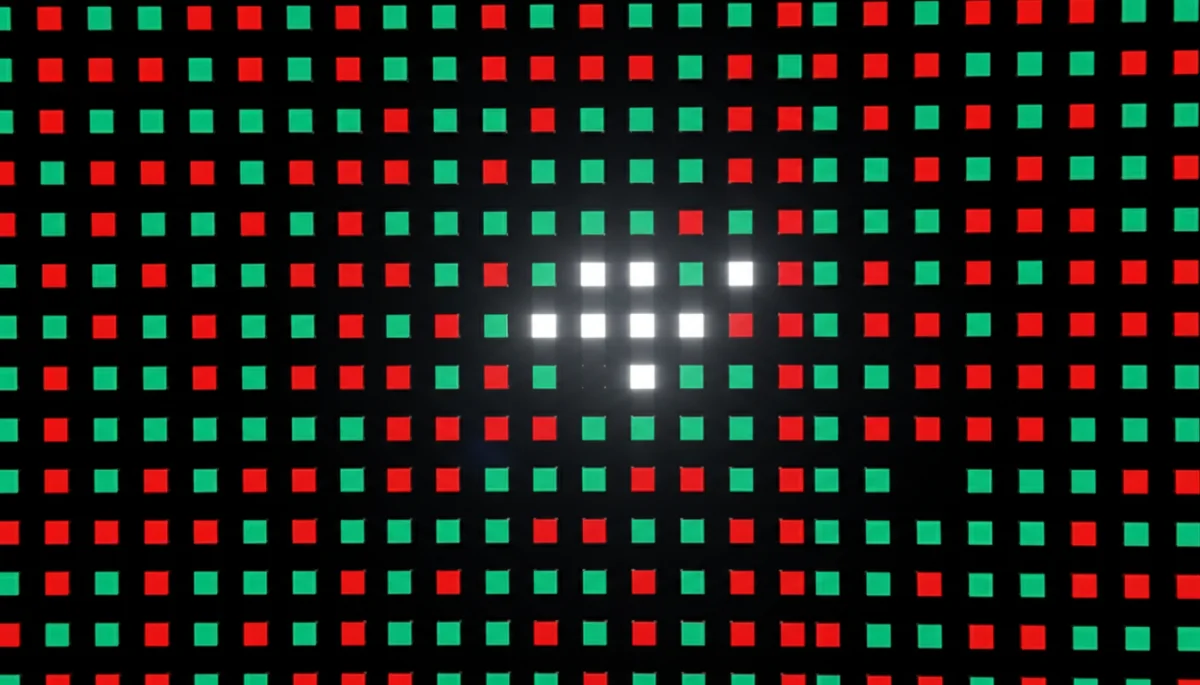
MicroLED is emerging as a frontrunner in the race for next-generation display technology. Unlike OLED, which uses organic compounds, MicroLED employs inorganic, self-emissive microscopic LEDs. This allows for incredible brightness, perfect blacks, and exceptional color volume without the risk of burn-in.
- Unrivaled Brightness: MicroLED screens can achieve significantly higher peak brightness levels than OLED, making them ideal for well-lit environments.
- True Blacks: Each pixel is individually controlled and can be turned off completely, resulting in absolute black levels and infinite contrast ratios.
- Exceptional Longevity: Being inorganic, MicroLED panels are less susceptible to degradation over time, offering a longer lifespan compared to OLED.
- Modular Design: The modular nature of MicroLED allows for custom screen sizes and aspect ratios, opening up possibilities for truly unique installations.
The modularity of MicroLED also presents exciting opportunities for future TV designs, enabling consumers to create displays perfectly tailored to their living spaces. This flexibility, combined with its superior image quality, positions MicroLED as a truly transformative technology for 2026 and beyond.
Quantum Dot OLED (QD-OLED) Advancements in 2026
QD-OLED, a hybrid technology combining the best of OLED and Quantum Dots, is set to evolve significantly by 2026. This technology utilizes a blue OLED emitter with a quantum dot color converter layer to produce red and green. The result is a display that offers the perfect blacks and wide viewing angles of OLED, coupled with the enhanced color brightness and volume characteristic of quantum dots.
The next generation of QD-OLED panels is expected to push boundaries further, with improvements in efficiency, brightness, and durability. These advancements will make QD-OLED an even more compelling option for flagship TVs, offering a visually stunning experience that balances deep contrast with vibrant, accurate colors.
Anúncios
Enhanced Color Volume and Brightness
One of the key strengths of QD-OLED is its ability to deliver exceptional color volume, even at higher brightness levels. This is crucial for HDR content, where a display needs to render a wide range of colors across varying luminance levels accurately. By 2026, we anticipate QD-OLED TVs to offer even greater color purity and saturation, thanks to refined quantum dot materials and optimized panel structures.
- Wider Color Gamut: Expect QD-OLEDs to cover an even larger portion of the Rec. 2020 color space, leading to more realistic and nuanced colors.
- Improved Peak Brightness: While already bright, future QD-OLED panels will likely achieve higher peak brightness without compromising black levels, enhancing HDR impact.
- Reduced Color Fringing: Advancements in pixel structure and quantum dot application will minimize any potential color fringing, ensuring crisp image clarity.
These improvements will solidify QD-OLED’s position as a premium display technology, providing a truly cinematic experience in the home. The blend of OLED’s contrast and quantum dots’ color vibrancy creates a powerful combination that few other technologies can match.
The Rise of AI-Powered Image Processing
Artificial intelligence is no longer just a buzzword; it’s an integral component of modern display technology. In 2026, AI-powered image processing will reach new heights, moving beyond simple upscaling to intelligent content analysis and real-time optimization. Flagship TVs will leverage AI to understand the type of content being displayed and adjust picture parameters accordingly, ensuring the best possible viewing experience.
This sophisticated AI will analyze everything from scene composition and object recognition to lighting conditions and viewer preferences. It will then dynamically optimize elements like contrast, color, sharpness, and even motion, creating a personalized and incredibly lifelike image. The goal is to make the technology invisible, allowing viewers to simply enjoy stunning visuals without needing to manually adjust settings.
Intelligent Content Recognition and Optimization
Future AI processors will be capable of identifying specific elements within a scene, such as faces, landscapes, or text. This allows for targeted optimization, enhancing facial details while maintaining the natural look of backgrounds, for instance. AI will also be able to differentiate between various content genres, applying tailored processing for movies, sports, or gaming.
- Dynamic HDR Mapping: AI will analyze HDR metadata on a frame-by-frame basis, optimizing tone mapping for every scene to preserve detail in both highlights and shadows.
- Adaptive Contrast Enhancement: Real-time analysis of contrast levels will allow AI to boost dynamic range without introducing artifacts or crushing blacks.
- Motion Smoothing and Clarity: Advanced AI algorithms will predict and compensate for motion blur, creating smoother and clearer fast-moving images, especially crucial for sports and action films.
The integration of AI will transform TVs from passive display devices into active intelligence hubs, constantly working to deliver the best possible visual fidelity. This will result in a more immersive and engaging experience for every type of content.
Flexible, Transparent, and Rollable Displays
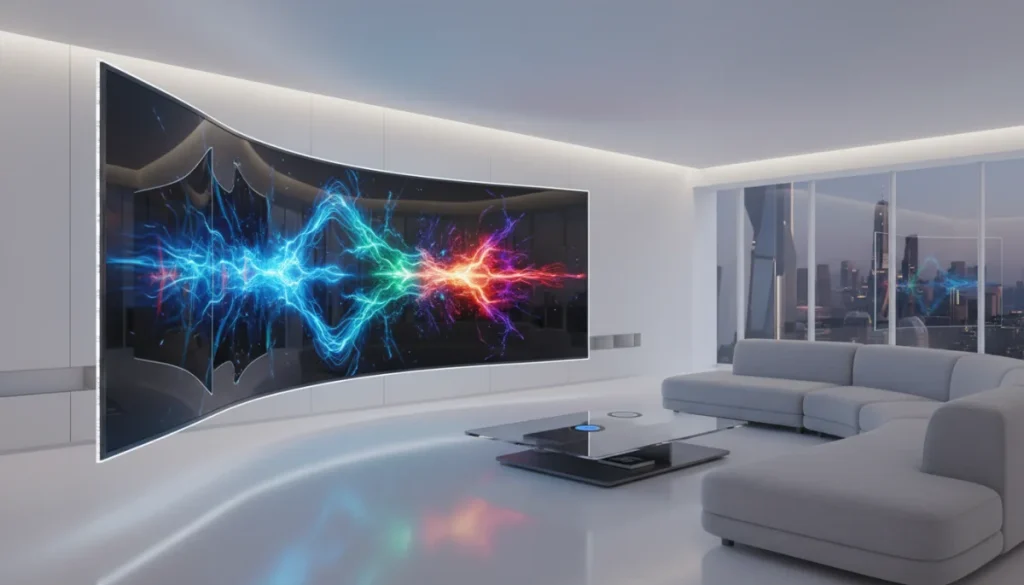
Beyond traditional flat panels, 2026 will see a significant push towards more dynamic and integrated display form factors. Flexible, transparent, and rollable displays are no longer just concepts; they are becoming tangible products that promise to revolutionize how we interact with screens in our homes. These innovations offer unprecedented design freedom, allowing TVs to blend seamlessly into living spaces or even disappear when not in use.
Imagine a TV that rolls up into a small base, freeing up wall space, or a display that becomes transparent, allowing you to see through it when turned off. These technologies are poised to transform interior design and create truly adaptable entertainment setups. The practical applications extend beyond aesthetic appeal, offering new possibilities for interactive displays and smart home integration.
The Aesthetics and Functionality of Novel Form Factors
Flexible displays, often based on advanced OLED or MicroLED substrates, will enable TVs to curve, bend, or even fold, adapting to various viewing preferences or room layouts. Transparent displays could function as smart windows, overlaying information onto real-world views, while rollable TVs offer the ultimate in space-saving convenience. These designs are not just about novelty; they enhance functionality and user experience.
- Space-Saving Solutions: Rollable TVs can retract when not in use, maximizing living space and minimizing visual clutter.
- Integrated Smart Home: Transparent displays could serve as interactive information hubs, blending digital content with physical environments.
- Customizable Viewing Angles: Flexible screens might allow users to adjust the curvature for optimal viewing from different positions in a room.
These innovative form factors will redefine the role of the television in the home, moving it from a static appliance to a dynamic, interactive element of the living environment. The future promises displays that are as adaptable as they are stunning.
Advanced Connectivity and Ecosystem Integration
The flagship TVs of 2026 will not merely be standalone display devices; they will be central hubs within a broader ecosystem of smart devices and high-speed networks. Connectivity will be paramount, with next-generation Wi-Fi standards, enhanced Bluetooth capabilities, and faster wired connections ensuring seamless interaction with all your digital content and smart home devices. This integration will create a truly unified and intelligent entertainment experience.
Expect deeper integration with smart home platforms, allowing your TV to control lighting, temperature, and security systems. Furthermore, the rise of cloud gaming and advanced streaming services will necessitate robust network capabilities, ensuring smooth, lag-free delivery of even the most demanding content. The TV will become the command center for your digital life.
The Role of Wi-Fi 7 and Beyond
Wi-Fi 7 (802.11be), also known as Extremely High Throughput (EHT), will be standard in 2026 flagship TVs, offering significantly increased speeds, lower latency, and greater capacity compared to current Wi-Fi standards. This will be crucial for streaming uncompressed 8K content, cloud gaming, and managing multiple smart devices simultaneously without network congestion.
- Ultra-Low Latency: Essential for responsive cloud gaming and real-time interactive applications.
- High Bandwidth: Supports multiple high-resolution streams and data-intensive smart home communications.
- Enhanced Network Efficiency: Better management of multiple connected devices reduces network bottlenecks.
Beyond Wi-Fi, expect more sophisticated integration with other wireless protocols like Matter and Thread, ensuring universal compatibility with a vast array of smart home devices. This comprehensive connectivity will make the 2026 flagship TV a truly indispensable part of the modern connected home.
Sustainability and Energy Efficiency in Future Displays
As display technology advances, so does the imperative for sustainability and energy efficiency. The flagship TVs of 2026 will incorporate cutting-edge innovations not only in visual performance but also in their environmental footprint. Consumers and manufacturers alike are increasingly aware of the need to reduce energy consumption and minimize waste, leading to significant advancements in eco-friendly design and operation.
This focus includes more energy-efficient panel technologies, intelligent power management systems, and the use of recycled and recyclable materials in TV construction. The industry is moving towards a future where high-performance displays do not come at the expense of environmental responsibility, offering a more sustainable viewing experience for all.
Eco-Conscious Manufacturing and Operation
Manufacturers are adopting greener production processes, reducing hazardous materials, and implementing take-back programs for end-of-life products. On the operational side, new display technologies like MicroLED inherently offer greater energy efficiency due to their direct light emission and individual pixel control. AI will also play a role in optimizing power consumption by intelligently adjusting display settings based on ambient light and content type.
- Recycled Materials: Increased use of recycled plastics and metals in chassis and components to reduce raw material demand.
- Adaptive Power Management: AI-driven systems that dynamically adjust brightness and other settings to minimize energy use without sacrificing image quality.
- Modular Design for Repairability: Encouraging longer product lifespans through easier repair and component replacement.
The future of display technology is not just about visual spectacle; it’s also about building a more sustainable and responsible consumer electronics industry. These efforts ensure that the next generation of TVs delivers both breathtaking performance and peace of mind.
| Key Innovation | Brief Description |
|---|---|
| MicroLED Technology | Offers superior brightness, perfect blacks, and longevity with modular design. |
| Advanced QD-OLED | Combines OLED’s contrast with Quantum Dot color volume for vibrant visuals. |
| AI Image Processing | Intelligent content analysis and real-time optimization for personalized viewing. |
| Flexible Form Factors | Introduces transparent, rollable, and flexible screens for innovative designs. |
Frequently Asked Questions About 2026 Flagship TVs
While 8K resolution will remain a premium feature, the focus for 2026 flagship TVs will extend beyond pixel count to encompass advancements in color, contrast, and new display technologies like MicroLED and QD-OLED, enhancing overall visual fidelity rather than just raw resolution.
MicroLED uses inorganic, self-emissive microscopic LEDs for incredible brightness, perfect blacks, and no burn-in risk. Its importance lies in offering superior image quality, exceptional longevity, and modular design capabilities for custom screen sizes, marking a significant leap in display tech.
AI will power intelligent image processing, analyzing content and optimizing parameters like contrast, color, and motion in real-time. This ensures the best possible viewing experience by adaptively adjusting settings based on content type and ambient conditions, creating a more personalized and lifelike image.
Yes, flexible, transparent, and rollable displays are expected to become more prevalent in 2026. These innovative form factors offer unprecedented design freedom, allowing TVs to blend seamlessly into living spaces, disappear when not in use, and even function as smart windows, revolutionizing home aesthetics.
Sustainability will be a key focus, with 2026 TVs featuring more energy-efficient panel technologies, intelligent power management systems, and increased use of recycled materials. Manufacturers are committed to reducing environmental impact through greener production and longer product lifespans, ensuring eco-conscious consumer choices.
Conclusion
The journey Beyond 8K: Exploring the Future of Display Technology with 2026’s Flagship TVs reveals a landscape far more exciting than mere pixel density. We are on the cusp of a revolution where MicroLED and advanced QD-OLED technologies will deliver unprecedented visual fidelity, while sophisticated AI will personalize and optimize every frame. Coupled with groundbreaking flexible and transparent form factors, and a strong emphasis on sustainability and advanced connectivity, the televisions of 2026 are poised to be more than just screens; they will be intelligent, integrated, and immersive portals to our digital world. The future of home entertainment promises an experience that is not only visually stunning but also seamlessly integrated into our lives, transforming how we interact with media and our living spaces.