Next-Gen Wearable Tech 2026: Health & Connectivity Innovations
Anúncios
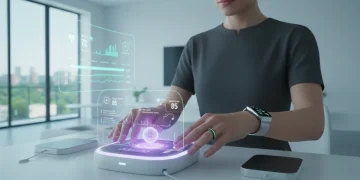
By 2026, next-gen wearable tech will revolutionize personal health and connectivity, integrating advanced AI, sophisticated sensors, and seamless interoperability to offer unprecedented insights and control over our well-being and digital lives.
Anúncios
The landscape of personal technology is rapidly evolving, with wearables at the forefront of this transformation. By 2026, next-gen wearable tech will not just be about tracking steps; it will be an indispensable extension of our health, well-being, and digital interactions. Prepare to witness a paradigm shift in how we monitor our bodies and connect with the world.
Hyper-Personalized Health Monitoring
The future of wearable technology is deeply intertwined with individualized health insights. Devices in 2026 will move beyond generic data to offer highly personalized health monitoring, leveraging advanced algorithms and comprehensive biometric data to understand each user’s unique physiological baseline and needs.
This hyper-personalization will mean that recommendations and alerts are not one-size-fits-all, but rather tailored to an individual’s specific health profile, genetic predispositions, and lifestyle choices. Imagine a device that not only detects an anomaly but also understands its potential impact on your body, based on years of collected data.
Predictive Analytics for Proactive Care
One of the most significant advancements will be in predictive analytics. Wearables will gather vast amounts of continuous data, including heart rate variability, sleep patterns, stress levels, and even early indicators of illness. This data, combined with AI, will allow for predictions of potential health issues before symptoms even manifest.
- Early Disease Detection: Identifying subtle physiological changes indicative of conditions like atrial fibrillation, diabetes onset, or even viral infections.
- Personalized Wellness Plans: Generating dynamic exercise routines, dietary suggestions, and stress management techniques adapted in real-time.
- Pharmacogenomic Insights: Potentially integrating with genetic data to suggest optimal medication dosages or avoid adverse drug reactions.
The goal is to shift from reactive healthcare to a proactive model, empowering individuals to take preventative measures and lead healthier lives based on highly accurate, personalized forecasts. This continuous feedback loop will redefine personal responsibility for health.
The era of hyper-personalized health monitoring will fundamentally change how we interact with our own bodies, offering unparalleled insights and fostering a new level of self-awareness and preventative care. This innovation promises to make healthcare more accessible and tailored than ever before.
Anúncios
Seamless Integration with Smart Environments
Beyond personal health, next-gen wearable tech will seamlessly integrate with our smart home environments, blurring the lines between our personal devices and the surrounding world. This integration will create an intuitive, responsive ecosystem that anticipates our needs and optimizes our daily experiences.
Picture a world where your smartwatch communicates directly with your smart home, adjusting lighting, temperature, and even music based on your biometric data and activity. This isn’t just convenience; it’s a fundamental shift towards truly intelligent living spaces that respond to our presence and well-being.
Context-Aware Automation
Wearables will become central hubs for context-aware automation. They will understand your daily routines, your current activity, and even your emotional state, using this information to trigger actions in your smart home or office. For instance, if your wearable detects elevated stress levels, your smart environment might automatically dim the lights, play calming music, and suggest a breathing exercise.
- Optimized Comfort: Automatic adjustment of ambient settings (temperature, lighting, humidity) to match your comfort preferences and physiological state.
- Enhanced Security: Biometric authentication via wearables for smart locks, ensuring only authorized individuals can access your home or office.
- Energy Efficiency: Smart devices learning your presence and patterns, optimizing energy consumption by turning off lights or adjusting thermostats when you leave.
This level of integration extends beyond the home, influencing smart cities and even vehicles. Your wearable could communicate with public transport systems to provide real-time updates based on your location and schedule, or with your car to precondition the cabin before you arrive. The seamless flow of data will create an environment that feels less like technology and more like an extension of your own intuition.
The integration of wearables with smart environments represents a significant leap forward in creating truly intelligent and responsive living spaces. It promises a future where technology works in harmony with our lives, anticipating our needs and enhancing our comfort and efficiency without conscious effort.
Advanced Biosensors and Diagnostics
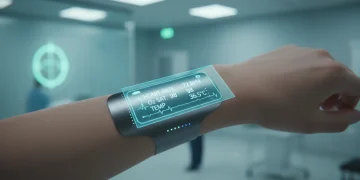
The core of revolutionary wearable tech lies in its sensor capabilities. By 2026, we will see a dramatic advancement in the sophistication and non-invasiveness of biosensors, allowing for real-time, medical-grade diagnostics directly from our wrists or even integrated into our clothing. These sensors will provide a depth of physiological data previously only available in clinical settings.
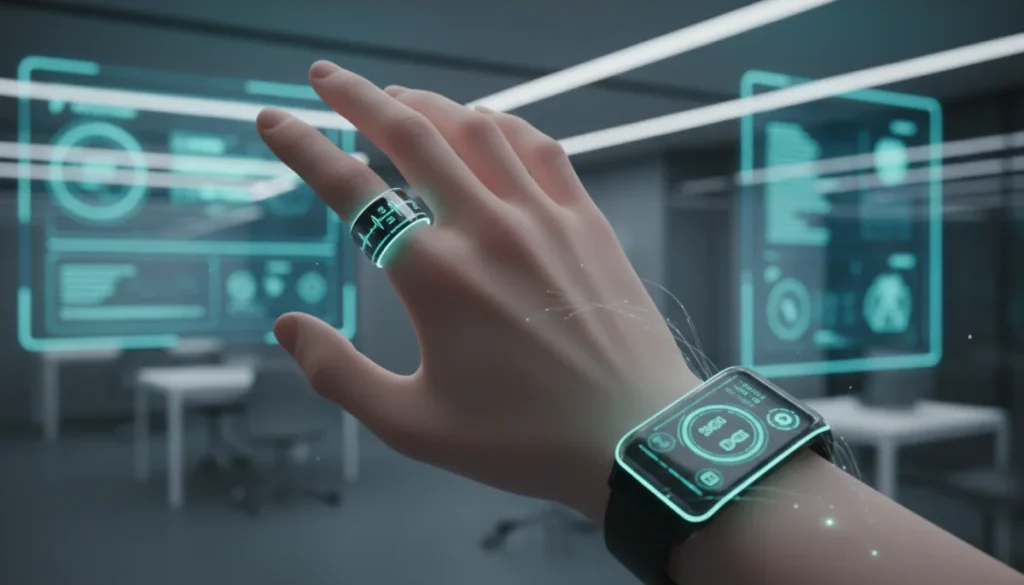
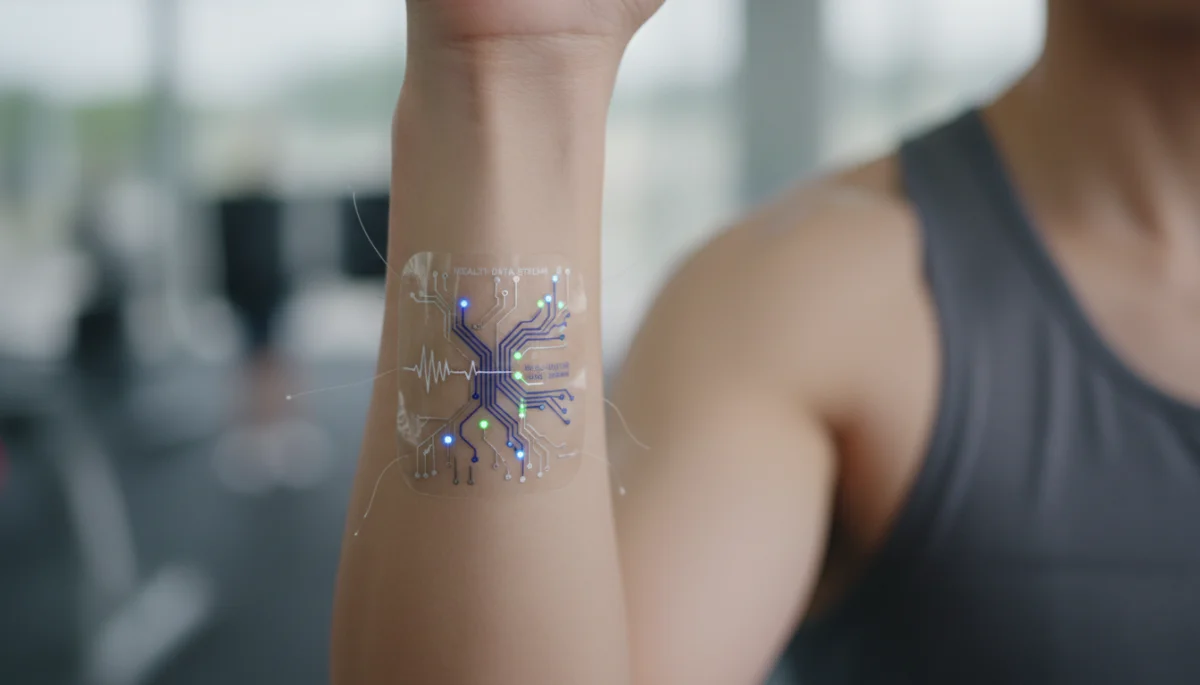
Imagine a tiny patch or a smart home ring capable of continuously monitoring blood glucose levels without a needle prick, or detecting early signs of cardiovascular distress with unparalleled accuracy. This will empower individuals with immediate health insights and potentially save lives through early intervention.
Non-Invasive Continuous Glucose Monitoring (CGM)
One of the most anticipated breakthroughs is truly non-invasive CGM. Current technologies often require a small filament inserted under the skin. Future wearables aim to achieve this through advanced optical sensors, radiofrequency, or even sweat analysis, making diabetes management far less intrusive and more accessible.
- Enhanced Accuracy: New sensor arrays will provide more precise readings, reducing false positives and negatives.
- Multi-Parameter Monitoring: Beyond glucose, these devices could monitor lactate, hydration levels, and electrolyte balance simultaneously.
- Wearable Form Factors: Integration into smartwatches, rings, or even discreet skin patches, making them almost invisible.
Furthermore, these advanced biosensors will extend to other critical health markers. Wearables could continuously monitor blood pressure with cuff-less technology, detect specific biomarkers for stress or inflammation, and even perform rudimentary blood analysis without drawing blood. The data gathered would be securely transmitted to personal health records, allowing both individuals and their healthcare providers to have a comprehensive, longitudinal view of their health status.
The evolution of advanced biosensors and diagnostic capabilities in wearables promises to democratize health monitoring, bringing powerful medical tools directly to the consumer. This will enable unprecedented self-management of chronic conditions and promote a proactive approach to wellness for everyone.
Augmented Reality (AR) Integration
The fusion of next-gen wearable tech with augmented reality will unlock entirely new dimensions of interaction and information delivery. Beyond simple notifications, AR-enabled wearables, such as smart glasses or contact lenses, will overlay digital information onto our real-world view, creating an immersive and contextually rich experience.
This integration promises to transform everything from navigation and education to social interaction and professional tasks. Imagine walking down a street and seeing real-time information about landmarks, shops, or even friends nearby, all seamlessly integrated into your vision without needing to look at a separate screen.
Hands-Free Information and Interaction
AR wearables will provide hands-free access to information, reducing reliance on smartphones. This will be particularly impactful in scenarios where keeping your hands free is crucial, such as during complex tasks, sports, or while navigating unfamiliar environments.
- Dynamic Navigation: Directions projected directly onto your path, making it impossible to get lost.
- Contextual Learning: Real-time information about objects or people around you, enhancing educational and social experiences.
- Professional Assistance: Overlapping instructions or data for technicians, surgeons, or field workers, improving efficiency and accuracy.
The visual nature of AR also extends to health monitoring. Imagine seeing your heart rate, calorie burn, or even hydration levels displayed subtly in your peripheral vision during a workout, without disrupting your focus. For individuals with certain health conditions, AR could provide visual cues for medication reminders or glucose level alerts. This blending of the digital and physical worlds will make information access more intuitive and less distracting, truly augmenting our perception of reality.
AR integration will fundamentally change how we perceive and interact with information, moving beyond traditional screens to create a more natural and immersive digital experience. This innovation will make technology an invisible, yet powerful, assistant in our daily lives.
Enhanced Battery Life and Energy Harvesting
One of the persistent challenges for wearable technology has been battery life. By 2026, significant advancements in battery technology and energy harvesting will dramatically extend the operational time of wearables, making them truly always-on devices without the constant need for recharging. This leap will unlock new possibilities for continuous monitoring and functionality.
The vision is for wearables to power themselves through ambient energy sources, reducing our dependence on cumbersome charging cables and ensuring uninterrupted data collection. This will be crucial for medical-grade devices and those integrated into critical systems.
Miniaturized Solid-State Batteries
Solid-state batteries, known for their higher energy density, faster charging times, and increased safety compared to traditional lithium-ion batteries, will become more prevalent and miniaturized. This allows for smaller, lighter devices with significantly longer battery life, potentially lasting weeks or even months on a single charge.
- Increased Durability: Solid-state batteries are less prone to degradation over time, extending the lifespan of devices.
- Faster Charging: Rapid charging capabilities will allow for quick top-ups when needed, minimizing downtime.
- Flexible Form Factors: The ability to mold solid-state batteries into various shapes will enable more innovative and comfortable wearable designs.
Alongside improved battery chemistry, energy harvesting techniques will play a crucial role. Wearables will increasingly draw power from kinetic energy generated by body movement, thermoelectric conversion from body heat, and even ambient radio frequency (RF) signals. Imagine a smartwatch that recharges itself as you walk, or a health patch that uses your body heat to power its sensors. These advancements will make wearables truly autonomous, enhancing their utility and user convenience.
The combination of enhanced battery life and sophisticated energy harvesting will liberate wearables from the constraints of frequent charging, making them more reliable and seamlessly integrated into our daily routines. This will be a cornerstone for the widespread adoption of next-gen wearable tech.
Advanced Haptic Feedback and Biometric Authentication
The interaction with next-gen wearable tech will become more nuanced and secure through advanced haptic feedback and sophisticated biometric authentication. Haptics will move beyond simple vibrations to convey complex information and emotional cues, while biometrics will offer unparalleled security and convenience for accessing digital services and physical spaces.
These innovations will make wearables feel more intuitive and integrated into our sensory experience, enhancing both usability and trustworthiness. Imagine receiving a subtle, directional haptic cue for navigation, or unlocking your car with a simple touch of your smart ring.
Intelligent Haptic Communication
Future haptic systems will employ micro-actuators to create a wider range of tactile sensations, capable of conveying nuanced information without visual or auditory prompts. This can include directional nudges for navigation, different patterns to distinguish notification types, or even subtle textures to mimic virtual objects.
- Discreet Notifications: Receiving alerts that only you can perceive, maintaining privacy in public spaces.
- Enhanced Immersion: More realistic feedback in AR/VR environments, adding a layer of realism to digital interactions.
- Emotional Resonance: Potentially conveying emotional states or empathy through specific haptic patterns in social communication.
Simultaneously, biometric authentication will become a standard feature, moving beyond fingerprint scans to include more sophisticated methods. Wearables could continuously verify your identity through heart rhythm analysis (ECG biometrics), gait patterns, or even unique sweat compositions. This continuous authentication would eliminate the need for passwords or PINs for various transactions and access points, making digital interactions both more secure and frictionless.
The synergy of advanced haptics and robust biometric authentication will redefine how we interact with our devices and the digital world, making it more intuitive, secure, and deeply personal. These features will solidify wearables as trusted extensions of our identity and senses.
Decentralized Data Management and Privacy
As wearables collect increasingly sensitive personal and health data, the issue of data management and privacy becomes paramount. By 2026, next-gen wearable tech will incorporate decentralized data management systems and robust privacy protocols, empowering users with greater control over their information and ensuring its security.
This shift away from centralized data silos will address growing concerns about data breaches and misuse, fostering greater trust in wearable devices. Users will have transparent control over who can access their data and for what purpose, bringing a new era of digital autonomy.
Blockchain-Enabled Data Security
Blockchain technology will play a significant role in securing and managing wearable data. By distributing data across a decentralized ledger, it becomes virtually tamper-proof and transparent. Users can grant specific permissions for data access, and every transaction or access attempt is recorded and verifiable.
- Enhanced Security: Data is encrypted and distributed, making it extremely difficult for malicious actors to compromise.
- User Control: Individuals maintain ownership of their health data, deciding who (e.g., doctors, researchers, insurance providers) can access it and for how long.
- Auditable Trails: All data access and modifications are recorded on an immutable ledger, ensuring accountability.
Furthermore, privacy-preserving AI techniques, such as federated learning, will allow wearable devices to analyze data and improve algorithms without ever sending raw personal data to a central server. Instead, only aggregated insights or model updates are shared, significantly reducing privacy risks. This combination of decentralized infrastructure and intelligent privacy measures will build a foundation of trust essential for the widespread adoption of highly personal wearable technologies.
Decentralized data management and advanced privacy features will be critical enablers for the next generation of wearables. By putting users in control of their sensitive information, these innovations will pave the way for a more secure and trustworthy digital health ecosystem.
| Innovation | Brief Description |
|---|---|
| Hyper-Personalized Health Monitoring | Tailored health insights and predictive analytics based on individual biometric data for proactive care. |
| Seamless Smart Environment Integration | Wearables communicate with smart homes/cities to optimize comfort and automate tasks contextually. |
| Advanced Biosensors & Diagnostics | Non-invasive, medical-grade sensors for continuous glucose monitoring and other vital health markers. |
| Augmented Reality (AR) Integration | Overlaying digital information onto the real world via smart glasses/lenses for hands-free interaction. |
Frequently Asked Questions About Next-Gen Wearable Tech
Hyper-personalized health monitoring refers to wearable tech that uses advanced AI and comprehensive biometric data to provide health insights and recommendations specifically tailored to an individual’s unique physiological profile and lifestyle, moving beyond generic data analysis.
By 2026, wearables will seamlessly communicate with smart homes and cities, adjusting settings like lighting, temperature, and home security based on your biometric data, activity, and preferences. This creates a responsive, context-aware environment that anticipates your needs.
We anticipate significant breakthroughs in non-invasive biosensors, including continuous glucose monitoring without needle pricks, cuff-less blood pressure tracking, and the detection of specific biomarkers for inflammation or stress, offering medical-grade diagnostics from discreet devices.
AR integration will allow wearables like smart glasses to overlay digital information directly onto your real-world view, offering hands-free navigation, contextual learning about your surroundings, and real-time health data display without needing a separate screen, creating immersive experiences.
Next-gen wearables will increasingly use decentralized data management, often powered by blockchain, to ensure data security and user control. This allows individuals to manage access permissions and provides transparent, immutable records, addressing privacy concerns effectively.
Conclusion
The journey towards 2026 reveals a future where next-gen wearable tech transcends mere gadgets, evolving into sophisticated, intelligent extensions of ourselves. From hyper-personalized health insights and seamless smart environment integration to advanced biosensors, AR overlays, extended battery life, enhanced haptics, and robust data privacy, these innovations promise to redefine our daily lives. They will empower us with unprecedented control over our well-being, deepen our connection with the digital world, and foster a new era of proactive health management. The convergence of these technologies is not just about convenience; it’s about creating a more informed, healthier, and interconnected future for everyone.