Predictive Analytics & ML: US Enterprises Cut Costs by 12%

Anúncios
US enterprises are strategically implementing advanced predictive analytics and machine learning to dramatically optimize operations, leading to an average 12% reduction in operational costs this year, marking a significant leap in efficiency and competitive advantage.
In today’s dynamic business landscape, US enterprises are constantly seeking innovative strategies to enhance efficiency and bolster their bottom line. A groundbreaking approach gaining significant traction is the integration of predictive analytics with machine learning, a powerful combination enabling organizations to forecast future outcomes and make data-driven decisions that directly impact operational expenses. This year alone, many US businesses are reporting an impressive average reduction of 12% in operational costs by harnessing these advanced technologies.
Anúncios
The Power of Predictive Analytics in Enterprise Operations
Predictive analytics, at its core, involves using historical data, statistical algorithms, and machine learning techniques to identify the likelihood of future outcomes based on past patterns. For US enterprises, this means moving beyond reactive decision-making to a proactive stance, anticipating challenges and opportunities before they fully materialize.
The ability to foresee potential equipment failures, fluctuations in demand, or inefficiencies in supply chains can translate into substantial savings. By accurately predicting these events, companies can optimize resource allocation, reduce waste, and prevent costly disruptions.
Forecasting Demand and Inventory Optimization
One of the most immediate impacts of predictive analytics is in demand forecasting. Traditional forecasting methods often fall short in complex, volatile markets. Machine learning algorithms, however, can process vast amounts of data, including seasonal trends, economic indicators, and even social media sentiment, to generate highly accurate demand predictions.
- Reduced Inventory Holding Costs: Precise demand forecasts prevent overstocking, cutting down on warehousing expenses, insurance, and potential spoilage.
- Minimized Stockouts: Accurate predictions ensure products are available when needed, preventing lost sales and customer dissatisfaction.
- Optimized Production Schedules: Aligning production with anticipated demand reduces idle time and overtime costs.
By refining their inventory strategies through predictive insights, enterprises can maintain optimal stock levels, ensuring customer satisfaction while significantly lowering capital tied up in inventory.
Machine Learning’s Role in Unlocking Cost Efficiencies
Machine learning (ML) is the engine that drives predictive analytics, enabling systems to learn from data without explicit programming. This capability is particularly crucial for identifying subtle patterns and correlations that human analysts might miss, leading to more robust and accurate predictions.
In the context of operational cost reduction, ML algorithms can continuously refine their models as new data becomes available, adapting to changing market conditions and improving their predictive accuracy over time. This continuous learning cycle ensures that cost-saving strategies remain effective and relevant.
Anúncios
Automating Anomaly Detection and Maintenance
ML excels at identifying anomalies in operational data, which often signal impending issues or inefficiencies. For instance, in manufacturing, ML models can analyze sensor data from machinery to predict equipment failure before it occurs, enabling proactive maintenance rather than costly emergency repairs.
- Predictive Maintenance: Scheduling maintenance based on actual need rather than fixed schedules extends asset lifespan and reduces unexpected downtime.
- Energy Consumption Optimization: ML algorithms can identify patterns in energy usage and recommend adjustments to reduce consumption without impacting productivity.
- Fraud Detection: In financial operations, ML models can quickly identify fraudulent transactions, minimizing financial losses.
These applications of machine learning move operations from a reactive, break-fix model to a predictive, preventative one, leading to significant cost avoidance and improved operational stability.
Real-World Impact: How US Enterprises Achieve 12% Savings
The reported 12% reduction in operational costs by US enterprises is not merely anecdotal; it is a testament to the tangible benefits of integrating predictive analytics and machine learning. This figure often represents savings across multiple operational facets, from supply chain management to customer service and energy consumption.
Companies are seeing these savings materialize through decreased waste, optimized labor scheduling, improved asset utilization, and reduced risk exposure. The aggregate effect of these improvements contributes to a substantial positive impact on profitability and competitive positioning.
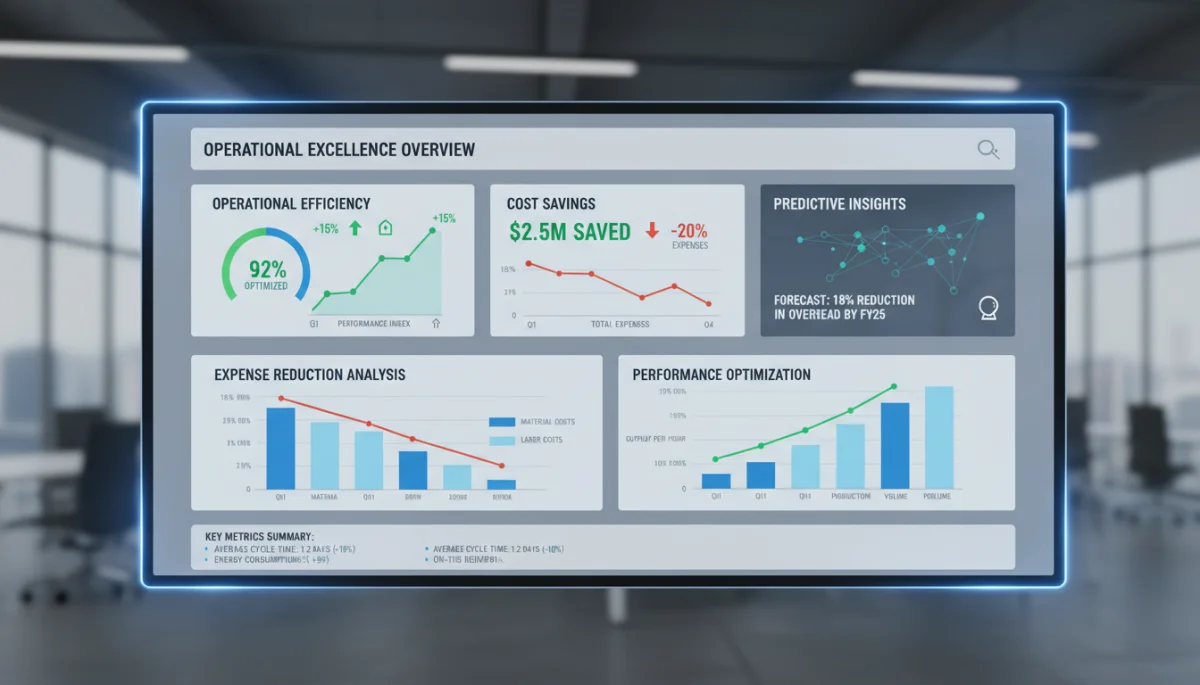
For example, a major logistics company might use predictive models to optimize delivery routes, considering traffic patterns, weather forecasts, and package density, thereby reducing fuel consumption and driver hours. Another instance could be a retail chain employing ML to personalize promotions, reducing marketing spend while increasing conversion rates.
Case Studies and Success Stories
Across various sectors, US businesses are documenting impressive results. A prominent manufacturing firm, for instance, implemented predictive maintenance and saw a 15% reduction in unscheduled downtime and a 10% decrease in maintenance costs within a year. Similarly, a national utility company utilized ML to predict peak demand, optimizing energy distribution and saving millions in procurement costs.
These examples highlight that the 12% average is a conservative estimate, with many organizations achieving even greater efficiencies. The key lies in strategic implementation and a commitment to data-driven decision-making.
Implementing Predictive Analytics and Machine Learning: Challenges and Best Practices
While the benefits are clear, successfully implementing predictive analytics and machine learning in an enterprise environment comes with its own set of challenges. Data quality, integration with existing systems, and the need for specialized talent are common hurdles.
However, by adopting best practices, organizations can navigate these challenges effectively. A phased approach, starting with pilot projects and gradually scaling up, often yields the best results. Investing in data infrastructure and fostering a data-literate culture are also critical success factors.
Key Implementation Strategies
- Start Small, Scale Big: Begin with a well-defined problem and a manageable dataset to demonstrate value quickly.
- Invest in Data Infrastructure: Ensure clean, accessible, and integrated data sources are available for ML models.
- Build a Skilled Team: Recruit or upskill data scientists, ML engineers, and business analysts who understand both the technology and business context.
- Foster Cross-Functional Collaboration: Break down silos between IT, operations, and business units to ensure alignment and effective solution deployment.
Overcoming these challenges transforms the initial investment into a sustainable competitive advantage, driving continuous operational improvements and cost savings.
Future Trends: Evolution of Predictive Analytics for Cost Reduction
The field of predictive analytics and machine learning is rapidly evolving, promising even greater cost-reduction opportunities for US enterprises. Advancements in areas like deep learning, reinforcement learning, and edge computing are set to enhance predictive capabilities and enable real-time decision-making on an unprecedented scale.
The integration of AI with IoT (Internet of Things) devices will generate even richer datasets, allowing for more granular and accurate predictions across complex operational environments. Furthermore, explainable AI (XAI) will help build trust in these advanced systems by providing insights into how decisions are made, addressing a common concern for business leaders.
Emerging Technologies and Their Impact
The rise of explainable AI (XAI) is particularly important as it helps demystify complex ML models, making them more transparent and trustworthy for business users. This transparency is crucial for broader adoption and confidence in automated decision-making processes.
- Edge AI: Processing data closer to its source reduces latency and bandwidth costs, enabling faster, more localized operational adjustments.
- Reinforcement Learning: Systems can learn optimal strategies through trial and error, perfect for optimizing complex processes like supply chain logistics or energy grid management.
- Generative AI: While often associated with content creation, generative models can also simulate complex scenarios to identify optimal operational strategies and potential cost-saving opportunities.
These future trends suggest that the potential for cost reduction through predictive analytics and machine learning will only continue to grow, making it an indispensable tool for forward-thinking enterprises.
Sustaining Cost Reduction with Continuous Improvement
Achieving a 12% cost reduction is a significant milestone, but sustaining and even exceeding this level of efficiency requires a commitment to continuous improvement. Predictive analytics and machine learning are not one-time solutions; they are ongoing processes that demand regular monitoring, model retraining, and adaptation to new data and business objectives.
Enterprises must establish robust feedback loops, where the outcomes of predictive models are continuously evaluated against actual results. This iterative process allows for the refinement of algorithms, the discovery of new data sources, and the identification of previously overlooked cost-saving opportunities.
Fostering a culture of innovation and encouraging experimentation with new ML techniques will ensure that organizations remain at the forefront of operational efficiency. This proactive approach to leveraging technology will be key to maintaining a competitive edge and consistently driving down operational costs in the long term.
| Key Point | Brief Description |
|---|---|
| Operational Cost Reduction | US enterprises achieve an average 12% cost reduction using predictive analytics and ML. |
| Proactive Decision Making | Anticipate issues like equipment failure and demand shifts to optimize resources. |
| Machine Learning Engine | ML continuously refines models, improving predictive accuracy and efficiency. |
| Future Trends | Emerging technologies like Edge AI and XAI will further enhance cost-saving potential. |
Frequently Asked Questions About Predictive Analytics and Cost Reduction
Predictive analytics uses historical data and algorithms to forecast future outcomes. It reduces costs by enabling proactive decision-making, such as optimizing inventory, anticipating equipment failures, and streamlining supply chains, thus preventing expensive disruptions and waste.
Machine learning algorithms analyze vast datasets to identify subtle patterns and continuously refine predictive models. This leads to more accurate forecasts, automates anomaly detection, and optimizes processes like energy consumption and maintenance schedules, directly minimizing operational expenses.
US enterprises are currently achieving an average of 12% reduction in operational costs. These savings stem from various areas including optimized logistics, reduced inventory holding, minimized equipment downtime, and more efficient resource allocation across the business.
Key challenges include ensuring high data quality, integrating new systems with existing infrastructure, and acquiring or developing specialized talent in data science and machine learning. Overcoming these requires strategic planning and investment in both technology and human capital.
Future trends like Edge AI, reinforcement learning, and explainable AI (XAI) are expected to further enhance predictive capabilities. These advancements will allow for real-time decision-making, more complex process optimization, and increased trust in AI-driven insights, leading to even greater cost efficiencies.
Conclusion
The journey towards optimized operational costs in US enterprises is undeniably being paved by the sophisticated application of predictive analytics and machine learning. The reported 12% cost reduction is a compelling indicator of the immediate and tangible value these technologies bring. By moving from reactive problem-solving to proactive foresight, businesses are not only saving significant capital but also building more resilient, efficient, and competitive operations. As these technologies continue to evolve, their role in shaping the financial health and strategic direction of enterprises will only grow, solidifying their status as indispensable tools for modern business success.