Holographic Technology: 4 Commercial Applications Poised for Growth in the US Market Over the Next 2 Years
Anúncios
Holographic technology is rapidly advancing, with four key commercial applications—retail, healthcare, education, and automotive—expected to see significant growth and integration into the US market within the next two years.
Anúncios
The future is no longer a distant concept, but an unfolding reality, particularly with the rapid evolution of holographic technology applications. Once confined to science fiction, holography is now emerging as a powerful tool with transformative potential across various industries. In the United States, we are on the cusp of seeing these sophisticated visual solutions move from niche applications to mainstream commercial adoption, promising to reshape how businesses interact with customers, train professionals, and innovate products. This article delves into four primary commercial sectors where holographic technology is poised for substantial growth and impact over the next two years.
The rise of holographic displays in retail and advertising
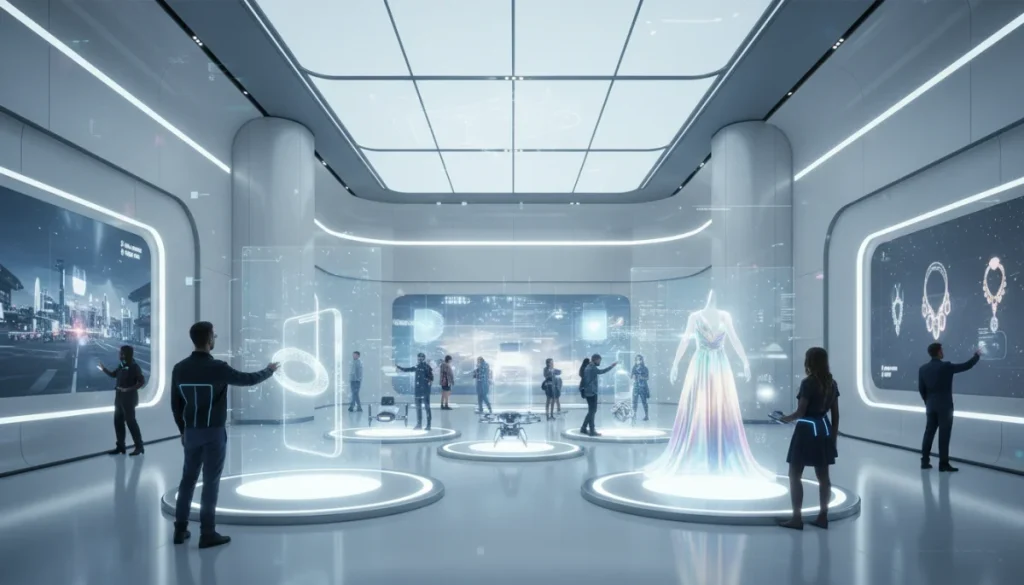
Holographic displays are revolutionizing the retail and advertising landscape by offering immersive and attention-grabbing visual experiences. These 3D projections can showcase products in unprecedented detail, allowing customers to interact with virtual items before making a purchase. This innovation addresses the growing demand for engaging and personalized shopping experiences, both in physical stores and potentially through remote interactions.
The retail sector, constantly seeking novel ways to attract and retain customers, finds a powerful ally in holographic technology. Imagine walking into a store and seeing a lifelike, three-dimensional representation of a product floating in mid-air, allowing for 360-degree inspection without physical handling. This level of engagement not only enhances the customer journey but also provides a distinct competitive advantage.
Enhanced product visualization and customer engagement
Holographic displays offer unparalleled opportunities for product visualization. They can animate features, demonstrate usage, and even allow for customization previews, far beyond what traditional screens can achieve. This interactive element significantly boosts customer engagement.
- Interactive product showcases: Customers can virtually manipulate products, change colors, and explore features in real-time.
- Dynamic advertising campaigns: Eye-catching holographic advertisements can create memorable brand experiences in public spaces.
- Personalized shopping assistants: Holographic avatars can guide shoppers, offer recommendations, and answer questions.
Impact on advertising and brand storytelling
In advertising, holography provides a fresh canvas for brand storytelling. Instead of static images or flat videos, brands can now create dynamic, three-dimensional narratives that captivate audiences. This technology allows for more impactful campaigns that stand out in a crowded media environment, fostering stronger emotional connections with consumers.
The ability to present complex information or intricate product details in an easily digestible and visually stunning 3D format is a game-changer for marketers. It transforms passive viewing into an active, immersive experience, leaving a lasting impression and driving consumer interest and recall. This shift is crucial for brands looking to differentiate themselves in a highly competitive market.
Anúncios
Ultimately, the integration of holographic displays into retail and advertising is not just a technological upgrade; it’s a fundamental shift in how businesses communicate value and engage with their audience. As the technology becomes more accessible and cost-effective, its presence in storefronts and public spaces will undoubtedly proliferate, redefining consumer expectations for interaction and product discovery.
Revolutionizing healthcare with holographic imaging
The healthcare industry stands to gain immensely from the adoption of holographic technology, particularly in areas like surgical planning, medical training, and patient education. Holographic imaging provides clinicians and students with unprecedented access to detailed 3D anatomical models, enhancing precision and understanding in critical medical contexts. This transformative potential promises to elevate the quality of care and accelerate medical advancements.
From complex surgeries to routine diagnostic procedures, the ability to visualize intricate structures in three dimensions, without the need for specialized eyewear, represents a significant leap forward. It allows medical professionals to interact with virtual organs and systems as if they were physically present, leading to more informed decisions and improved outcomes.
Advanced surgical planning and visualization
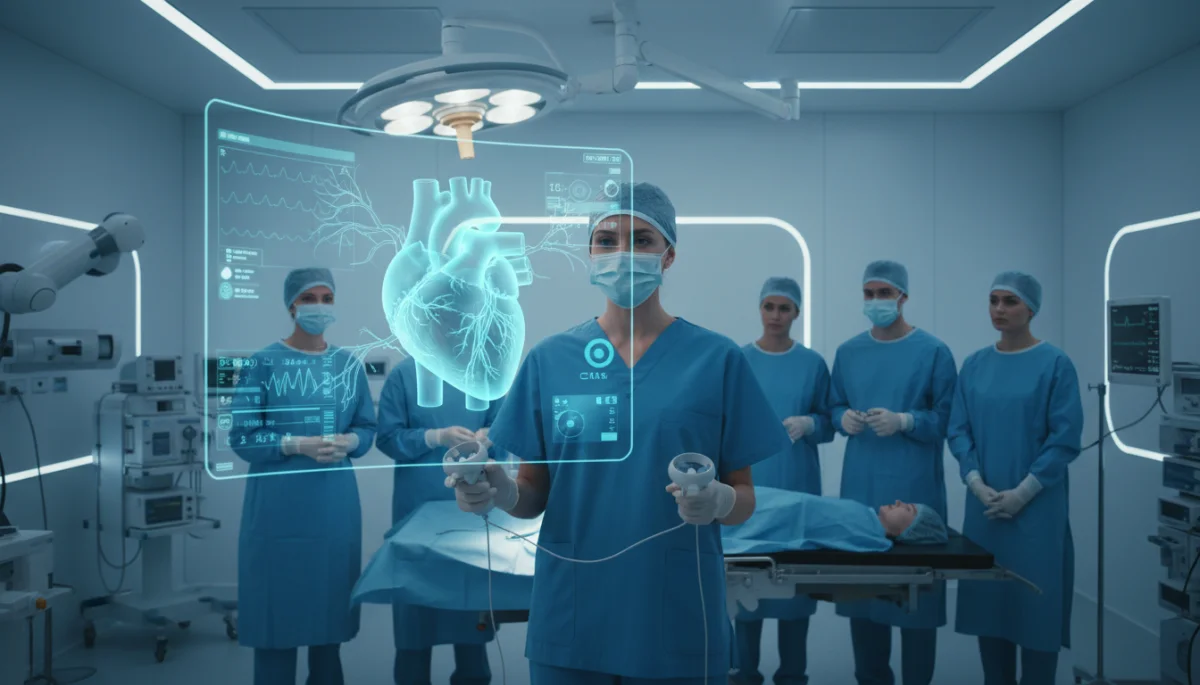
Holography enables surgeons to plan complex operations with greater accuracy by overlaying 3D patient data directly onto the surgical field. This provides a real-time, interactive guide during procedures, minimizing risks and improving precision.
- Pre-operative walkthroughs: Surgeons can practice procedures on holographic models derived from actual patient scans.
- Real-time intraoperative guidance: Critical anatomical structures can be projected directly onto the patient during surgery.
- Collaborative surgical reviews: Teams can jointly analyze 3D patient data in a shared holographic space.
Enhanced medical education and training
Medical schools and training institutions are already beginning to leverage holographic technology to create immersive learning environments. Students can explore human anatomy in unparalleled detail, dissect virtual organs, and simulate procedures, all without the need for cadavers or expensive physical models.
This hands-on, interactive approach to learning fosters a deeper understanding of complex medical concepts and improves practical skills. It also offers a scalable and cost-effective solution for providing high-quality medical education, reaching a wider audience of aspiring healthcare professionals. The visual clarity and interactivity of holograms make abstract concepts tangible and easier to grasp.
The integration of holographic imaging into healthcare promises a future where medical professionals are better prepared, procedures are more precise, and patient outcomes are significantly improved. Its ability to simplify complex data visualization and foster collaborative learning makes it an indispensable tool for the evolving demands of modern medicine.
Holography in education and training: immersive learning experiences
Education and training are ripe for disruption by holographic technology, which offers immersive and interactive learning experiences far beyond traditional methods. By bringing 3D content directly into the classroom or training facility, holography can make complex subjects more engaging, understandable, and memorable. This technology promises to transform how students and professionals acquire knowledge and develop skills, fostering deeper comprehension and retention.
Imagine a history lesson where students can walk through ancient Rome as if they were there, or a biology class where they can virtually dissect a frog without any ethical concerns. Holographic projections can create these vivid, interactive environments, turning passive learning into active exploration. This direct engagement with content stimulates curiosity and makes learning a truly dynamic process.
Transforming classroom environments
Holographic displays can project dynamic 3D models of anything from molecular structures to historical artifacts, allowing students to interact with educational content in a completely new way. This fosters a more engaging and effective learning environment.
- Interactive science labs: Students can experiment with virtual chemicals and reactions safely.
- Virtual field trips: Explore remote locations or historical sites through realistic 3D projections.
- Enhanced visual aids: Complex concepts become clearer when presented as interactive 3D models.
Professional development and skill acquisition
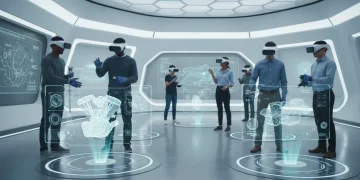
Beyond traditional classrooms, holographic technology is also proving invaluable for professional training. Industries requiring hands-on skill development, such as engineering, manufacturing, and even customer service, can benefit from realistic simulations and interactive guides.
For example, engineers can virtually assemble complex machinery, technicians can practice repair procedures, and customer service representatives can role-play scenarios with holographic avatars. This allows for safe, repeatable practice without the constraints of physical prototypes or real-world risks, significantly accelerating skill acquisition and reducing training costs. The ability to visualize and manipulate virtual objects in a real-world setting provides a powerful cognitive advantage.
The widespread adoption of holography in education and training is set to create a new generation of learners who are more engaged, better informed, and more adept at applying their knowledge in practical scenarios. Its capacity to bridge the gap between abstract concepts and tangible experiences makes it a cornerstone of future learning methodologies.
Automotive industry innovations: design, safety, and user experience
The automotive industry is a fertile ground for holographic technology, with applications spanning from vehicle design and safety systems to enhancing the in-car user experience. Holography offers innovative solutions for visualizing prototypes, improving driver awareness, and creating futuristic infotainment systems. These advancements are crucial for a sector constantly pushing the boundaries of technology and consumer expectations.
From the initial design phase to the final user interface, holographic technology can streamline processes and introduce novel functionalities. Engineers can evaluate designs in 3D, drivers can receive critical information projected onto their line of sight, and passengers can enjoy immersive entertainment, all contributing to a safer, more efficient, and more enjoyable driving experience.
Holographic heads-up displays (HUDs)
Holographic HUDs project critical information, such as speed, navigation, and warning signals, directly onto the windshield, appearing to float in the driver’s field of vision. This allows drivers to keep their eyes on the road, significantly enhancing safety and reducing distraction.
- Augmented reality navigation: Directions are overlaid directly onto the road ahead, making turns and exits clearer.
- Enhanced driver awareness: Warnings for hazards or obstacles appear in the driver’s line of sight.
- Customizable information displays: Drivers can select which data is most relevant to them.
Design and prototyping efficiency
Automotive designers can leverage holographic technology to visualize and iterate on vehicle prototypes in 3D, reducing the need for costly physical models. This accelerates the design process, allows for more collaborative reviews, and facilitates faster decision-making.
Engineers can walk around a holographic car model, inspect its interior, and even simulate its performance characteristics, all within a virtual environment. This level of detail and interactivity enables them to identify potential issues and refine designs with greater precision and speed. The ability to make changes instantly and visualize them in real-time saves both time and significant financial resources, pushing the boundaries of automotive innovation.
The integration of holographic technology across the automotive lifecycle, from concept to cabin, promises to deliver safer, smarter, and more engaging vehicles. As these applications mature, they will become distinguishing features, shaping the future of transportation and redefining what consumers expect from their vehicles.
Overcoming challenges and future prospects
While the potential of holographic technology is immense, its widespread commercial adoption faces several challenges that need to be addressed in the coming years. These include technological limitations, cost barriers, and the need for greater standardization. However, ongoing research and development, coupled with increasing investment, are steadily paving the way for holography to become a ubiquitous part of our daily lives.
The journey from concept to widespread commercial viability is rarely straightforward. For holography, issues such as display resolution, viewing angles, and the complexity of content creation are actively being tackled by researchers and engineers. As these technical hurdles are overcome, the technology will become more robust and versatile, opening up even broader application possibilities.
Key challenges for widespread adoption
Several factors currently hinder the rapid expansion of holographic technology. Addressing these will be crucial for its successful integration into diverse commercial sectors.
- Cost of production: High manufacturing costs for advanced holographic displays remain a significant barrier for mass market adoption.
- Technological limitations: Issues like limited viewing angles, resolution, and the computational power required for real-time rendering still need improvement.
- Content creation complexity: Developing compelling 3D holographic content requires specialized skills and tools, which are not yet widely available.
The path forward: innovation and investment
Despite these challenges, the trajectory for holographic technology is overwhelmingly positive. Significant investment from tech giants and startups alike is fueling innovation, leading to more affordable, higher-resolution, and more user-friendly holographic solutions. The demand for immersive experiences across industries is a strong driver for continued progress.
As the technology matures, we can expect to see smaller, more portable holographic devices, easier content creation tools, and a broader ecosystem of developers and applications. Furthermore, advancements in AI and machine learning will likely play a crucial role in optimizing holographic rendering and interaction, making the technology more intuitive and accessible to a wider audience. The synergistic development with other emerging technologies will accelerate its integration.
The next two years will be critical in demonstrating holography’s practical value and overcoming initial resistance. With continuous innovation and strategic investments, holographic technology is well on its way to transforming how we interact with information and the world around us, promising a future that is truly three-dimensional.
The economic impact and market growth in the US
The anticipated growth of holographic technology applications in the US market is not merely a technological marvel; it represents a significant economic opportunity. As these innovations permeate various sectors, they are expected to drive job creation, stimulate investment, and foster new business models. The economic impact will be far-reaching, influencing manufacturing, software development, service industries, and beyond.
The emergence of a new technological frontier often creates a ripple effect across the economy. For holographic technology, this means a surge in demand for specialized hardware, software, and skilled professionals capable of developing and deploying these advanced solutions. This creates a fertile ground for startups and established companies alike to innovate and capture market share, contributing to overall economic expansion.
Projected market expansion and investment trends
Analysts predict substantial market growth for holographic technology in the US, driven by increasing demand across commercial sectors. Investment in research and development, along with venture capital funding for holographic startups, is on an upward trend.
- Increased R&D spending: Companies are allocating more resources to develop advanced holographic hardware and software.
- Startup ecosystem growth: A booming number of startups are focusing on niche holographic applications and content creation.
- Strategic partnerships: Collaborations between tech giants and specialized holographic firms are accelerating market penetration.
Job creation and new skill demands
The expansion of holographic technology will inevitably lead to the creation of new jobs and a demand for specialized skills. This includes roles in holographic display manufacturing, 3D content creation, software development for interactive applications, and maintenance technicians for holographic systems.
Educational institutions and workforce development programs will need to adapt to prepare individuals for these emerging roles. The demand for professionals skilled in 3D modeling, computer vision, optical engineering, and user experience design for holographic interfaces will intensify. This shift will necessitate a proactive approach to skill development to ensure the US workforce is equipped to capitalize on this technological wave.
The economic landscape of the US is poised for a significant transformation as holographic technology moves from novelty to necessity. Its ability to create new markets, enhance existing industries, and drive innovation underscores its importance as a key economic driver for the next decade. The ripple effects will be felt across numerous sectors, fostering a more technologically advanced and economically robust nation.
| Key Application | Growth Area |
|---|---|
| Retail & Advertising | Enhanced product visualization, interactive campaigns, personalized shopping. |
| Healthcare | Surgical planning, medical training, 3D anatomical modeling. |
| Education & Training | Immersive classrooms, professional skill development, virtual labs. |
| Automotive | Holographic HUDs, design prototyping, enhanced in-car user experience. |
Frequently asked questions about holographic technology
Holographic technology creates three-dimensional images (holograms) that appear to float in space, visible without special glasses. Unlike 3D projections, holograms are truly volumetric, offering depth perception from various angles, which allows for highly immersive and interactive visual experiences across diverse applications.
In US retail, holography will transform product displays and advertising. It will allow customers to interact with virtual 3D products, enhancing engagement and providing detailed previews. This can lead to more personalized shopping experiences and innovative marketing campaigns, distinguishing brands in a competitive market.
Holographic imaging offers significant benefits in healthcare by providing detailed 3D anatomical models for surgical planning and medical training. It enhances precision in operations, allows students to visualize complex structures interactively, and facilitates collaborative medical analysis, ultimately improving patient outcomes and educational efficacy.
Currently, the cost of advanced holographic technology can be a barrier to widespread adoption. However, continuous advancements in manufacturing processes and increased investment in research and development are steadily driving down costs, making it more accessible for various commercial applications in the US market over the next two years.
In the automotive industry, holography will enhance safety and user experience through holographic heads-up displays that project critical information onto the windshield. It will also streamline vehicle design and prototyping by allowing engineers to visualize and iterate 3D models more efficiently, reducing development costs and time.
Conclusion
The journey of holographic technology from a futuristic concept to a tangible commercial reality is accelerating, particularly within the United States. The next two years are poised to witness significant advancements and broader integration across retail, healthcare, education, and the automotive sector. While challenges such as cost and technological refinement persist, the immense potential for immersive experiences, enhanced efficiency, and revolutionary interactions ensures that holographic technology will be a cornerstone of innovation, reshaping industries and enriching daily life.