VR Gaming Adoption: US Households See 10% Headset Sales Increase by 2026
Anúncios
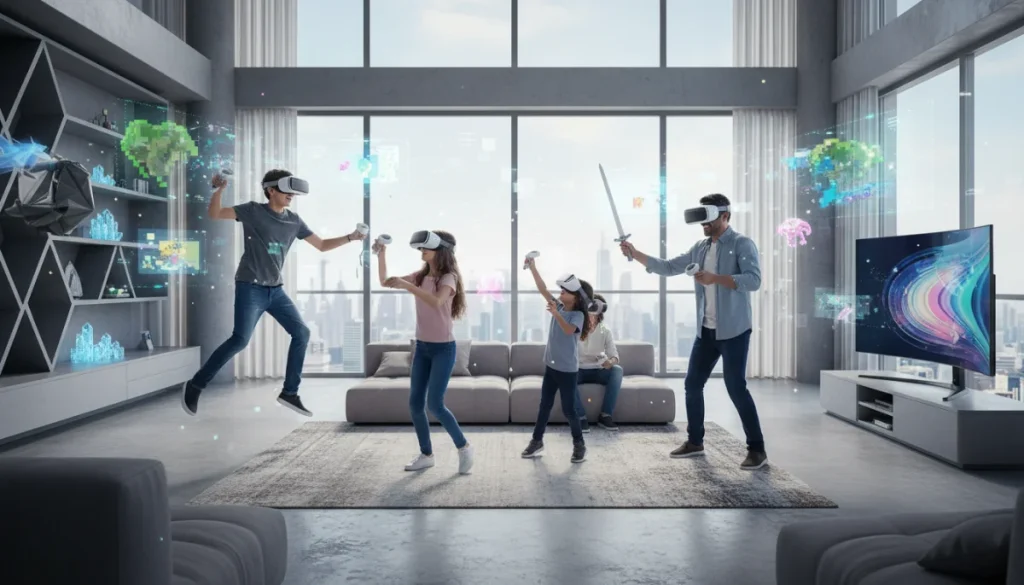
Virtual reality gaming adoption in US households is on a strong upward trajectory, with analysts projecting a notable 10% increase in headset sales by 2026, fueled by technological innovations and a burgeoning ecosystem of immersive content.
Anúncios
The landscape of home entertainment is undergoing a profound transformation, with virtual reality gaming adoption in US households emerging as a dominant force. What was once a niche technology is rapidly becoming a mainstream staple, offering unparalleled immersive experiences that redefine how we play and interact. This article delves into the pivotal trends driving this surge and explores the exciting projection of a 10% increase in VR headset sales by 2026.
The accelerating pace of VR gaming adoption
Virtual reality gaming is no longer a futuristic concept; it’s a tangible reality captivating millions of users across the United States. The initial hurdles of high cost and limited content are steadily giving way to more accessible hardware and a rich, diverse library of games, drawing in a wider demographic than ever before.
This acceleration is influenced by several factors, including enhanced user experience, a wider variety of content, and increased awareness. Consumers are beginning to see VR not just as a novelty, but as a legitimate and engaging form of entertainment.
Technological breakthroughs driving accessibility
- Standalone headsets: Devices like the Meta Quest series have significantly lowered the barrier to entry by removing the need for powerful PCs or external sensors, offering an all-in-one gaming solution.
- Improved resolution and refresh rates: Modern VR headsets deliver sharper visuals and smoother motion, drastically reducing motion sickness and enhancing immersion for extended play sessions.
- Ergonomics and comfort: Manufacturers are prioritizing lighter designs and better weight distribution, making headsets more comfortable for prolonged use, which is crucial for gaming.
The continuous refinement of VR technology plays a critical role in its increasing appeal. As the hardware becomes more user-friendly and powerful, the potential for truly groundbreaking gaming experiences grows exponentially. This ease of access is a cornerstone of broader adoption.
Furthermore, the growing competition among manufacturers is leading to more competitive pricing, making VR technology attainable for a larger segment of US households. This affordability, coupled with technological advancements, creates a compelling value proposition for consumers considering a dive into virtual worlds.
Key trends shaping the VR gaming market
The VR gaming market is dynamic, constantly evolving with new innovations and consumer demands. Understanding these key trends is essential to grasp the trajectory of its growth and the projected increase in headset sales. These trends span across hardware, software, and user engagement.
Anúncios
One significant trend is the diversification of VR game genres. Beyond traditional action and adventure titles, we are seeing a rise in VR fitness, educational games, and social experiences, broadening the appeal to different types of gamers and even non-gamers.
The rise of social VR experiences
Social VR platforms are becoming incredibly popular, allowing users to connect, interact, and play together in virtual spaces. This aspect of VR gaming transforms solitary play into a communal experience, mirroring the appeal of online multiplayer games but with an added layer of presence.
- Virtual hangouts: Platforms like VRChat and Rec Room offer spaces for friends to gather, customize avatars, and participate in a wide array of activities.
- Multiplayer gaming: Cooperative and competitive multiplayer VR games foster a strong sense of community and replayability, encouraging sustained engagement.
- Live events in VR: Concerts, comedy shows, and other live events are increasingly hosted in virtual environments, providing unique entertainment options.
Another powerful trend is the integration of haptic feedback and advanced controllers. These innovations enhance the sense of touch and interaction within virtual environments, making experiences more believable and engaging. The tactile feedback adds another dimension to immersion, moving beyond just visual and audio cues.
Driving factors behind increased headset sales
The projection of a 10% increase in VR headset sales by 2026 is not an arbitrary figure; it’s a reflection of several powerful market drivers converging. These factors collectively create a fertile ground for expanded adoption, making VR an increasingly attractive proposition for US households.
One primary driver is the continuous improvement in the user experience. Early VR was often clunky and complex, but modern headsets are intuitive, comfortable, and offer seamless setup, making them much more appealing to the average consumer.
Content quality and quantity
The availability of high-quality, diverse content is arguably the most critical factor. A VR headset is only as good as the experiences it offers, and developers are now delivering compelling titles across various genres.
- AAA titles: Major game studios are investing in VR, bringing blockbuster experiences to the platform that rival traditional console games in scope and production value.
- Indie innovation: Independent developers continue to push boundaries, creating unique and experimental VR games that offer fresh perspectives and gameplay mechanics.
- Expanding content libraries: Digital storefronts are continually updated with new games, ensuring there’s always something new to play, catering to different tastes and preferences.
Marketing and increased consumer awareness also play a significant role. Major tech companies are heavily investing in promoting VR, showcasing its capabilities through compelling advertisements and demonstrations. This increased visibility helps to demystify VR and highlight its entertainment value to a broader audience.
The impact of standalone VR headsets
Standalone VR headsets have revolutionized the accessibility of virtual reality gaming. By eliminating the need for external hardware, these devices offer a plug-and-play experience that is far more convenient for the average household. This simplicity is a game-changer for mass market adoption.
Their portability means VR gaming is no longer confined to a dedicated gaming room; it can be enjoyed anywhere in the house, or even taken to a friend’s place. This flexibility significantly enhances their appeal and utility.
Meta Quest’s market dominance
The Meta Quest series, formerly Oculus Quest, has been instrumental in popularizing standalone VR. Its combination of affordability, ease of use, and a robust content library has made it the go-to choice for many first-time VR users.
- All-in-one design: No wires, no external sensors, just grab and play, making it incredibly user-friendly.
- Affordable price point: Compared to PC VR setups, standalone headsets offer a much lower entry cost, making them accessible to more households.
- Growing content ecosystem: Meta’s aggressive investment in exclusive titles and developer support ensures a steady stream of new games and applications.
The success of standalone headsets demonstrates that convenience and accessibility are paramount for widespread adoption. As other manufacturers introduce their own standalone devices, the competition will likely drive further innovation and even more attractive price points, benefiting consumers.
Challenges and opportunities for sustained growth
While the outlook for VR gaming adoption is overwhelmingly positive, there are still challenges that need to be addressed to ensure sustained growth. Overcoming these hurdles will unlock even greater potential for the industry, allowing it to reach a broader audience and solidify its place in mainstream entertainment.
One ongoing challenge is the relatively high cost of entry for some of the more advanced VR systems, particularly those that require powerful PCs. While standalone headsets have mitigated this, high-fidelity VR still carries a premium price tag.
Overcoming motion sickness and comfort issues
Motion sickness remains a barrier for a segment of the population. While technological advancements have reduced its prevalence, it’s still a concern for potential new users. Continued research into display technologies and game design principles is crucial.
- Improved refresh rates and low-persistence displays: These technologies minimize visual latency, which is a major contributor to motion sickness.
- Comfortable and balanced designs: Lighter headsets with better weight distribution reduce physical strain, allowing for longer, more enjoyable sessions.
- Game design best practices: Developers are learning to incorporate VR-specific locomotion methods and comfort options to cater to a wider range of sensitivities.
Another opportunity lies in expanding the appeal beyond core gamers. Introducing more casual, family-friendly, and fitness-oriented VR experiences can attract new demographics, further increasing market penetration. The versatility of VR extends far beyond traditional gaming, offering avenues for education, productivity, and social interaction.
The future landscape: VR gaming beyond 2026
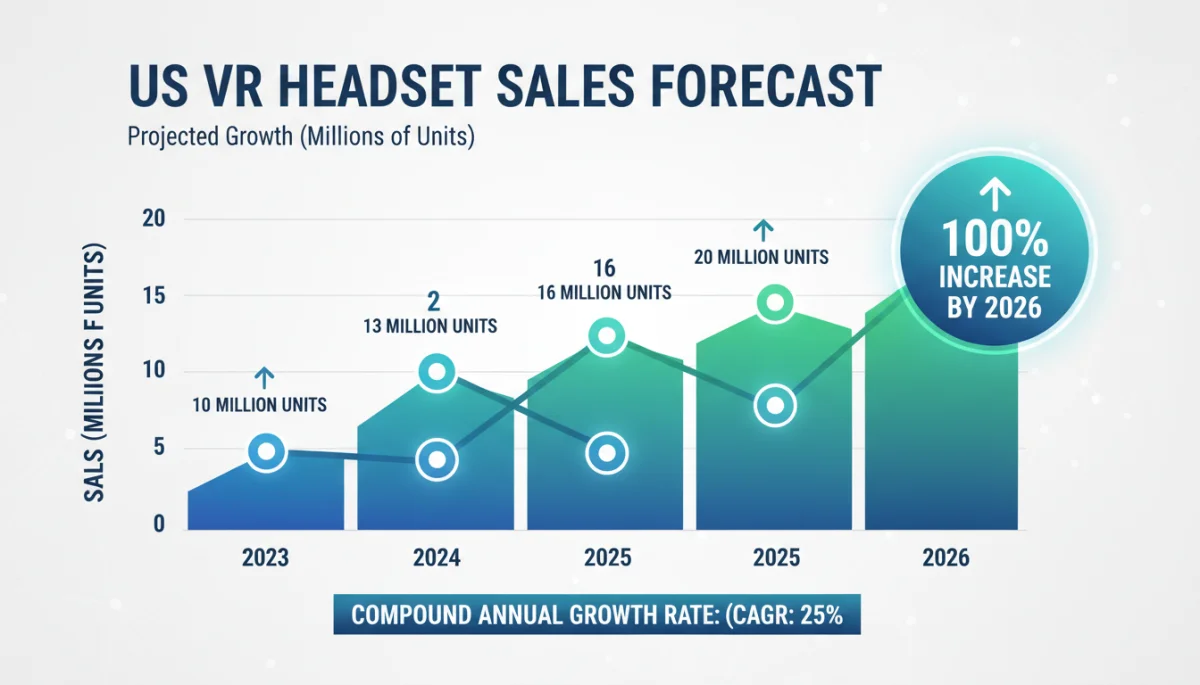
Looking beyond the projected 10% increase in headset sales by 2026, the future of VR gaming in US households appears incredibly bright and full of transformative potential. The current growth trajectory is merely a prelude to a more integrated and ubiquitous presence of virtual reality in our daily lives.
Expect to see VR headsets become even more sophisticated, lighter, and potentially more fashionable, resembling regular eyewear. This evolution will make them less of a specialized gadget and more of a personal computing device.
Integration with augmented reality
The lines between virtual reality and augmented reality are blurring. Future devices are likely to offer mixed reality experiences, seamlessly blending digital content with the real world. This hybrid approach will unlock new possibilities for gaming and everyday applications.
- Seamless transition: Users will be able to switch between fully immersive VR and AR overlays without changing devices, enhancing flexibility.
- Real-world interaction: AR elements will allow games to interact with the user’s physical environment, creating highly personalized and dynamic experiences.
- Everyday utility: Mixed reality could integrate gaming with productivity and communication tools, making VR headsets indispensable.
The continuous development of haptic suits, advanced brain-computer interfaces, and AI-driven virtual characters will further deepen immersion and interactivity. These advancements promise to deliver experiences that are almost indistinguishable from reality, pushing the boundaries of what gaming can be.
Ultimately, the continued growth of VR gaming adoption in US households reflects a broader societal shift towards immersive digital experiences. As technology matures and content diversifies, VR will cement its position not just as a gaming platform, but as a fundamental component of future entertainment and interaction.
| Key Aspect | Brief Description |
|---|---|
| Headset Sales Projection | Expected 10% increase in VR headset sales in US households by 2026. |
| Driving Factor: Accessibility | Standalone VR headsets significantly lower entry barriers and simplify user experience. |
| Content Evolution | Growing library of high-quality, diverse games and social experiences. |
| Future Outlook | Integration with AR, lighter devices, and deeper immersion beyond 2026. |
Frequently asked questions about VR gaming adoption
The growth is primarily driven by advancements in standalone headset technology, increased content quality and diversity, more affordable pricing, and growing consumer awareness. These factors combine to make VR gaming more accessible and appealing to a broader audience.
Analysts project a significant 10% increase in VR headset sales in US households by 2026. This forecast reflects sustained market momentum and the continued maturation of VR technology and its content ecosystem.
Standalone VR headsets, like the Meta Quest, simplify the user experience by eliminating the need for a powerful PC or external sensors. Their all-in-one design and lower price point make VR more convenient and affordable for the average consumer.
Yes, challenges include the remaining cost barrier for high-end systems, the persistent issue of motion sickness for some users, and the need to broaden content appeal beyond traditional gamers to fully penetrate the mainstream market.
Beyond 2026, VR gaming is expected to see further integration with augmented reality, leading to mixed reality experiences. Devices will likely become lighter and more advanced, with deeper immersion through haptic feedback and AI-driven interactions, making VR an integral part of daily life.
Conclusion
The narrative surrounding virtual reality gaming adoption in US households is one of undeniable growth and exciting potential. With a projected 10% increase in headset sales by 2026, the trajectory is clear: VR is transitioning from a nascent technology to a fundamental component of modern entertainment. Driven by accessible standalone headsets, a rich tapestry of engaging content, and continuous technological innovation, virtual reality is poised to offer increasingly immersive and interactive experiences. As the industry matures, addressing challenges like cost and comfort will further solidify its place in homes across the nation, promising a future where virtual worlds are seamlessly integrated into our daily lives.