Ransomware Attacks on the Rise: Protect Your Data Now

Anúncios
The escalating threat of ransomware attacks necessitates immediate and comprehensive strategies to protect digital data, requiring individuals and organizations to implement advanced cybersecurity measures and proactive incident response plans in the coming year.
The digital landscape is constantly evolving, and with it, the sophistication of cyber threats. One of the most insidious and pervasive dangers facing individuals and organizations today is ransomware. Understanding why ransomware data protection is critical has never been more urgent as these attacks are demonstrably on the rise, posing a significant risk to your valuable information in the next 12 months.
Anúncios
The escalating threat of ransomware: what you need to know
Ransomware attacks have moved beyond simple opportunistic strikes to highly targeted, sophisticated operations. These attacks can cripple businesses, compromise personal data, and demand hefty ransoms, often in cryptocurrency, for the safe return of encrypted files. The sheer volume and increasing complexity of these threats mean that vigilance and proactive defense are no longer optional but essential.
Cybercriminals are continuously refining their tactics, exploiting new vulnerabilities and employing social engineering techniques to gain access to networks. The financial and reputational damage caused by a successful ransomware attack can be catastrophic, making prevention paramount.
Understanding modern ransomware tactics
Today’s ransomware gangs often employ multi-extortion tactics, not only encrypting data but also exfiltrating it and threatening to publish it if the ransom is not paid. This adds another layer of pressure on victims, increasing the likelihood of payment.
- Phishing and spear-phishing: These remain primary vectors, tricking users into opening malicious attachments or clicking compromised links.
- Vulnerability exploitation: Attackers actively scan for unpatched software and network vulnerabilities to gain initial access.
- Supply chain attacks: Compromising a single vendor can provide access to numerous downstream clients, amplifying the impact of an attack.
- Ransomware-as-a-Service (RaaS): This model lowers the barrier to entry for aspiring cybercriminals, making sophisticated attacks more accessible.
The evolution of ransomware means that defense strategies must also adapt, focusing on a holistic approach that covers technological safeguards, human awareness, and robust incident response plans. Staying informed about these evolving threats is the first step toward effective protection.
Building a robust cybersecurity foundation
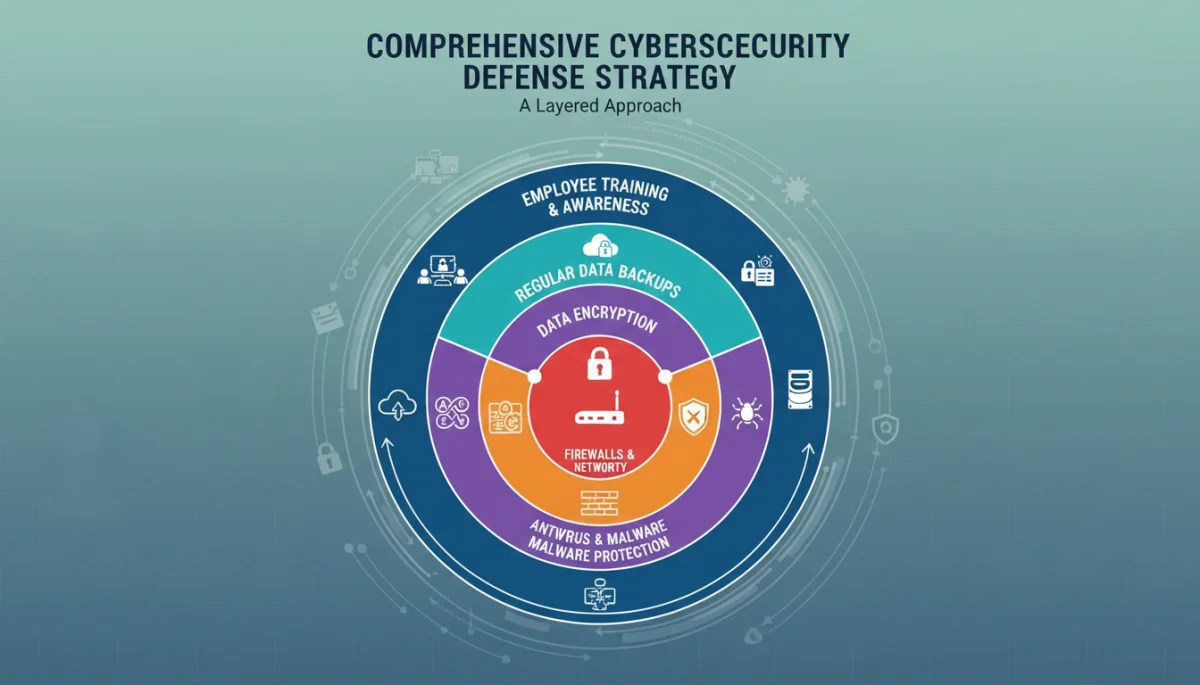
Effective ransomware data protection begins with a strong cybersecurity foundation. This involves implementing a layered defense strategy that addresses multiple potential entry points for attackers. Without these fundamental safeguards, even the most advanced individual measures can be easily circumvented.
A comprehensive approach ensures that if one layer of defense is breached, others are in place to detect, contain, and mitigate the threat. This proactive stance is crucial in minimizing the impact of a potential attack.
Anúncios
Essential security measures for individuals and businesses
Both individuals and organizations share common ground when it comes to fundamental cybersecurity practices. The scale might differ, but the principles remain the same: reduce your attack surface and increase your resilience.
- Strong password policies and multi-factor authentication (MFA): Enforce complex passwords and enable MFA on all accounts to prevent unauthorized access.
- Regular software updates and patching: Keep all operating systems, applications, and firmware up to date to address known vulnerabilities.
- Next-generation antivirus and endpoint detection and response (EDR): Deploy advanced security solutions that can detect and respond to novel threats.
- Network segmentation: For businesses, dividing networks into smaller, isolated segments can limit the lateral movement of attackers.
By prioritizing these foundational elements, you create a more secure environment, significantly reducing the chances of a successful ransomware infiltration. It’s about making your systems a less attractive target for cybercriminals.
The critical role of data backup and recovery
Even with the most robust preventative measures, no system is entirely impervious to attack. This is why a comprehensive data backup and recovery strategy is not just important but absolutely critical for ransomware data protection. It serves as your last line of defense, ensuring business continuity and data integrity.
A well-executed backup plan allows you to restore your systems and data to a pre-attack state, effectively neutralizing the impact of ransomware without having to pay the ransom. This capability can be the difference between a minor disruption and a catastrophic loss.
Implementing a 3-2-1 backup rule
The 3-2-1 backup rule is a widely accepted best practice for ensuring data resilience. Following this rule significantly reduces the risk of data loss, even in the face of a sophisticated ransomware attack or other disaster.
- Three copies of your data: This includes the original data and at least two backups.
- Two different media types: Store backups on at least two different storage types (e.g., internal hard drive, external drive, cloud storage).
- One offsite copy: Keep at least one backup copy in a separate geographical location to protect against localized disasters.
Regularly test your backups to ensure they are recoverable and that the recovery process is smooth and efficient. An untested backup is as good as no backup at all. This diligence ensures that when an incident occurs, you can confidently restore your operations.
Employee training and human firewall
Technology alone cannot fully protect against ransomware; the human element remains a primary target for cybercriminals. Employee training is an indispensable component of any effective ransomware data protection strategy, transforming your workforce into a crucial line of defense.
A well-informed and vigilant staff can identify and report suspicious activities, preventing attacks before they can cause significant damage. Education empowers employees to make better security decisions, reducing the likelihood of falling victim to social engineering tactics.
Cultivating a security-aware culture
Security awareness should not be a one-time event but an ongoing process, woven into the fabric of an organization’s culture. Regular training, clear policies, and continuous reinforcement are key to building a human firewall.
- Phishing simulation exercises: Conduct regular simulated phishing attacks to test employee vigilance and provide immediate feedback.
- Recognizing social engineering: Train employees to identify common social engineering ploys, such as urgent requests, suspicious links, and unexpected attachments.
- Reporting suspicious activity: Establish clear protocols for reporting potential security incidents, encouraging a culture of openness and prompt action.
- Best practices for remote work: Educate remote employees on securing their home networks and devices, as these often present new vulnerabilities.
By investing in comprehensive security awareness training, organizations can significantly reduce the risk of human error leading to a ransomware breach. Empowering employees to be proactive defenders is a powerful deterrent against cyber threats.
Incident response and recovery planning
Despite best efforts in prevention, a ransomware attack can still occur. Having a well-defined incident response plan is therefore essential for effective ransomware data protection. This plan outlines the steps an organization will take from detection to recovery, minimizing downtime and mitigating damage.
An effective incident response plan ensures a coordinated and efficient reaction, reducing panic and allowing for systematic problem-solving. It’s about being prepared for the worst and having a clear roadmap to navigate through a crisis.
Key components of an effective response plan
A robust incident response plan should be regularly reviewed, updated, and practiced through drills to ensure its effectiveness. It should address all phases of an attack, from initial detection to post-incident analysis.
- Detection and analysis: Establish clear procedures for identifying and assessing a ransomware attack, including monitoring tools and alert systems.
- Containment: Define steps to isolate affected systems and prevent the ransomware from spreading further across the network.
- Eradication: Outline procedures for removing the ransomware, patching vulnerabilities, and ensuring the threat is completely eliminated.
- Recovery: Detail the process for restoring data from backups, rebuilding compromised systems, and bringing operations back online.
- Post-incident review: Conduct a thorough analysis of the incident to identify root causes, improve security measures, and update the response plan.
A well-practiced incident response plan can significantly reduce the financial and operational impact of a ransomware attack, allowing organizations to recover more quickly and effectively. It’s an investment in resilience that pays dividends when a crisis strikes.
Future-proofing your defenses: emerging trends
The cybersecurity landscape is constantly evolving, with new threats and defense mechanisms emerging regularly. To ensure effective ransomware data protection in the long term, it is crucial to stay abreast of these trends and continuously adapt your security strategies. Proactive adaptation is key to staying ahead of cybercriminals.
Ignoring these emerging trends can leave organizations vulnerable to new forms of attack. By understanding and integrating future-proof defenses, you can build a more resilient and sustainable security posture.
Advanced strategies for the next 12 months
Looking ahead, several key areas will become increasingly important in the fight against ransomware. Embracing these advanced strategies will enhance your ability to protect critical data and maintain operational integrity.
- Zero Trust architecture: Implement a ‘never trust, always verify’ approach, requiring strict verification for every user and device attempting to access resources, regardless of their location.
- AI and machine learning in security: Leverage AI-powered tools for advanced threat detection, anomaly identification, and automated response capabilities.
- Immutable backups: Explore solutions that create unchangeable backup copies, protecting them from deletion or modification by ransomware.
- Cyber insurance: Consider specialized cyber insurance policies that can help cover the financial costs associated with a ransomware attack, including recovery, legal fees, and reputational damage.
By strategically adopting these advanced defense mechanisms, organizations can significantly strengthen their resilience against evolving ransomware threats. Continuous improvement and foresight are paramount in the ongoing battle for digital security.
| Key Protection Strategy | Brief Description |
|---|---|
| Robust Cybersecurity Foundation | Implement strong passwords, MFA, regular updates, and advanced antivirus solutions to prevent initial breaches. |
| Comprehensive Data Backup | Adhere to the 3-2-1 backup rule with offsite and immutable copies, regularly testing recovery processes. |
| Employee Training & Awareness | Educate staff on identifying phishing, social engineering, and reporting suspicious activities to build a human firewall. |
| Incident Response Plan | Develop and practice a clear plan for detection, containment, eradication, and recovery from ransomware attacks. |
Frequently asked questions about ransomware protection
Ransomware is malicious software that encrypts your files, making them inaccessible. Attackers then demand a ransom, typically in cryptocurrency, for the decryption key. It usually spreads through phishing emails, compromised websites, or exploiting software vulnerabilities to gain unauthorized access.
The rise is attributed to several factors, including the profitability for cybercriminals, the proliferation of Ransomware-as-a-Service (RaaS) models, and the increasing reliance on digital systems by businesses and individuals, creating more potential targets.
Generally, cybersecurity experts advise against paying the ransom. There’s no guarantee that paying will restore your data, and it can encourage further attacks. Instead, focus on robust backups and incident response plans to avoid this dilemma entirely.
The frequency of backups depends on how often your data changes and its criticality. For critical data, daily or even continuous backups are recommended. For less dynamic data, weekly or monthly backups might suffice. Always follow the 3-2-1 rule.
Zero Trust is a security model that assumes no user or device, whether inside or outside an organization’s network, should be trusted by default. Every access attempt is verified, authenticated, and authorized, minimizing the risk of unauthorized access and lateral movement.
Conclusion
The persistent and evolving threat of ransomware demands a proactive and multi-faceted approach to data protection. By building a strong cybersecurity foundation, implementing rigorous backup strategies, fostering a security-aware culture among employees, and developing comprehensive incident response plans, individuals and organizations can significantly bolster their defenses. Staying informed about emerging trends and continuously adapting security measures will be crucial in safeguarding valuable digital assets against the relentless tide of ransomware attacks in the coming year and beyond. Ultimately, resilience in the face of these threats hinges on preparedness and continuous vigilance.