Quantum Cybersecurity: 4 US Strategies for 2026 Data Protection
Anúncios
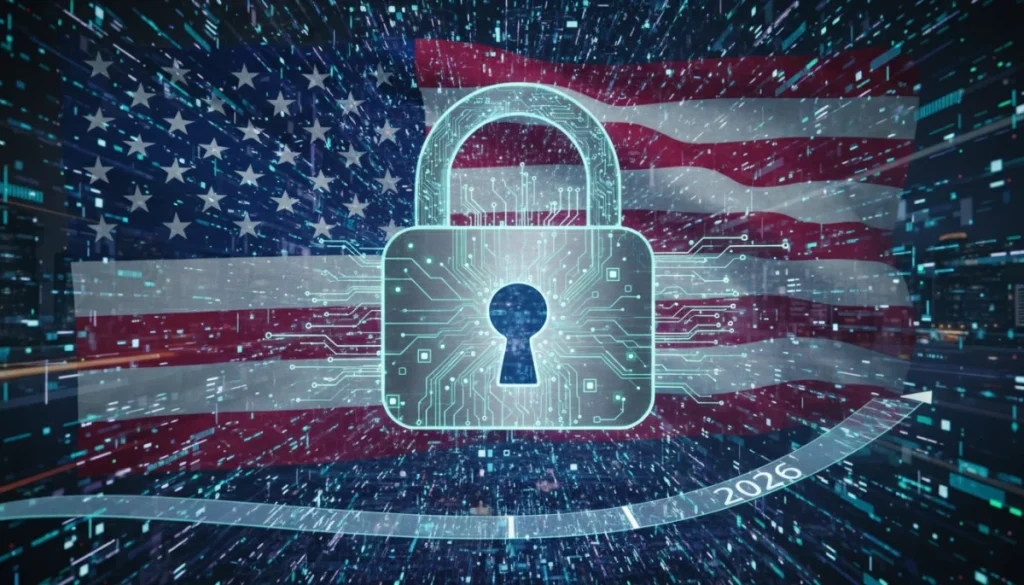
The United States is implementing a multi-faceted approach, including post-quantum cryptography and supply chain security, to fortify its digital infrastructure against the imminent threats posed by quantum computing by 2026.
As the digital landscape evolves at an unprecedented pace, the looming threat of quantum computing to current encryption standards is no longer a distant concern but an urgent reality. The need for robust cybersecurity in the quantum age: 4 US strategies to protect data from 2026 threats is paramount, demanding proactive measures to safeguard national security, economic stability, and individual privacy.
Anúncios
Understanding the Quantum Threat to Current Cryptography
The advent of quantum computing promises revolutionary advancements across various fields, yet it also presents a formidable challenge to conventional cybersecurity. Current encryption methods, foundational to securing everything from financial transactions to government communications, rely on mathematical problems that are computationally infeasible for classical computers to solve. However, quantum computers, with their ability to perform calculations at an exponential rate, could easily break these widely used cryptographic algorithms.
This paradigm shift necessitates a complete overhaul of our digital defense mechanisms. The potential for quantum algorithms, such as Shor’s algorithm, to decrypt RSA and ECC—the backbone of today’s secure communications—creates an urgent deadline. Experts predict that a cryptographically relevant quantum computer (CRQC) could emerge as early as 2026, making the transition to quantum-resistant encryption a critical national security imperative for the United States.
The implications of this threat extend beyond mere data breaches. Entire infrastructures, including critical utilities, military communications, and financial systems, could become vulnerable. Therefore, understanding the nature of this threat is the first step in formulating effective countermeasures and ensuring the continued integrity of digital information.
Strategy 1: Accelerating Post-Quantum Cryptography (PQC) Development and Adoption
The most direct defense against quantum attacks is the development and widespread implementation of Post-Quantum Cryptography (PQC). These are cryptographic algorithms designed to be secure against both classical and quantum computers. The US government, through agencies like the National Institute of Standards and Technology (NIST), has been at the forefront of this global effort, evaluating and standardizing new PQC algorithms.
NIST’s Standardization Process
NIST initiated a multi-year process to solicit, evaluate, and standardize quantum-resistant cryptographic algorithms. This rigorous process involves cryptographers worldwide, ensuring that the selected algorithms are robust and secure against future quantum capabilities. The goal is to provide a suite of standardized algorithms that can replace existing vulnerable ones.
- Selection of primary PQC algorithms for standardization.
- Ongoing evaluation of additional algorithms for future use cases.
- Development of implementation guidelines and best practices.
- Collaboration with international partners to ensure global interoperability.
The urgency stems from the need to transition before a CRQC becomes widely available. This transition is not merely a software update; it involves a complex process of identifying all cryptographic assets, upgrading systems, and training personnel. The US strategy emphasizes not just the development but also the rapid, secure adoption across federal agencies and critical infrastructure sectors.
Anúncios
Accelerating PQC development and adoption is crucial for establishing a resilient cryptographic foundation. This proactive stance ensures that data protected today remains secure even against tomorrow’s quantum adversaries, minimizing the window of vulnerability and maintaining trust in digital systems.
Strategy 2: Securing the Supply Chain for Quantum Resilience
Beyond cryptographic algorithms, the security of the digital supply chain is a critical vulnerability point that quantum computing could exacerbate. Hardware and software components, from chips to operating systems, can be compromised at various stages of their lifecycle, introducing backdoors or weaknesses that quantum adversaries could exploit. The US strategy heavily emphasizes securing the supply chain to prevent such compromises.


This involves a comprehensive approach to vetting components, ensuring integrity from design to deployment. The goal is to build trust in the underlying technology that will host quantum-resistant solutions. Without a secure supply chain, even the strongest PQC algorithms could be undermined by compromised hardware or software.
Key Initiatives in Supply Chain Security
To address these challenges, the US government is implementing several key initiatives. These include establishing stringent procurement standards, fostering domestic production of critical components, and developing advanced methods for hardware and software attestation. The emphasis is on transparency and verifiability throughout the supply chain.
- Mandating secure-by-design principles for all new systems.
- Implementing supply chain risk management frameworks.
- Encouraging independent third-party evaluations of hardware and software.
- Promoting information sharing about supply chain vulnerabilities.
Securing the supply chain is an intricate and ongoing process that requires collaboration between government, industry, and academia. This strategy aims to create an ecosystem where quantum-resilient solutions are built upon a foundation of verifiable trust, thereby protecting against both classical and quantum-era threats.
Strategy 3: Investing in Quantum-Resilient Infrastructure and Education
The transition to a quantum-safe world is not solely about algorithms; it also requires significant investment in infrastructure upgrades and a highly skilled workforce. Existing IT infrastructure must be assessed for its compatibility with new PQC standards, and plans must be developed for phased migration. This includes networks, data centers, and endpoint devices, all of which will need to be capable of supporting the new cryptographic protocols.
Equally important is the development of a quantum-aware cybersecurity workforce. The complexity of quantum threats and PQC solutions demands specialized knowledge and expertise. Educational programs and training initiatives are vital to ensure that cybersecurity professionals are equipped to design, implement, and manage quantum-resistant systems.
Building a Quantum-Ready Workforce
Educational institutions and government agencies are collaborating to create curricula that cover quantum mechanics, quantum computing principles, and post-quantum cryptography. This includes developing certification programs and offering continuous professional development to keep pace with rapid technological advancements.
- Developing university courses focused on quantum cybersecurity.
- Creating online training modules for IT professionals.
- Funding research grants for PQC implementation challenges.
- Establishing centers of excellence for quantum information science.
Investing in quantum-resilient infrastructure and education is a long-term commitment that ensures the US has both the technological backbone and the human capital necessary to navigate the quantum age securely. These investments are critical for maintaining a competitive edge and protecting national interests.
Strategy 4: International Collaboration and Policy Development
Cybersecurity is a global challenge, and the threat of quantum computing transcends national borders. No single nation can effectively address this threat in isolation. Therefore, international collaboration and the development of harmonized policies are essential components of the US strategy. This involves working with allies and partners to share intelligence, coordinate research efforts, and align on PQC standards.
Establishing common standards and best practices across nations will facilitate a smoother global transition to quantum-resistant cryptography, preventing fragmentation and ensuring interoperability. This collaborative approach enhances collective security and builds a stronger global defense against potential quantum adversaries.
Harmonizing Global Quantum Security Efforts
The US is actively engaging in multilateral forums and bilateral discussions to foster a unified approach to quantum cybersecurity. This includes sharing threat intelligence, cooperating on cryptographic research, and promoting the adoption of standardized PQC algorithms worldwide. Such cooperation is vital for protecting global critical infrastructure and supply chains.
- Participating in international PQC standardization bodies.
- Sharing threat intelligence with allied nations.
- Coordinating national strategies to avoid cryptographic islands.
- Developing joint exercises to test quantum resilience.
International collaboration and policy development underscore the interconnected nature of modern cybersecurity. By working together, nations can pool resources, share expertise, and collectively accelerate the global transition to a quantum-safe future, thereby strengthening the security posture of all participants.
Challenges and the Road Ahead for Quantum Cybersecurity
While the US has outlined clear strategies, the path to quantum cybersecurity is fraught with challenges. The sheer scale of the cryptographic transition, often referred to as ‘cryptographic agility,’ is immense. Organizations must inventory all cryptographic assets, understand their dependencies, and plan for a phased migration that minimizes disruption while maximizing security. This process requires significant resources, technical expertise, and careful coordination.
Another significant challenge lies in the unknown nature of future quantum computing capabilities. While current PQC algorithms are designed to be quantum-resistant, the field of quantum computing is rapidly evolving. Continuous research and development are necessary to ensure that PQC solutions remain robust against future advancements in quantum technology. This necessitates a flexible and adaptive approach to cybersecurity.
Furthermore, the human element remains a critical factor. The global shortage of cybersecurity professionals is already a pressing issue, and the specialized skills required for quantum cybersecurity will only exacerbate this problem. Training and retaining a skilled workforce capable of understanding and implementing these complex solutions will be vital for success. The road ahead demands vigilance, innovation, and unwavering commitment.
The Importance of Proactive Measures Against Quantum Threats
The proactive measures being undertaken by the US are not merely defensive; they represent a fundamental shift in how nations approach digital security. Waiting until a cryptographically relevant quantum computer is fully operational would be catastrophic, as it would leave little to no time for a secure transition. The ability to decrypt sensitive historical data, often referred to as ‘harvest now, decrypt later,’ makes immediate action imperative.
By implementing these four strategies—accelerating PQC development, securing the supply chain, investing in infrastructure and education, and fostering international collaboration—the US aims to create a robust and resilient digital ecosystem. This forward-thinking approach ensures that critical data and infrastructure are protected not just for today, but for decades to come, securing the nation’s future in the quantum age.
The emphasis on a multi-faceted approach acknowledges the complexity of the threat and the interconnectedness of modern digital systems. It’s a race against time, but with concerted effort and strategic planning, the US is positioning itself to successfully navigate the quantum transition and emerge with enhanced cybersecurity capabilities.
| Key Strategy | Brief Description |
|---|---|
| PQC Development & Adoption | NIST-led standardization and rapid implementation of quantum-resistant algorithms. |
| Secure Supply Chain | Vetting components and ensuring integrity from design to deployment. |
| Infrastructure & Education | Upgrading IT systems and developing a specialized quantum cybersecurity workforce. |
| International Collaboration | Sharing intelligence and coordinating global PQC standards with allies. |
Frequently Asked Questions About Quantum Cybersecurity
Quantum computers threaten to break current public-key encryption algorithms like RSA and ECC, which secure most of today’s digital communications and transactions, potentially exposing vast amounts of sensitive data.
PQC refers to new cryptographic algorithms designed to be secure against attacks from both classical and quantum computers. NIST is leading the global effort to standardize these quantum-resistant algorithms for widespread adoption.
Even with strong PQC, vulnerabilities in the hardware and software supply chain could be exploited by quantum adversaries. Ensuring integrity from design to deployment prevents backdoors and strengthens overall quantum resilience.
Investing in education is crucial to developing a skilled workforce capable of understanding, implementing, and managing complex quantum-resistant systems. This includes specialized training and academic programs in quantum information science.
Quantum threats are global, requiring international cooperation to share intelligence, coordinate research, and align on PQC standards. This collaboration strengthens collective security and ensures global interoperability in the quantum age.
Conclusion
The impending quantum threat demands an immediate and comprehensive response, and the United States’ proactive approach through its four key strategies represents a critical step towards securing global digital infrastructure. By prioritizing the development and adoption of Post-Quantum Cryptography, fortifying the supply chain, investing in resilient infrastructure and a skilled workforce, and fostering international cooperation, the US aims to safeguard sensitive data from the potential decryption capabilities of quantum computers by 2026. This multi-faceted strategy is not just about defense; it’s about building a future where digital trust and security can endure the transformative power of quantum technology.