Cloud Gaming vs. Local Hardware: 2026 US Performance Battle
Anúncios
For US gamers in 2026, the choice between cloud gaming and local hardware hinges on a nuanced balance of performance, cost, and accessibility, with both technologies evolving rapidly to meet diverse player needs.
Anúncios
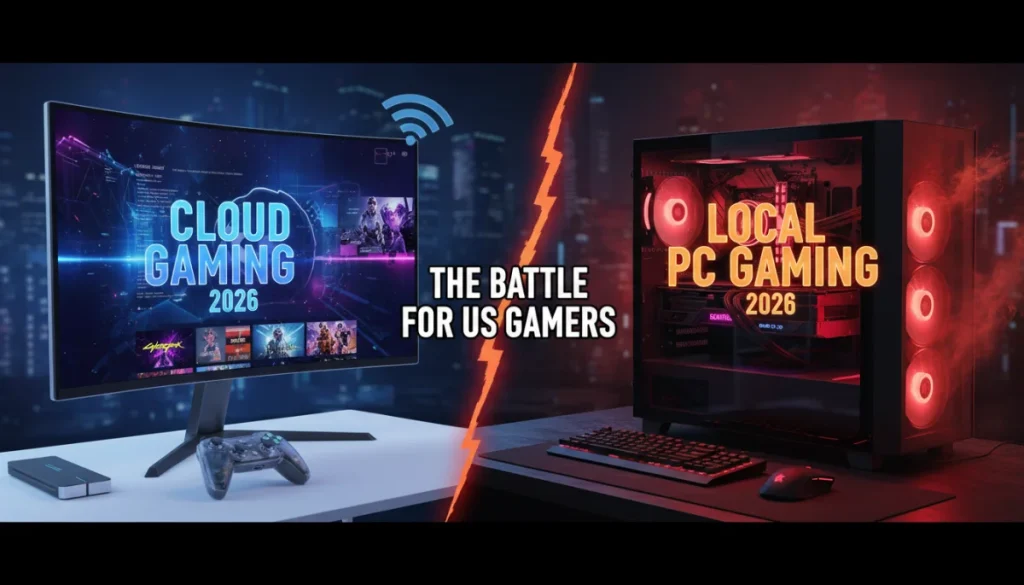
The landscape of interactive entertainment is constantly shifting, and in 2026, the debate between cloud gaming vs. local hardware for US gamers has reached a critical juncture. As technology advances, both paradigms offer compelling advantages and distinct challenges. This article delves into a comprehensive performance comparison, helping you decide which path is best suited for your gaming future.
The rise of cloud gaming: promises and realities in 2026
Cloud gaming, once a niche concept, has matured significantly by 2026, offering a compelling alternative to traditional gaming setups. Its appeal lies in accessibility and convenience, allowing gamers to stream high-fidelity titles without the need for expensive, powerful local hardware. However, the experience is heavily reliant on internet infrastructure, a factor that varies considerably across the United States.
Major players in the cloud gaming space have invested heavily in expanding their server networks and optimizing streaming protocols. This has led to noticeable improvements in image quality and a reduction in perceptible lag for many users. Yet, the promise of a truly seamless experience for every gamer, regardless of location or internet speed, remains an ongoing challenge.
Technological advancements driving cloud gaming
Several key technological breakthroughs have propelled cloud gaming forward. These include:
- Improved compression algorithms: More efficient video compression allows for higher quality streams with less bandwidth.
- Edge computing integration: Placing servers closer to users minimizes latency, crucial for responsive gameplay.
- Adaptive streaming technologies: Dynamic adjustments to stream quality based on real-time network conditions ensure a more consistent experience.
Despite these advancements, the inherent nature of streaming means that even the best cloud gaming services cannot entirely eliminate latency. This is particularly critical for competitive multiplayer games where split-second reactions are paramount. For single-player narrative experiences or more casual gaming, the impact of minor latency is often negligible, making cloud gaming a highly attractive option.
Local hardware dominance: raw power and uncompromised control
For many US gamers, the allure of local hardware remains undiminished in 2026. Building or buying a high-end gaming PC or console still represents the pinnacle of performance, offering uncompromised graphical fidelity, buttery-smooth frame rates, and zero input lag. The tangible ownership of hardware also provides a sense of control and customization that cloud services cannot replicate.
Anúncios
The latest generation of GPUs and CPUs continues to push boundaries, delivering photorealistic visuals and complex game worlds that demand significant processing power. Local hardware allows gamers to experience these titles at their absolute best, often exceeding the visual quality achievable through even the most advanced cloud streaming.
Advantages of investing in local gaming rigs
The benefits of a dedicated local gaming setup are clear:
- Zero input latency: Direct connection between input devices and the game eliminates streaming lag.
- Maximum graphical fidelity: Games run at their native resolutions and highest graphical settings.
- Offline playability: Enjoy your games anywhere, anytime, without an internet connection.
However, this raw power comes with a significant financial investment. High-end components are expensive, and the need for frequent upgrades to stay current with the latest games adds to the long-term cost. Furthermore, the physical space required for a powerful setup and the associated noise and heat generation can be deterrents for some users.
Performance metrics: latency, graphics, and frame rates in focus
When comparing cloud gaming vs. local hardware, a deep dive into specific performance metrics is essential. These factors directly impact the gaming experience and often dictate a gamer’s preference.
Latency, the delay between input and on-screen action, is arguably the most critical differentiator. Local hardware boasts near-zero latency, offering instantaneous response times. Cloud gaming, by its very nature, introduces a network latency component. While services have significantly reduced this, it can still be a factor in fast-paced or competitive titles.
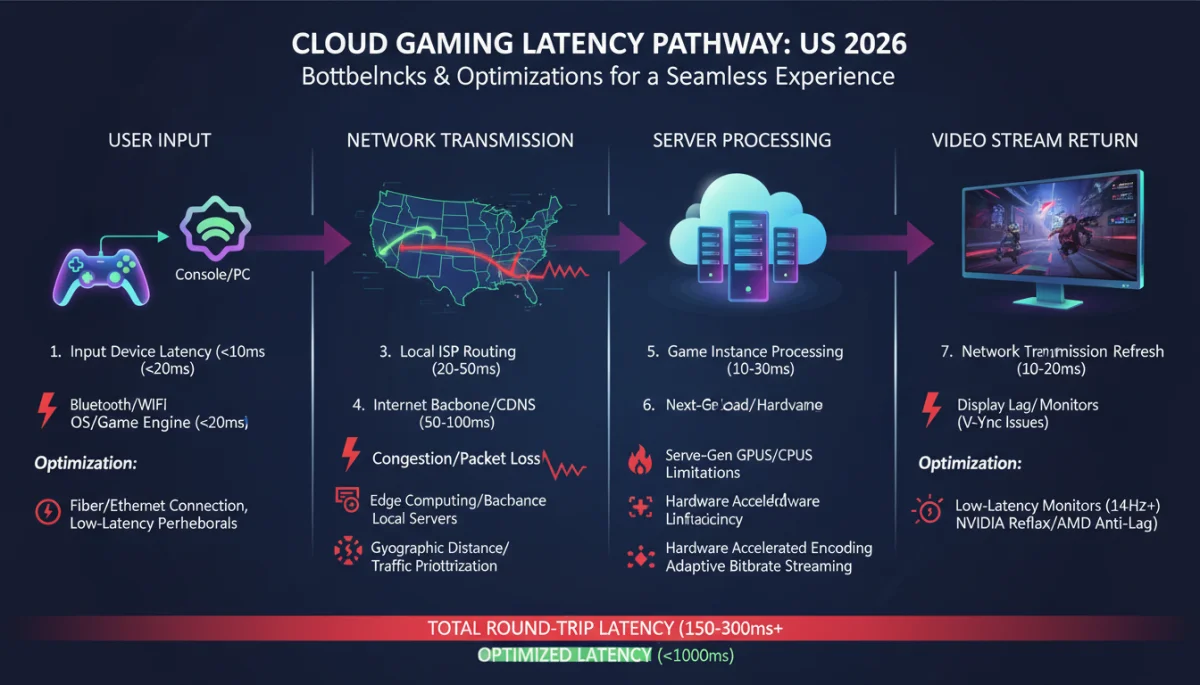
Graphics and frame rates are also key. Local hardware, especially high-end PCs, can render games at native 4K resolutions with ray tracing and ultra settings, achieving frame rates well over 100 FPS. Cloud gaming aims to replicate this, often delivering 1080p or 1440p at 60 FPS, with 4K options becoming more common but often at the cost of higher bandwidth requirements and potential visual artifacts due to compression.
In essence, local hardware provides a consistently superior and uncompromised visual and responsive experience, provided the user has invested in top-tier components. Cloud gaming offers a highly accessible and often impressive experience that, while not always matching local hardware’s peak performance, delivers a ‘good enough’ experience for a vast majority of games and players, especially those with robust internet connections.
Cost analysis: initial investment vs. subscription models
The financial aspect is a significant determinant for many US gamers when weighing cloud gaming vs. local hardware. The cost structures are fundamentally different, appealing to different budget philosophies.
Local hardware demands a substantial upfront investment. A high-end gaming PC can easily cost upwards of $1500-$3000, and current-generation consoles typically range from $400-$600. Beyond the initial purchase, there are ongoing costs for upgrades, peripherals, and individual game purchases. This model suits gamers who prefer ownership and are willing to pay a premium for peak performance and customization.
Subscription benefits of cloud gaming
Cloud gaming, conversely, operates on a subscription-based model, significantly reducing the initial barrier to entry. For a monthly fee, users gain access to a library of games or the ability to stream games they already own. This makes gaming accessible to a broader audience who might not be able or willing to invest in expensive hardware.
- Lower upfront cost: No need to purchase expensive gaming PCs or consoles.
- Reduced upgrade cycles: The cloud provider handles hardware upgrades, ensuring access to the latest tech.
- Flexible access: Play on various devices, from smart TVs to tablets, without additional hardware purchases.
While the monthly fees add up over time, the total cost of ownership for cloud gaming can be considerably lower than local hardware over a typical gaming cycle (e.g., 3-5 years), especially when factoring in hardware depreciation and the need for upgrades. However, the reliance on a stable, high-speed internet connection means potential additional costs for internet service providers or data overages for some users.
Internet infrastructure: the backbone of cloud gaming in the US
The success and widespread adoption of cloud gaming in the United States by 2026 are inextricably linked to the quality and availability of internet infrastructure. While urban and suburban areas generally boast robust fiber optic and high-speed broadband connections, rural regions often lag, creating a digital divide that directly impacts the cloud gaming experience.
For optimal cloud gaming, a stable connection with low latency and high bandwidth is paramount. Most services recommend a minimum of 25-50 Mbps for 1080p streaming, with 4K requiring significantly more. Even with sufficient bandwidth, packet loss and network congestion can introduce perceptible lag and visual artifacts, diminishing the experience. Improvements in 5G networks and ongoing fiber optic expansions are certainly helping, but nationwide consistency remains a challenge.
Challenges and opportunities for US internet connectivity
The diverse geography and varied investment in infrastructure across the US present both hurdles and potential for cloud gaming. Key points include:
- Regional disparities: Performance varies drastically between densely populated cities and remote rural areas.
- ISP limitations: Data caps and inconsistent speeds from internet service providers can hinder consistent high-quality streaming.
- 5G and satellite internet: Expanding 5G coverage and advancements in satellite internet (e.g., Starlink) offer promising solutions for underserved areas, though latency can still be a concern.
Ultimately, the quality of your internet connection will be the single most important factor determining whether cloud gaming is a viable and enjoyable option for you. For those with premium, low-latency broadband, cloud gaming offers an experience that can closely rival local hardware in many scenarios. For others, particularly in areas with less developed infrastructure, local hardware remains the only truly reliable path to high-performance gaming.
The future outlook: convergence or divergence by 2026?
Looking ahead to 2026 and beyond, the relationship between cloud gaming vs. local hardware is unlikely to be a zero-sum game. Instead, a future of both convergence and continued divergence seems most probable, catering to an ever-widening spectrum of US gamers.
We may see more hybrid models emerge, where local hardware handles some processing, while the cloud offloads resource-intensive tasks. This could manifest in consoles with reduced internal specs relying on cloud enhancement, or PC games offering cloud-boosted graphical options. Such convergence would aim to blend the best of both worlds: the low latency of local processing with the scalable power of the cloud.
Conversely, divergence will likely continue as local hardware pushes the absolute limits of graphical realism and performance, serving the enthusiast market. Cloud gaming, meanwhile, will continue its trajectory as the ultimate accessibility platform, reaching new audiences on a multitude of devices. The market is large enough to support both approaches, with each fulfilling distinct needs.
The ultimate winner in the long run won’t be one technology over the other, but rather the gamer who benefits from increased choice and accessibility. As internet infrastructure improves and cloud technologies become even more sophisticated, the lines between what’s possible locally and remotely will blur, offering a rich and varied gaming ecosystem for everyone.
| Key Aspect | Comparison Summary |
|---|---|
| Performance | Local hardware offers superior, uncompromised graphics and near-zero latency. Cloud gaming provides impressive visuals but is limited by network latency and compression. |
| Cost | Local hardware requires high initial investment and upgrade costs. Cloud gaming uses a subscription model with lower upfront costs but ongoing fees. |
| Accessibility | Cloud gaming offers broad device compatibility and ease of access. Local hardware requires dedicated gaming setups. |
| Internet Dependency | Cloud gaming is highly dependent on high-speed, low-latency internet. Local hardware offers offline playability. |
Frequently asked questions about cloud gaming vs. local hardware
While cloud gaming has significantly improved, local hardware still offers superior, uncompromised performance in terms of latency, graphical fidelity, and frame rates. Cloud gaming provides a highly accessible and often impressive experience that may not match local hardware’s peak, but is excellent for many gamers and game types.
Local hardware demands a significant upfront investment for components and upgrades. Cloud gaming operates on a subscription model, reducing initial costs but incurring ongoing fees. Over time, cloud gaming can be more cost-effective, especially when considering hardware depreciation and upgrade cycles.
Internet speed and stability are critically important for cloud gaming. A high-speed, low-latency connection (typically 25-50 Mbps minimum for 1080p, more for 4K) is essential for a smooth experience. Inconsistent internet can lead to lag, visual artifacts, and a frustrating gaming session.
For casual gamers, those on a budget, or those prioritizing accessibility across devices, cloud gaming can largely replace local hardware. However, for competitive players, graphical enthusiasts, or those in areas with poor internet, a dedicated gaming PC or console still offers a superior and more reliable experience.
By 2026, expect further improvements in compression algorithms, wider adoption of edge computing to reduce latency, and more sophisticated adaptive streaming technologies. 5G expansion and advanced satellite internet will also enhance accessibility in previously underserved regions, making the cloud gaming experience more robust and consistent.
Conclusion
The 2026 landscape for US gamers presents a dynamic choice between the accessibility and evolving performance of cloud gaming and the raw power and control of local hardware. While local rigs continue to offer the pinnacle of graphical fidelity and zero-latency gameplay, cloud platforms are rapidly closing the gap, particularly for those with robust internet connections. Ultimately, the optimal choice depends on individual priorities: budget, internet access, preferred game genres, and the desire for uncompromised performance versus widespread accessibility. Both technologies are set to coexist and evolve, ensuring a rich and diverse future for gaming.