Advanced Material Science: 7 Breakthroughs Reshaping US Engineering by 2026

Anúncios
Advanced material science is set to redefine US engineering by 2026, with seven key breakthroughs poised to revolutionize sectors from aerospace to medicine, driving unprecedented innovation and economic growth across various industries.
Anúncios
The landscape of engineering in the United States is on the cusp of a profound transformation, driven by incredible advancements in advanced material science. By 2026, we anticipate seeing the widespread integration of revolutionary materials that will not only enhance existing technologies but also unlock entirely new possibilities across various sectors. These breakthroughs promise to redefine efficiency, sustainability, and performance in ways we are only just beginning to comprehend.
Self-Healing Polymers: Longevity and Resilience Redefined
Self-healing polymers represent a monumental leap in material science, offering the ability to autonomously repair damage. This innovation promises to extend the lifespan of products and reduce waste, fundamentally changing how we approach material durability and maintenance across numerous industries.
The concept behind self-healing polymers involves embedding microscopic capsules containing healing agents within the material’s structure. When a crack forms, these capsules rupture, releasing the agents that then react to mend the damage. This process can occur repeatedly, significantly enhancing the material’s resilience and longevity, making it ideal for applications where repair is difficult or costly.
Mechanisms of Self-Healing
- Encapsulated Agents: Microcapsules filled with monomers and catalysts are dispersed within the polymer matrix. When damage occurs, the capsules break, releasing the healing agents into the crack.
- Vascular Networks: Inspired by biological systems, these materials incorporate interconnected channels that transport healing agents to damaged areas, allowing for more extensive and repeated repairs.
- Intrinsic Healing: Some polymers possess inherent molecular structures that allow them to reform bonds after damage, often requiring external stimuli like heat or light to initiate the healing process.
The implications of self-healing polymers are vast. Imagine bridges that repair their own micro-cracks, pipelines that seal leaks automatically, or electronic devices with screens that mend themselves after minor scratches. This technology not only promises significant cost savings in maintenance and replacement but also contributes to a more sustainable future by reducing material consumption and landfill waste. The automotive, aerospace, and construction industries are particularly keen on integrating these resilient materials, foreseeing a future where infrastructure and vehicles are inherently more durable.
As research progresses, the complexity and efficiency of self-healing polymers continue to improve. The focus is now on developing materials that can heal larger damages, at varying temperatures, and with greater speed, making them viable for an even broader range of challenging applications. This breakthrough is set to usher in an era where materials are not merely static components but active participants in their own preservation.
Advanced Composites: Lighter, Stronger, Smarter Structures
Advanced composites, particularly those integrating nanotechnology, are pushing the boundaries of what structures can achieve. These materials are engineered at a molecular level to exhibit superior strength-to-weight ratios, enhanced durability, and often, multi-functional properties that traditional materials cannot match.
Anúncios
The development of new fiber reinforcements, such as carbon nanotubes and graphene, combined with advanced polymer matrices, allows for the creation of composites that are incredibly light yet extraordinarily strong. This is crucial for industries like aerospace, where every gram saved translates into significant fuel efficiency and performance gains. In sports equipment, these composites enable athletes to achieve new levels of performance through lighter and more responsive gear.
Key Innovations in Composite Materials
- Graphene-Enhanced Composites: Incorporating graphene significantly boosts mechanical strength, thermal conductivity, and electrical properties, opening doors for smart structures.
- Carbon Nanotube (CNT) Composites: CNTs provide exceptional tensile strength and flexibility, making them ideal for high-performance applications where both strength and lightweight are critical.
- Ceramic Matrix Composites (CMCs): Offering high-temperature resistance and toughness, CMCs are revolutionizing components in jet engines and hypersonic vehicles, where extreme conditions are the norm.
Beyond their structural benefits, advanced composites are increasingly being designed with integrated functionalities. This includes self-sensing capabilities, where the material can detect stress or damage and report it, or even self-heating properties. Such smart composites are transforming how we monitor and maintain critical infrastructure, from wind turbine blades to aircraft fuselages. The potential for these materials to reduce operational costs and enhance safety is enormous, driving their rapid adoption across various engineering disciplines. The continued refinement of manufacturing processes, such as automated fiber placement and advanced resin infusion, is making these complex materials more economically viable for mass production.
Quantum Materials: Unlocking Unprecedented Electronic Properties
Quantum materials represent a frontier where the peculiar rules of quantum mechanics are harnessed to create substances with extraordinary electronic, magnetic, and optical properties. These materials are not just incrementally better; they offer fundamentally new ways to conduct electricity, store data, and interact with light, promising to revolutionize computing, energy, and sensing technologies.
The behavior of electrons in quantum materials is governed by quantum effects, leading to phenomena like superconductivity at higher temperatures, topological insulation, and exotic magnetic states. These properties can lead to devices with unparalleled efficiency and performance. For instance, superconductors could enable lossless power transmission, while topological insulators might form the basis for incredibly robust quantum computing.
Impactful Quantum Material Classes
- Superconductors: Materials that conduct electricity with zero resistance below a certain critical temperature. High-temperature superconductors are a key focus for energy efficiency and powerful magnets.
- Topological Insulators: These materials act as insulators in their bulk but conduct electricity perfectly on their surface, offering a pathway for low-power electronics and quantum computing.
- 2D Materials (e.g., Graphene, Molybdenum Disulfide): Atomically thin materials with unique electronic and optical properties, suitable for next-generation transistors, flexible electronics, and advanced sensors.
The development of quantum materials is deeply intertwined with advancements in synthesis and characterization techniques, allowing scientists to precisely control their atomic structure and observe their quantum behaviors. By manipulating these properties, engineers can design devices that operate at speeds and efficiencies previously unimaginable. This field is still in its nascent stages, but the potential applications are so transformative that significant investment is being poured into research. From ultra-fast data processing to highly sensitive medical diagnostics, quantum materials are poised to be a cornerstone of future technological innovation, fundamentally altering how we interact with and utilize energy and information.
Additive Manufacturing with Novel Materials: Design Freedom and Customization
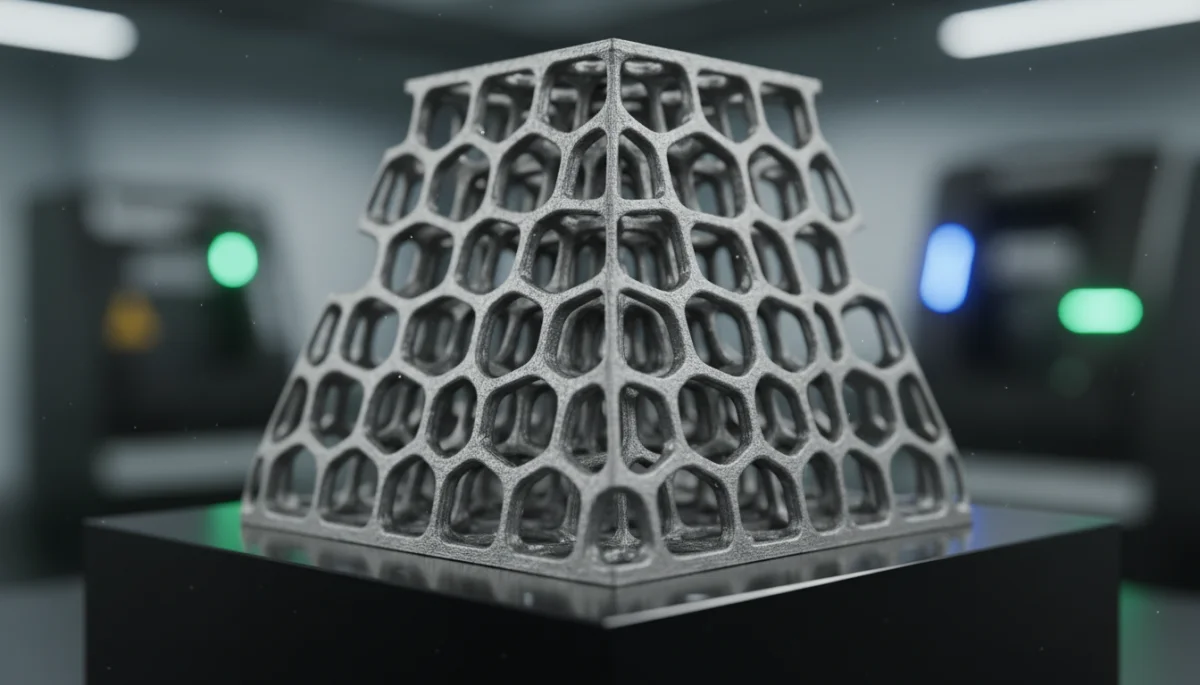
Additive manufacturing, commonly known as 3D printing, is being revolutionized by the introduction of novel materials. This synergy is unlocking unprecedented design freedom, allowing engineers to create complex geometries and functional parts with tailored properties that were previously impossible to achieve through traditional manufacturing methods.
The ability to print components layer by layer with advanced polymers, metals, and ceramics means that products can be customized on a mass scale, optimized for specific performance requirements, and produced on-demand. This not only reduces waste but also accelerates product development cycles, making it a critical technology for rapid prototyping and specialized manufacturing. The aerospace industry, for example, is leveraging additive manufacturing to produce lighter, more efficient components with intricate internal structures.
Materials Driving Additive Manufacturing
- High-Performance Polymers: Materials like PEEK and ULTEM are being used to print strong, heat-resistant parts for demanding applications in aerospace and medical devices.
- Metal Alloys: Advanced alloys, including titanium and nickel-based superalloys, are 3D printed to create complex components with superior strength and corrosion resistance for automotive and industrial uses.
- Ceramics: Technical ceramics can be printed for high-temperature applications, offering excellent wear resistance and electrical insulation, ideal for specialized tooling and electronics.
The integration of new materials with additive manufacturing processes is also enabling the creation of multi-material components, where different properties are combined within a single part. This allows for localized optimization, such as creating a component that is rigid in one area and flexible in another, or electrically conductive in specific pathways. The precision and versatility offered by these advancements are driving a paradigm shift in manufacturing, moving from a subtractive to an additive approach, which is inherently more efficient and sustainable. As material libraries expand and printing technologies mature, additive manufacturing will continue to redefine the possibilities of product design and production across almost every sector.
Bio-Inspired Materials: Mimicking Nature’s Ingenuity
Bio-inspired materials draw their design principles from the natural world, replicating the structures and processes found in living organisms to achieve superior performance. This approach leverages millions of years of natural selection, resulting in materials that are often stronger, lighter, more sustainable, and possess unique functionalities not found in synthetic counterparts.
From the hierarchical structures of bone and shell that provide exceptional toughness to the self-cleaning properties of lotus leaves, nature offers an endless source of inspiration. Engineers are now translating these biological blueprints into man-made materials, creating innovations that range from highly efficient adhesives to incredibly robust protective coatings. This interdisciplinary field combines biology, chemistry, and engineering to develop solutions that are both high-performing and environmentally friendly.
Examples of Bio-Inspired Innovation
- Nacre (Mother-of-Pearl) Mimicry: Replicating the brick-and-mortar structure of nacre to create ceramics with extraordinary fracture toughness and strength.
- Lotus Effect Surfaces: Developing superhydrophobic and self-cleaning surfaces by mimicking the micro- and nano-structures of lotus leaves, reducing maintenance needs.
- Gecko Adhesives: Creating dry, reusable adhesives that exploit van der Waals forces, similar to gecko feet, for applications in robotics and medical devices.
The core advantage of bio-inspired materials lies in their ability to achieve multiple functionalities simultaneously, often with minimal resources. For instance, a material might be both strong and self-healing, or transparent and electrically conductive. This holistic approach to material design is paving the way for a new generation of products that are not only efficient but also inherently sustainable, often using biodegradable or renewable components. As our understanding of biological systems deepens, the potential for translating nature’s wisdom into engineering solutions will only continue to grow, leading to materials that are more harmonious with the environment and better adapted to complex challenges.
Metamaterials: Engineering Properties Beyond Natural Limits
Metamaterials are artificially engineered materials that derive their properties not from their chemical composition, but from their meticulously designed sub-wavelength structures. These structures allow metamaterials to exhibit properties not found in nature, such as negative refractive index, perfect absorption, or cloaking capabilities, opening up extraordinary possibilities for optics, acoustics, and electromagnetism.
By precisely arranging microscopic elements, often in periodic arrays, scientists can manipulate waves (light, sound, radio waves) in ways that conventional materials cannot. This enables the creation of devices that can bend light around objects, focus sound with extreme precision, or absorb electromagnetic radiation over broad frequency ranges. The design freedom offered by metamaterials allows engineers to tailor material responses to specific applications, leading to revolutionary advances in various fields.
Revolutionary Applications of Metamaterials
- Perfect Lenses: Overcoming the diffraction limit of conventional lenses, enabling ultra-high-resolution imaging for medical diagnostics and semiconductor manufacturing.
- Acoustic Cloaking: Designing materials that can render objects invisible to sound waves, with potential applications in noise reduction and underwater stealth technology.
- Antennas and Sensors: Creating highly efficient, compact antennas and ultra-sensitive sensors for telecommunications, medical imaging, and environmental monitoring.
The fabrication of metamaterials requires advanced manufacturing techniques, such as lithography, 3D printing, and self-assembly, to achieve the necessary precision at the nanoscale. As these fabrication methods become more sophisticated and cost-effective, the practical applications of metamaterials will expand significantly. From enhancing wireless communication to developing new forms of energy harvesting, metamaterials are poised to revolutionize how we interact with and control various forms of energy, pushing the boundaries of what is physically possible and leading to devices with unprecedented capabilities.
Smart Materials and Sensors: Responsive and Adaptive Systems
Smart materials and integrated sensors are at the forefront of creating responsive and adaptive engineering systems. These materials can sense changes in their environment, process information, and react in a predetermined manner, effectively blurring the lines between passive structure and active component. This capability is transforming fields from healthcare to infrastructure monitoring, enabling real-time feedback and autonomous adjustment.
The integration of sensors directly into material structures allows for continuous monitoring of conditions such as stress, temperature, and chemical exposure. When combined with actuators, these smart materials can actively respond to detected changes, for example, by altering their shape, stiffness, or electrical properties. This creates systems that are not only more efficient but also inherently safer and more resilient, capable of self-diagnosis and self-correction.
Key Smart Material Technologies
- Piezoelectric Materials: Generate an electric charge in response to mechanical stress and vice-versa, used in sensors, actuators, and energy harvesting.
- Shape Memory Alloys (SMAs): Can return to a pre-defined shape when heated, ideal for deployable structures, medical implants, and thermal actuators.
- Thermochromic and Photochromic Materials: Change color in response to temperature or light, respectively, used in smart windows, textiles, and optical sensors.
The applications for smart materials and sensors are incredibly diverse. In civil engineering, they can monitor the structural integrity of bridges and buildings, alerting engineers to potential failures before they occur. In medicine, smart implants can release drugs in response to physiological cues or adapt to changes in the body. The development of self-powered sensors and wireless communication capabilities further enhances their utility, enabling the creation of truly autonomous and interconnected systems. As these technologies mature, they will underpin the next generation of intelligent systems, from smart cities to personalized healthcare devices, making our environment more responsive and our technologies more intuitive.
| Breakthrough | Impact on US Engineering |
|---|---|
| Self-Healing Polymers | Extends product lifespan, reduces waste, enhances material resilience in infrastructure. |
| Advanced Composites | Enables lighter, stronger, and more durable structures for aerospace and automotive industries. |
| Quantum Materials | Revolutionizes computing, energy transmission, and sensing with unprecedented electronic properties. |
| Additive Manufacturing | Offers design freedom and customization, accelerating product development and reducing waste. |
Frequently Asked Questions About Advanced Material Science
Self-healing polymers are materials capable of autonomously repairing damage, extending product lifespan, and reducing the need for maintenance and replacement. Their primary benefits include increased durability, reduced waste, and significant cost savings over time, especially in critical infrastructure and high-value components.
Advanced composites provide superior strength-to-weight ratios, allowing for lighter aircraft structures. This translates to improved fuel efficiency, increased payload capacity, and enhanced performance. They also offer greater resistance to fatigue and corrosion, contributing to safer and more durable aerospace components.
Quantum materials exhibit unique electronic, magnetic, and optical properties due to quantum mechanical effects. These properties can lead to breakthroughs like lossless power transmission (superconductors) and robust quantum computing (topological insulators), fundamentally changing how information is processed and energy is managed.
Additive manufacturing, especially with novel materials, enables the creation of highly complex geometries and customized parts with tailored properties. It offers unprecedented design freedom, rapid prototyping, and on-demand production, significantly reducing material waste and accelerating innovation across various industries, from medical to automotive.
Bio-inspired materials mimic nature’s designs to achieve superior performance with often sustainable and biodegradable components. They contribute to sustainable engineering by enabling the creation of stronger, lighter, and more efficient materials that require fewer resources, reduce waste, and often possess self-repairing or self-cleaning properties, aligning with eco-friendly practices.
Conclusion
The advancements in advanced material science are not merely incremental improvements; they represent a fundamental shift in our capabilities as engineers and innovators. By 2026, the seven breakthroughs discussed—self-healing polymers, advanced composites, quantum materials, additive manufacturing with novel materials, bio-inspired materials, metamaterials, and smart materials—will collectively redefine the boundaries of US engineering. These innovations promise to deliver unprecedented levels of performance, efficiency, and sustainability across a multitude of sectors, from aerospace and defense to healthcare and consumer electronics. The ongoing integration of these cutting-edge materials will not only solve complex challenges but also inspire a new generation of technologies that were once confined to the realm of science fiction, ultimately shaping a more resilient, efficient, and technologically advanced future for the United States.