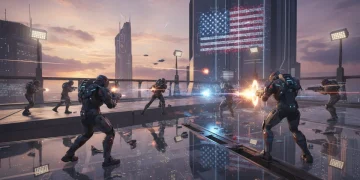
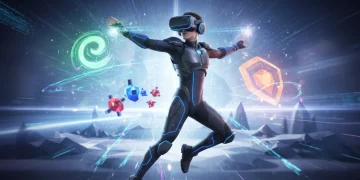
Interactive Storytelling in US Video Games: Key 2026 Trends
Anúncios
By 2026, interactive storytelling in US video games will be revolutionized by three core trends: hyper-personalized player agency, dynamically adaptive narratives, and robust cross-media integration, delivering unparalleled immersive experiences.
The landscape of video games is continuously evolving, pushing the boundaries of what narratives can achieve. In 2026, interactive storytelling in US video games stands at a pivotal juncture, promising experiences far more profound and personalized than ever before. This exploration delves into the three key trends defining narrative experiences, offering a glimpse into the future of digital sagas.
Anúncios
The rise of hyper-personalized player agency
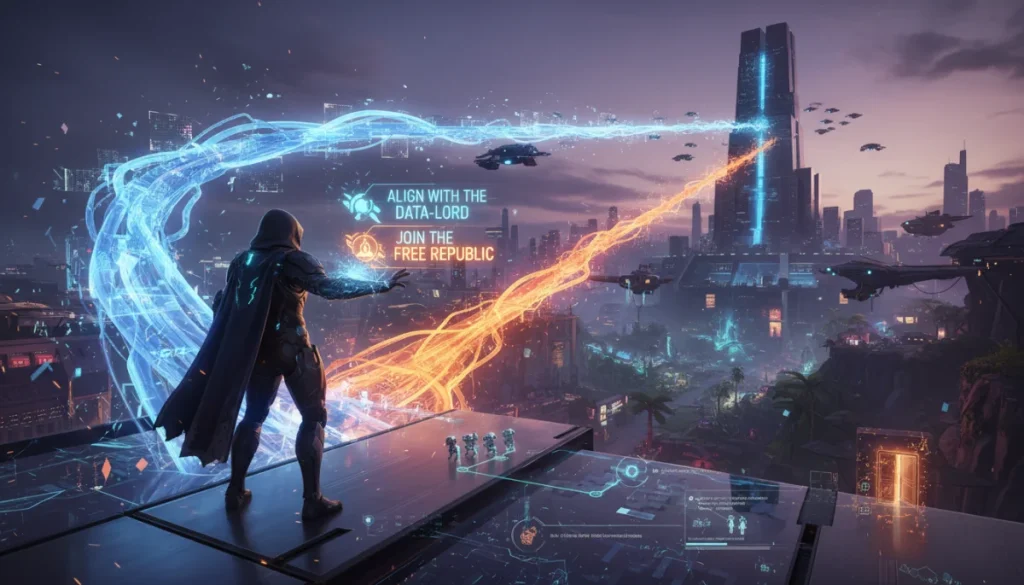
Player agency, the ability of a player to influence the game world and narrative, has always been a cornerstone of interactive entertainment. However, by 2026, this concept is transcending simple branching paths to embrace hyper-personalization. This means every decision, no matter how small, has a tangible and often unforeseen ripple effect on the story, character relationships, and even the game’s overarching themes.
Developers are no longer content with offering a few major choices; instead, they are crafting intricate systems where player choices are tracked, analyzed, and used to dynamically sculpt the unfolding narrative. This approach moves beyond good/evil morality systems into nuanced consequences that reflect the complexities of real-world decision-making. The goal is to make players feel genuinely responsible for their journey, fostering a deeper emotional connection.
Redefining player choice and consequence
The evolution of player choice is moving past binary decisions. Games are incorporating advanced AI to interpret player actions and dialogue choices, leading to more organic and less predictable outcomes. This enhances replayability significantly, as each playthrough can genuinely feel unique.
- Nuanced moral dilemmas: Scenarios where there’s no clear ‘right’ or ‘wrong’ answer, forcing players to confront their own ethical frameworks.
- Dynamic character relationships: NPCs remember past interactions, influencing their behavior, trust levels, and even their personal story arcs.
- Environmental impact: Player actions can permanently alter the game world, reflecting their choices in a visible and tangible way.
The implications of hyper-personalized agency are profound, transforming games from mere entertainment into powerful platforms for self-reflection and exploration of personal values. Players become co-authors of their narratives, an experience that traditional linear media cannot replicate.
Adaptive narratives and procedural content generation
Adaptive narratives represent a significant leap forward from static, pre-written stories. By 2026, game engines are leveraging sophisticated algorithms to generate story elements, quests, and even character dialogue procedurally, all while maintaining narrative coherence. This trend ensures that no two players will experience the exact same story, even when playing the same game.
This goes beyond simple randomized quests; it involves systems that can understand narrative structures, character motivations, and world lore to create new, relevant content on the fly. The integration of machine learning allows these systems to learn from player behavior, further refining their ability to craft compelling and contextually appropriate story beats.
Anúncios
The mechanics of dynamic storytelling
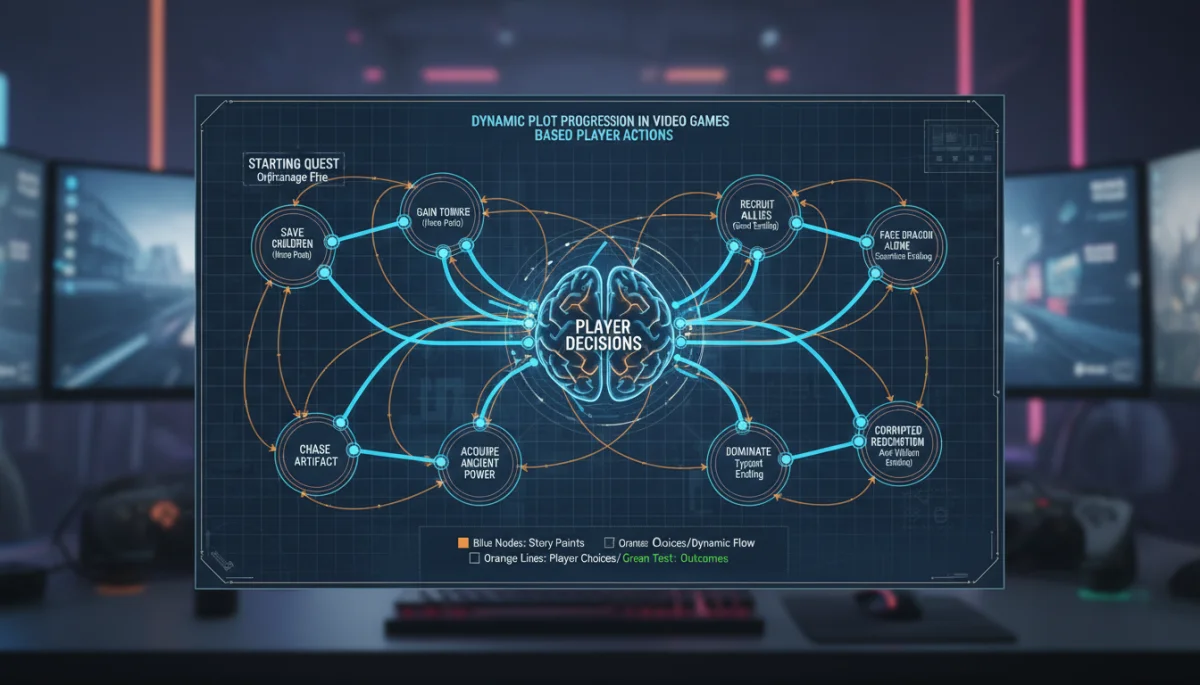
Procedural content generation (PCG) is being applied not just to level design, but to narrative elements. This allows for an unprecedented level of dynamism, where the story adapts to player skill, preferences, and even emotional states. Imagine a game that subtly shifts its tone or introduces new challenges based on how you’re performing or the choices you’ve made.
- AI-driven story engines: Algorithms that can generate new plot points, character interactions, and quest lines based on a set of narrative rules and player input.
- Real-time narrative adjustments: The story can pivot in response to unexpected player actions, creating a sense of genuine unpredictability.
- Personalized challenges: Difficulty and narrative complexity can adjust based on a player’s engagement and mastery of game mechanics, ensuring a tailored experience.
The promise of adaptive narratives lies in their ability to offer endless replayability and a deeply personal adventure, where the game constantly surprises and challenges the player in novel ways. This trend is set to redefine expectations for narrative depth and longevity in video games.
Cross-media integration and transmedia storytelling
The boundaries between different forms of entertainment are blurring, and video games are at the forefront of this convergence. By 2026, cross-media integration will be a dominant trend, extending game narratives beyond the console or PC into other mediums like television series, films, novels, and even interactive web experiences. This isn’t just about adaptations; it’s about creating a cohesive, expanded universe where each medium contributes uniquely to the overarching story.
Transmedia storytelling involves weaving a single narrative across multiple platforms, with each piece offering a distinct entry point and contributing to a larger, more complete understanding of the world and its characters. This allows for deeper lore exploration, character development, and community engagement, as fans can immerse themselves in the story through various interactive and passive experiences.
Expanding narratives beyond the screen
This trend is about creating a richer, more expansive narrative ecosystem. A video game might introduce core characters and plot, while a companion web series explores their backstory, and an interactive novel reveals hidden lore. Each piece is designed to enhance the others, creating a symbiotic relationship between different media.
- Unified narrative universes: Stories are meticulously crafted to seamlessly extend across games, films, books, and other digital platforms.
- Interactive lore exploration: Players can delve into the game’s world through external media, uncovering secrets and enriching their understanding.
- Community-driven narratives: Fan communities play a role in shaping the ongoing story, influencing future content across various media.
Cross-media integration promises to elevate interactive storytelling to new heights, transforming individual games into expansive, living universes that players can explore and influence across a multitude of platforms, fostering unparalleled engagement.
Ethical considerations in advanced interactive narratives
As interactive storytelling becomes more sophisticated, so do the ethical considerations surrounding its implementation. The power to craft deeply personal and adaptive narratives comes with a responsibility to consider player well-being. By 2026, developers are increasingly focused on ethical design, ensuring that immersive experiences are engaging without being manipulative or overly distressing.
This involves careful consideration of player agency, the psychological impact of choices, and the potential for narrative systems to exploit cognitive biases. Discussions around ‘dark patterns’ in game design are evolving to include narrative elements, pushing for transparency and respect for player autonomy.
Navigating player well-being and narrative design
Ethical design in interactive narratives is becoming a critical area of focus. Developers are implementing safeguards and best practices to ensure that the power of personalized storytelling is used responsibly. This includes giving players more control over their experience and providing clear indications of how their choices might affect the narrative.
- Opt-in narrative paths: Allowing players to opt-out of potentially distressing or overly complex narrative branches.
- Transparent consequence systems: Clearly communicating the potential impact of major decisions without spoiling the narrative.
- Mental health resources: Integrating subtle in-game prompts or external links to support services for players who might be emotionally affected by intense narratives.
The ethical landscape of interactive storytelling is complex, but by prioritizing player well-being, developers can ensure that these advanced narratives remain a positive and enriching experience for all.
Technological advancements powering 2026 narratives
The ambitious trends in interactive storytelling for 2026 are not possible without significant technological breakthroughs. Advances in artificial intelligence, machine learning, and cloud computing are the bedrock upon which these next-generation narratives are built. These technologies enable the dynamic, responsive, and expansive storytelling experiences discussed.
Sophisticated AI models are now capable of understanding context, generating natural language, and even simulating complex character behaviors. Cloud computing provides the necessary processing power to run these intricate systems, allowing for real-time narrative adaptation and personalized content delivery without taxing local hardware.
The engines of narrative innovation
Behind every compelling interactive story in 2026 are cutting-edge technologies that empower developers to push creative boundaries. These tools are democratizing advanced narrative techniques, making them accessible to a broader range of studios, from indie to AAA.
- Advanced AI for NPC behavior: NPCs exhibit more realistic and adaptive behaviors, reacting intelligently to player actions and environmental changes.
- Natural language processing (NLP): Enables more nuanced dialogue systems, allowing players to interact with characters in natural language and receive contextually appropriate responses.
- Cloud-based narrative processing: Offloads complex narrative calculations to remote servers, enabling more dynamic and expansive stories without performance bottlenecks.
These technological advancements are not just incremental improvements; they represent a paradigm shift in how stories can be told and experienced in video games, paving the way for truly revolutionary interactive narratives.
The future impact on player engagement and immersion
The convergence of hyper-personalized agency, adaptive narratives, and cross-media integration is set to profoundly impact player engagement and immersion. By 2026, video games will offer experiences that are not only entertaining but deeply personal, memorable, and often thought-provoking. Players will feel a stronger sense of ownership over their stories, leading to increased emotional investment and a desire to explore every facet of the game world.
The enhanced immersion will stem from the feeling that the game world truly reacts to the player, making every decision feel meaningful. This level of responsiveness cultivates a unique bond between the player and the narrative, elevating video games beyond mere pastime to a significant cultural and personal experience.
Deepening the player-story connection
The trends discussed are all geared towards forging a stronger, more intimate connection between the player and the narrative. This isn’t just about better graphics or more expansive worlds, but about creating stories that resonate on a personal level and adapt to individual journeys.
- Unparalleled emotional resonance: Stories that mirror or challenge players’ personal experiences, leading to powerful emotional responses.
- Enhanced sense of presence: The feeling of truly ‘being’ in the game world, influenced by its dynamic reactions to player input.
- Long-term engagement: Narratives that evolve over time and across platforms, encouraging sustained interaction and community participation.
Ultimately, these trends are shaping a future where interactive storytelling in US video games offers an unparalleled level of personal connection and immersive depth, solidifying their place as a leading form of artistic expression.
| Key Trend | Brief Description |
|---|---|
| Hyper-Personalized Player Agency | Every player decision has nuanced, far-reaching consequences, fostering deep emotional connection and unique playthroughs. |
| Adaptive Narratives | Stories dynamically generate content, quests, and dialogue based on player behavior and preferences, ensuring no two experiences are identical. |
| Cross-Media Integration | Game narratives extend across various platforms (TV, film, books), creating expanded, cohesive story universes. |
Frequently asked questions about interactive storytelling in video games
Hyper-personalized player agency refers to the advanced ability of players to significantly influence game narratives, character relationships, and the game world through their choices. Unlike simple branching paths, it involves complex systems that track and react to even subtle player actions, creating a deeply unique and personal story experience tailored to individual decisions.
Adaptive narratives differ by employing procedural generation and AI to dynamically create story elements, quests, and dialogue in real-time. This means the story isn’t rigidly pre-written but evolves based on player input, skill, and preferences. Traditional storytelling typically follows a fixed plot, whereas adaptive narratives offer a fluid, ever-changing experience unique to each playthrough.
Cross-media integration means that game narratives extend beyond the game itself into other forms of media, such as TV shows, movies, or books. Each medium contributes uniquely to a larger, unified story universe, providing deeper lore and character development. This approach allows fans to engage with the narrative across multiple platforms, enriching their overall immersion and understanding.
Ethical considerations are crucial because advanced interactive narratives can profoundly impact players psychologically. Developers must ensure that immersive experiences are engaging without being manipulative, overly distressing, or exploiting cognitive biases. This involves designing transparent choice systems, offering opt-out options for sensitive content, and prioritizing player well-being to maintain a positive and enriching experience.
These interactive storytelling trends are primarily enabled by advancements in artificial intelligence (AI), machine learning (ML), and cloud computing. AI and ML power dynamic NPC behavior, natural language processing for dialogue, and procedural content generation. Cloud computing provides the necessary processing power for real-time narrative adaptation and expansive story systems, ensuring seamless and complex player experiences.
Conclusion
The future of interactive storytelling in US video games in 2026 is one of unprecedented depth, personalization, and expansive universes. The three key trends – hyper-personalized player agency, adaptive narratives, and cross-media integration – are converging to create experiences that are not only entertaining but deeply resonant and emotionally engaging. As technology continues to evolve, the boundaries of what is possible in digital narratives will only expand, promising a rich and diverse landscape for players and creators alike.