Data Broker Blacklist 2026: 10 Companies to Opt Out From

Anúncios
The 2026 data broker blacklist identifies key companies actively collecting and selling personal information. Understanding this list is crucial for individuals aiming to proactively safeguard their digital privacy and prevent unauthorized data sharing.
Anúncios
In an increasingly digital world, your personal information is a commodity, and data brokers are the merchants. This guide to the Data Broker Blacklist 2026 will empower you to identify and opt out from the companies actively profiting from your private life.
Understanding the Data Broker Landscape in 2026
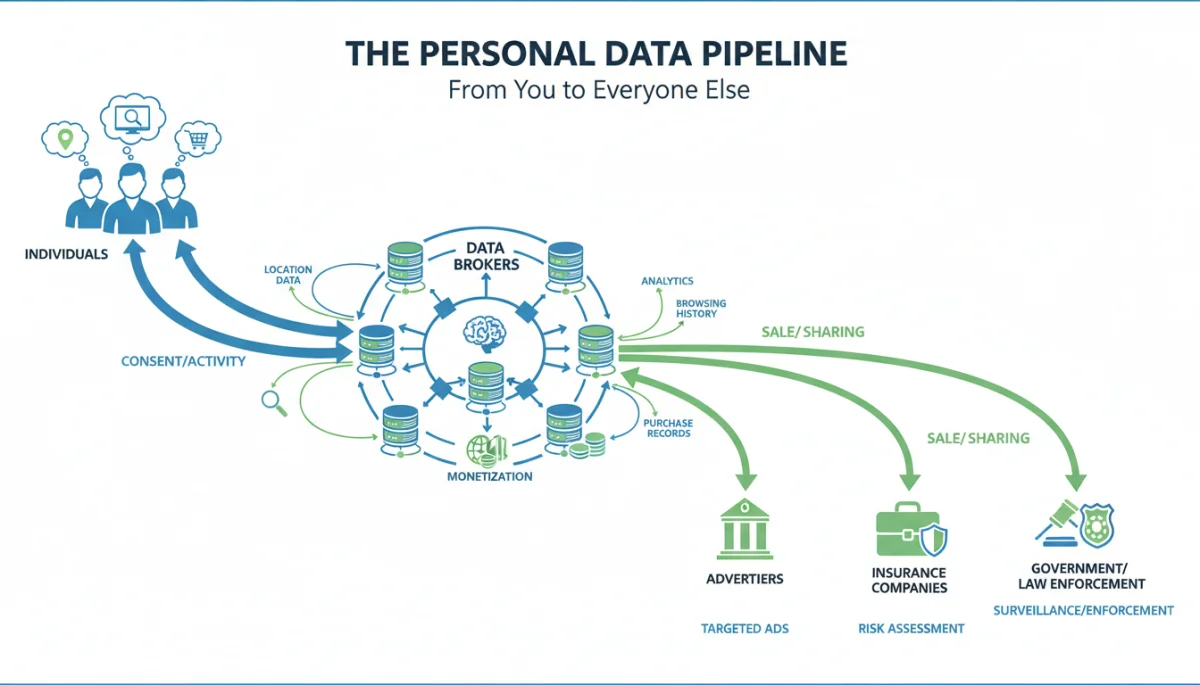
The digital ecosystem of 2026 is more interconnected than ever, leading to an unprecedented collection of personal data. Data brokers operate largely behind the scenes, aggregating vast amounts of information from various sources to create detailed profiles of individuals. These profiles are then sold to marketers, advertisers, and even other organizations, often without your explicit knowledge or consent.
This industry thrives on the sheer volume of data generated daily, from your online purchases and browsing habits to your physical location and public records. The challenge for individuals lies in identifying who holds their data and how to reclaim control. The sheer number of these entities makes it difficult to track, but certain key players consistently appear due to their extensive data networks.
What data brokers collect and why it matters
Data brokers compile a comprehensive dossier on you, often including sensitive details. This can range from your name, address, and contact information to more intimate insights like your income, health conditions, political affiliations, and even your online dating preferences. The implications of this collection are far-reaching.
- Targeted advertising: You see ads tailored to your supposed interests, sometimes feeling intrusive.
- Discriminatory practices: Data can be used to unfairly deny services like loans, insurance, or housing.
- Security risks: A large aggregation of personal data creates a single point of failure for potential data breaches.
- Identity theft: Detailed personal profiles can be exploited by malicious actors for fraudulent activities.
The ability of these companies to paint such a detailed picture of your life underscores the urgent need for proactive measures. Understanding their methods is the first step towards effectively mitigating the risks associated with their operations.
In essence, data brokers are the invisible architects of your digital persona, shaping how you are perceived and targeted across the internet. Being aware of their existence and their practices is fundamental to maintaining any semblance of privacy in the modern age.
Anúncios
The Top 10 Data Brokers to Opt Out From in 2026
Navigating the complex world of data brokers can be daunting, but identifying the most pervasive players is crucial for protecting your privacy. This list highlights ten significant data brokers that have consistently demonstrated extensive data collection and sharing practices. While many more exist, these represent some of the largest and most impactful entities from which you should consider opting out immediately.
Each of these companies operates with varying degrees of transparency, and their opt-out processes can range from straightforward to complex. However, the effort is worthwhile to minimize your digital footprint and reduce the potential for your data to be misused.
1. Acxiom
Acxiom is one of the oldest and largest data brokers globally, maintaining vast databases of consumer information. They collect data from virtually every available source, including public records, surveys, and online activities. Their profiles are incredibly detailed, used primarily for marketing and advertising.
- Data collected: Demographics, financial data, purchase history, lifestyle interests.
- Opt-out process: Requires submitting an online form, often followed by a mailed letter for verification.
2. Experian
While known for credit reporting, Experian also operates as a significant data broker, compiling extensive marketing databases. They offer services that help businesses target consumers based on creditworthiness, purchasing power, and other lifestyle indicators.
- Data collected: Credit history, income, property records, marketing segments.
- Opt-out process: Specific opt-out options for marketing data differ from credit report freezing.
3. Oracle (BlueKai)
Oracle’s BlueKai is a major data management platform that collects and aggregates third-party data for targeted advertising. They build comprehensive profiles based on browsing behavior, app usage, and other online interactions.
- Data collected: Online browsing habits, app usage, cookie data, demographic inferences.
- Opt-out process: Primarily through their online opt-out tool, which sets a persistent opt-out cookie.
4. Epsilon
Epsilon is a global marketing company that leverages extensive consumer data to provide personalized marketing solutions. They compile detailed profiles that include purchase history, household demographics, and online activity, serving a wide range of industries.
- Data collected: Purchase history, household income, lifestyle attributes, online engagement.
- Opt-out process: An online form is available, often requiring multiple steps to confirm identity.
5. CoreLogic
CoreLogic specializes in property and real estate data, but their reach extends to comprehensive consumer profiles related to housing, financial status, and geographic location. They serve industries like real estate, finance, and insurance.
- Data collected: Property ownership, mortgage details, neighborhood demographics, financial indicators.
- Opt-out process: Generally involves contacting their privacy department directly with specific requests.
6. LiveRamp
LiveRamp is a data connectivity platform that helps companies match and connect customer data across various channels. They don’t directly collect data from consumers but enable other businesses to link disparate datasets, effectively enhancing profiles.
- Data collected: Pseudonymized identifiers linked to various data points from partners.
- Opt-out process: They offer a consumer opt-out mechanism that prevents them from using your data for identity resolution.
7. Neustar
Neustar provides identity resolution services, helping businesses recognize customers across different devices and touchpoints. They aggregate data to create unified customer profiles for marketing, fraud prevention, and analytics.
- Data collected: Device IDs, IP addresses, online behavior, demographic data from partners.
- Opt-out process: Their privacy center provides tools to opt out of their data collection for marketing purposes.
8. PeopleConnect (WhitePages, Intelius, TruthFinder)
PeopleConnect operates several well-known people-search sites like WhitePages, Intelius, and TruthFinder. These sites aggregate public records and other data to create profiles that can include contact information, addresses, relatives, and criminal records.
- Data collected: Public records, contact information, family relations, background check data.
- Opt-out process: Each site often requires a separate opt-out request, which can be tedious but necessary.
9. LexisNexis Risk Solutions
LexisNexis is a major provider of data analytics and risk management solutions. They collect vast amounts of public and proprietary data to create comprehensive profiles used by law enforcement, government agencies, and businesses for fraud detection, identity verification, and due diligence.
- Data collected: Public records, court documents, news articles, professional licenses, financial data.
- Opt-out process: Due to the nature of their services, opting out is complex and often limited to correcting inaccuracies rather than full removal.
10. Verisk Analytics
Verisk Analytics is a data analytics company primarily serving the insurance and financial services industries. They collect and analyze data related to property, health, and risk assessment to help clients make informed decisions.
- Data collected: Property characteristics, insurance claims history, health data (anonymized), risk scores.
- Opt-out process: Opt-out options are often specific to certain data types and may require direct contact.
Understanding these key players is the first step in a proactive approach to digital privacy. While the process of opting out can be time-consuming, it is a critical measure to reduce your exposure to unwanted data collection and sharing.
The Importance of Proactive Opt-Out Strategies
Taking a proactive stance against data brokers is no longer just an option; it’s a necessity in 2026. The sheer volume and sensitivity of the data these companies collect can have significant repercussions on your financial well-being, personal security, and overall digital peace of mind. Simply hoping your data remains private is an insufficient strategy when your information is actively being bought and sold.
Without intervention, your detailed profile could be used for highly targeted advertising that feels invasive, or worse, for discriminatory practices in areas like employment, housing, or credit. Furthermore, the aggregation of your data by multiple brokers increases the attack surface for potential data breaches, making you more vulnerable to identity theft and fraud.
Why waiting is not an option
The longer your data remains in the hands of data brokers, the more widely it can be disseminated. Once your information is sold to one entity, it can be resold, repackaged, and shared with countless others, making it exponentially harder to trace and remove. Each passing day allows these profiles to become more detailed and entrenched across the digital landscape.
- Data permanence: Once data is collected, it’s difficult to erase completely.
- Compounding risk: More data in more places increases your vulnerability.
- Evolving threats: New ways to exploit personal data emerge constantly.
Therefore, acting swiftly to opt out from these companies minimizes the window of opportunity for your data to be further exploited. It’s an ongoing battle, but proactive measures significantly reduce your digital exposure.
By actively managing your presence with data brokers, you are not just protecting your privacy; you are asserting your right to control your personal narrative in the digital realm. This proactive approach helps build a stronger defense against the pervasive data collection practices of the modern internet.
Step-by-Step Guide to Opting Out from Data Brokers
Opting out from data brokers can seem like a daunting task, given the number of companies and their varied processes. However, by following a structured approach, you can systematically reduce your digital footprint. This guide provides actionable steps to help you navigate the opt-out process effectively.
Remember that this is often an ongoing process, as new data may be collected or re-added over time. Regular checks and re-submission of requests might be necessary for persistent privacy. Patience and meticulous record-keeping are your best allies in this endeavor.
Initial preparation and essential tools
Before you begin, gather some essential information and tools that will streamline the process. Having these ready will save you time and reduce frustration.
- Create a dedicated email address: Use a separate email for opt-out requests to manage communications and avoid spam in your primary inbox.
- Document everything: Keep a spreadsheet or document to track which companies you’ve contacted, the date, confirmation numbers, and any follow-up required.
- Gather personal information: Have your full name, current and previous addresses, phone numbers, and email addresses readily available. This helps brokers locate your data.
- Consider a privacy service: Tools like DeleteMe or OneRep can automate parts of this process, though they come with a subscription fee.
The opt-out process: A general approach
While each data broker has its own specific procedure, a general framework applies to most. Understanding this flow will help you approach each opt-out request efficiently.
- Identify the data broker: Use the blacklist provided or search for data brokers online.
- Locate their privacy policy/opt-out page: Most companies have a dedicated section on their website.
- Submit an opt-out request: This usually involves filling out an online form. You might need to provide personal details for them to find your record.
- Verify your identity: Some brokers require email verification, phone calls, or even mailing a physical letter for identity confirmation.
- Follow up: After a few weeks, check if your data has been removed. If not, follow up with the company.
Be persistent. Data brokers are legally obligated in many jurisdictions to process these requests, but they may not always make it easy. Your diligence is key to achieving success in removing your information.
By systematically addressing each data broker and maintaining thorough records, you can significantly reduce your exposure and regain a measure of control over your personal information.
Legal Frameworks and Your Rights in 2026
The landscape of data privacy laws is continually evolving, and by 2026, several key regulations provide individuals with significant rights regarding their personal data. Understanding these legal frameworks is crucial for asserting your control over the information data brokers collect and share. These laws empower you to demand transparency, access, and deletion of your data, serving as a powerful tool in your privacy arsenal.
While the United States does not have a single overarching federal privacy law akin to GDPR in Europe, a patchwork of state-level legislation offers substantial protections. Familiarizing yourself with these acts can strengthen your ability to enforce your data rights.
Key privacy laws impacting data brokers
Several regulations directly impact how data brokers operate and what rights consumers have. These laws dictate how data must be handled and provide mechanisms for individuals to request actions concerning their data.
- California Consumer Privacy Act (CCPA) / California Privacy Rights Act (CPRA): Grants Californians the right to know what personal information is collected, to delete it, and to opt out of its sale. The CPRA expands these rights and creates the California Privacy Protection Agency.
- Virginia Consumer Data Protection Act (VCDPA): Provides similar rights to Californians, allowing consumers to access, delete, and opt out of the sale of their personal data.
- Colorado Privacy Act (CPA): Also grants consumers rights to opt out of targeted advertising, the sale of personal data, and profiling.
- Utah Consumer Privacy Act (UCPA): Offers consumers the right to access and delete their personal data, as well as opt out of the sale of personal data or targeted advertising.
- Connecticut Data Privacy Act (CTDPA): Similar to other state laws, it provides rights to access, correct, delete, and opt out of the sale of personal data and targeted advertising.
These state laws, while varied, collectively create a more robust environment for consumer data protection in the US. They often require data brokers to respond to consumer requests within a specific timeframe and impose penalties for non-compliance.
It’s important to note that even if you don’t reside in these states, their existence often prompts data brokers to adopt more standardized privacy practices that may benefit all consumers. Always refer to the specific laws applicable to your location to understand your full rights.
Leveraging these legal frameworks is an effective way to hold data brokers accountable and enforce your right to privacy in an increasingly data-driven world.
Beyond Opt-Out: Long-Term Digital Privacy Habits
While opting out from data brokers is a critical step, it’s just one part of a comprehensive strategy for digital privacy. Maintaining long-term privacy requires adopting ongoing habits that minimize data generation and sharing. In 2026, a proactive and continuous approach is essential to safeguard your personal information effectively.
Think of it as digital hygiene: just as you maintain your physical health, your digital health requires regular attention and conscious choices. These habits extend beyond simply clicking ‘no’ to cookies; they involve a fundamental shift in how you interact with the online world.
Essential practices for ongoing data protection
Integrating these practices into your daily digital routine can significantly reduce your exposure to data collection and enhance your overall privacy posture.
- Use privacy-focused browsers and search engines: Browsers like Brave or Firefox (with enhanced tracking protection) and search engines like DuckDuckGo prioritize user privacy.
- Review app permissions: Regularly check what permissions your mobile apps have and revoke any unnecessary access to your camera, microphone, location, or contacts.
- Be mindful of what you share online: Exercise caution on social media and other platforms. Every piece of information you share can be collected and used.
- Use strong, unique passwords and 2FA: This prevents unauthorized access to your accounts, which could be exploited for data gathering.
- Limit third-party cookies: Configure your browser settings to block third-party cookies by default.
- Read privacy policies: While often lengthy, try to skim privacy policies for key information about data collection and sharing before agreeing to terms of service.
These habits, when consistently applied, create a robust defense against pervasive data collection. They empower you to be more intentional about your digital interactions and the data you generate.
Remember, achieving complete online anonymity is nearly impossible, but significantly reducing your digital footprint and making it harder for data brokers to profile you is an achievable and worthwhile goal. Long-term privacy is a journey, not a destination, requiring continuous vigilance and adaptation.
| Key Aspect | Brief Description |
|---|---|
| Data Broker Role | Companies collecting and selling personal data for profiling and marketing. |
| Top 10 Blacklist | Key companies like Acxiom, Experian, Oracle (BlueKai), and PeopleConnect to opt out from. |
| Opt-Out Process | Step-by-step guide involving identification, request submission, and follow-up. |
| Legal Rights | Leveraging CCPA, VCDPA, CPA, and other state privacy laws to protect data. |
Frequently Asked Questions About Data Brokers
A data broker is a company that collects personal information from various sources, such as public records, online activities, and commercial transactions. They then aggregate, analyze, and package this data into profiles which are sold to other businesses for marketing, risk assessment, or other purposes.
Opting out helps protect your privacy by reducing the amount of your personal information circulating. This lessens your exposure to targeted advertising, potential discrimination, identity theft, and data breaches, giving you more control over your digital footprint and personal security.
Unfortunately, opting out is often an ongoing process. Data brokers may re-acquire your information from new sources, or it might reappear over time. Regular checks and re-submitting opt-out requests annually or semi-annually are recommended to maintain your privacy.
Yes, privacy services like DeleteMe can be very effective. They automate the tedious process of identifying data brokers and submitting opt-out requests on your behalf, often with better success rates due to their specialized knowledge and persistent follow-ups. They can save significant time and effort.
In the US, state laws like CCPA/CPRA (California), VCDPA (Virginia), CPA (Colorado), and others grant you rights to know what data is collected, to request its deletion, and to opt out of its sale. These laws provide legal backing for your privacy requests.
Conclusion
The digital landscape of 2026 demands heightened awareness and proactive measures to protect personal privacy. Understanding the operations of data brokers and acting decisively to opt out from key players is no longer optional but essential. By leveraging the provided Data Broker Blacklist 2026, following step-by-step opt-out guides, and adopting long-term privacy habits, individuals can significantly reclaim control over their personal information and build a more secure digital future. Your data is your digital identity; safeguarding it is paramount in an increasingly interconnected world.