Gaming Addiction Awareness in the US: New Initiatives & Support in 2026

Anúncios
Gaming addiction awareness in the US is reaching unprecedented levels in 2026, driven by a confluence of factors including increased research, evolving societal norms, and the pervasive integration of gaming into daily life. This heightened understanding is paving the way for innovative initiatives and more accessible support systems, aiming to address a complex issue that impacts individuals, families, and communities nationwide.
Understanding the Rise of Gaming Addiction in the US
The landscape of digital entertainment has transformed dramatically over the past decade, with video games evolving from niche hobbies to a mainstream cultural phenomenon. This widespread adoption, while offering numerous benefits, has also brought to light the growing concern of gaming addiction. In the US, the prevalence of problematic gaming behaviors has necessitated a deeper investigation into its causes, symptoms, and long-term effects.
Anúncios
As gaming platforms become more immersive and accessible, the line between healthy engagement and excessive use can blur. Researchers are increasingly identifying specific risk factors and psychological vulnerabilities that contribute to the development of gaming disorder, recognized by the World Health Organization as a legitimate health condition. This recognition has been a crucial step in legitimizing the need for dedicated resources and support.
Defining Problematic Gaming Behavior
Problematic gaming behavior is not simply about playing games frequently; it involves a pattern of gaming behavior characterized by impaired control over gaming, increasing priority given to gaming over other life interests and daily activities, and continuation or escalation of gaming despite the occurrence of negative consequences. Understanding this distinction is vital for accurate diagnosis and effective intervention.
- Impaired Control: Difficulty in limiting gaming duration or frequency.
- Increased Priority: Gaming takes precedence over responsibilities, relationships, and personal hygiene.
- Negative Consequences: Experiencing problems at work, school, or home due to gaming.
- Persistence: Continuing to game despite awareness of the negative impacts.
The rise of gaming addiction in the US is a multifaceted issue, influenced by technological advancements, social dynamics, and individual psychological factors. Addressing it effectively requires a comprehensive approach that considers all these elements, moving beyond simplistic explanations to foster a nuanced understanding.
New National Initiatives for Awareness and Prevention
In response to the escalating concerns surrounding gaming addiction, the US has seen the emergence of several promising national initiatives aimed at increasing awareness and implementing preventative measures. These programs represent a concerted effort from governmental bodies, non-profit organizations, and educational institutions to proactively address the challenge.
A key focus of these initiatives is early identification and education. By equipping parents, educators, and healthcare professionals with the knowledge to recognize the signs of problematic gaming, interventions can be initiated before behaviors escalate into full-blown addiction. Public service campaigns are also playing a vital role in destigmatizing the issue, encouraging open dialogue and reducing barriers to seeking help.
Government-Funded Research and Public Campaigns
Federal agencies, such as the National Institute of Mental Health (NIMH), have significantly increased funding for research into gaming disorder. This investment is crucial for developing evidence-based diagnostic tools and treatment protocols. Alongside research, nationwide public awareness campaigns are being launched to inform the public about the risks and resources available.
- NIMH Funding: Enhanced grants for studies on gaming disorder etiology and treatment.
- CDC Partnerships: Collaborations with the Centers for Disease Control and Prevention for public health messaging.
- Educational Toolkits: Development of resources for schools and community centers.
These national initiatives are critical for building a robust infrastructure to combat gaming addiction. By fostering a culture of awareness and providing accessible information, the US is taking significant steps towards prevention and early intervention, ultimately aiming to mitigate the societal impact of this growing concern.
Anúncios
Evolving Support Systems and Treatment Options
The landscape of support systems and treatment options for gaming addiction in the US has undergone substantial evolution, reflecting a deeper understanding of the condition and a commitment to providing effective care. Beyond traditional therapy, a range of innovative approaches are gaining traction, offering hope and recovery paths for those affected.
These evolving systems emphasize personalized care, recognizing that each individual’s journey with gaming addiction is unique. From specialized outpatient programs to digital therapeutics, the focus is on holistic recovery that addresses not only the behavioral aspects but also underlying psychological and social factors.
Specialized Treatment Centers and Digital Therapeutics
Several dedicated treatment centers have emerged across the US, offering inpatient and intensive outpatient programs specifically designed for gaming addiction. These centers often employ multidisciplinary teams, including psychologists, psychiatrists, and social workers, to provide comprehensive care. Additionally, digital therapeutics, which are evidence-based therapeutic interventions delivered through software programs, are showing promise in extending access to care.
- Inpatient Programs: Structured environments for severe cases, focusing on detox and intensive therapy.
- Outpatient Clinics: Flexible treatment options allowing individuals to maintain daily routines.
- Telehealth Services: Expanding access to therapy and support groups, especially in remote areas.
- Cognitive Behavioral Therapy (CBT): A cornerstone of treatment, helping individuals identify and modify problematic thought patterns.
The expansion and diversification of support systems are vital for addressing the varied needs of individuals struggling with gaming addiction. By integrating traditional therapeutic approaches with modern technological solutions, the US is enhancing its capacity to provide effective and accessible treatment.
The Role of Technology in Both Problem and Solution
Technology, while being the primary medium for gaming, also holds significant potential as a tool in both identifying and mitigating gaming addiction. In 2026, there’s a growing recognition of this dual role, leading to the development of tech-based solutions that aim to foster healthier digital habits.
From AI-powered detection systems that flag problematic play patterns to applications designed for digital well-being, technology is being harnessed to empower individuals with greater control over their gaming habits. This innovative approach seeks to integrate preventative and supportive measures directly into the digital environments where gaming takes place.
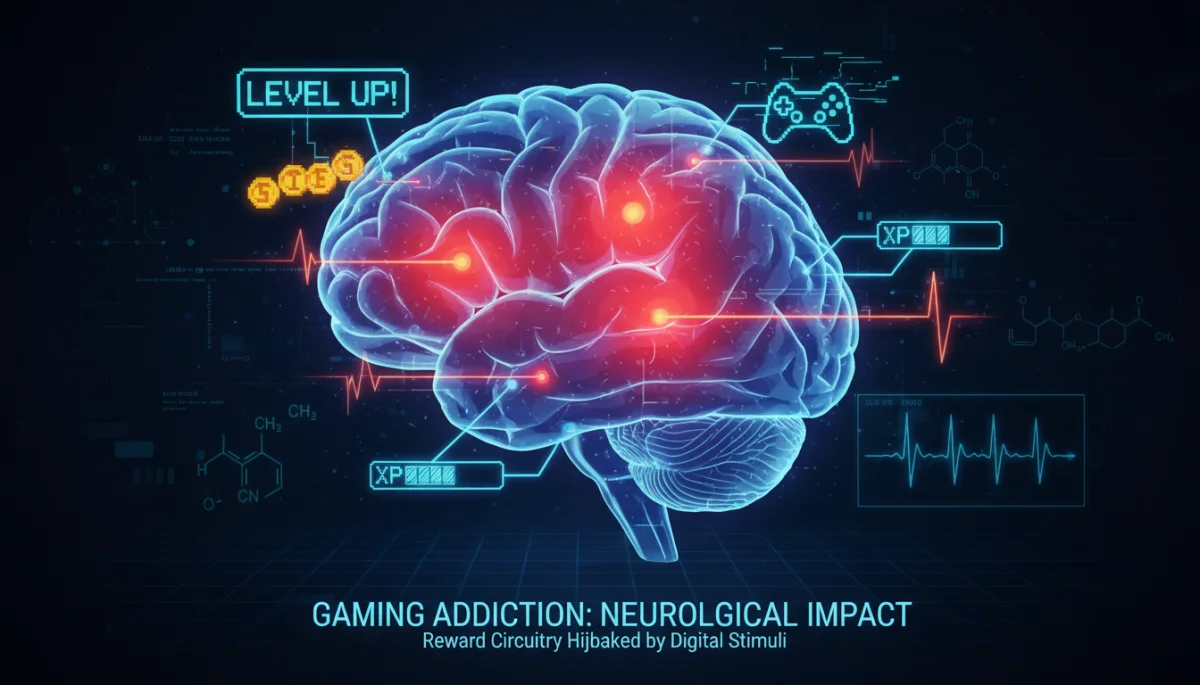
AI-Powered Monitoring and Digital Wellness Apps
Advanced AI algorithms are now being developed to monitor gaming behavior, identifying early warning signs of addiction by analyzing play duration, frequency, and in-game spending. These systems can provide personalized feedback to users and, with consent, alert support networks. Concurrently, a new generation of digital wellness apps offers tools for setting screen time limits, tracking usage, and promoting alternative activities.
- Predictive Analytics: AI models analyzing gaming patterns for early addiction indicators.
- Self-Regulation Tools: Apps designed to help users manage screen time and gaming sessions.
- Gamified Wellness: Incorporating game-like elements into apps that promote healthy habits.
- Parental Control Software: Enhanced tools for parents to monitor and manage children’s gaming.
The strategic deployment of technology offers a unique opportunity to address gaming addiction from within the digital sphere. By leveraging technological advancements responsibly, the US can move towards a future where digital entertainment is enjoyed safely and sustainably, with built-in mechanisms for support and prevention.
Impact on Families and Educational Institutions
The ramifications of gaming addiction extend far beyond the individual, significantly impacting family dynamics and educational performance. As awareness grows in the US, families and educational institutions are increasingly seeking guidance and implementing strategies to cope with and prevent the adverse effects of problematic gaming behaviors.
For families, gaming addiction can lead to strained relationships, financial difficulties, and a breakdown in communication. In educational settings, it often results in academic decline, absenteeism, and social isolation. Recognizing these widespread effects, new programs are being developed to support both families and schools in navigating this challenging issue.
Family Therapy and School-Based Interventions
Family therapy has become an essential component of treatment, helping family members understand gaming addiction and develop healthier communication and coping strategies. Schools are also stepping up with interventions that include educational workshops for students and staff, as well as counseling services for those affected. These comprehensive approaches aim to create a supportive ecosystem for recovery.
- Parental Guidance Workshops: Educating parents on healthy gaming habits and intervention strategies.
- School Counseling Programs: Providing support for students struggling with gaming-related issues.
- Peer Support Groups: Creating safe spaces for individuals and families to share experiences and find solidarity.
- Curriculum Integration: Incorporating digital literacy and well-being into school curricula.
Addressing the impact of gaming addiction on families and educational institutions is crucial for a holistic societal response. By empowering these foundational units with resources and knowledge, the US is building resilience against the pervasive challenges of digital dependency.
Looking Ahead: Future Trends and Challenges
As 2026 unfolds, the trajectory of gaming addiction awareness and intervention in the US points towards a future characterized by both promising trends and persistent challenges. The ongoing evolution of gaming technology, coupled with a deeper understanding of human behavior, will continue to shape the national response to this complex issue.
Future trends suggest an increased integration of mental health support within gaming platforms themselves, as well as a greater emphasis on preventive education from an early age. However, challenges such as the rapid pace of technological change and the need for sustained funding will require continuous innovation and collaboration.
Preventive Education and Integrated Mental Health Support
There’s a growing movement towards embedding preventive education on healthy gaming habits into standard health curricula, starting from elementary school. Furthermore, gaming companies are being encouraged, and in some cases mandated, to integrate mental health resources and self-regulation tools directly into their platforms, making support more accessible at the point of need.
- Early Childhood Education: Introducing concepts of balanced screen time and digital citizenship.
- Gaming Platform Responsibilities: Companies offering in-game resources for mental health and addiction.
- Cross-Sector Collaboration: Increased partnerships between tech companies, healthcare providers, and policymakers.
- Personalized Interventions: Leveraging data to offer tailored support based on individual gaming patterns.
The future of addressing gaming addiction in the US will depend on a proactive, adaptive, and collaborative approach. By anticipating new challenges and embracing innovative solutions, the nation can continue to build a robust framework for supporting digital well-being and ensuring that gaming remains a source of enjoyment rather than distress.
| Key Aspect | Brief Description |
|---|---|
| Rising Awareness | Increased public and professional understanding of gaming addiction as a legitimate health concern in the US. |
| New Initiatives | Governmental and non-profit programs focused on prevention, education, and early identification of problematic gaming. |
| Evolving Support | Diversified treatment options, including specialized centers, telehealth, and digital therapeutics. |
| Tech’s Dual Role | Technology both contributes to addiction and offers solutions through AI monitoring and wellness apps. |
Frequently Asked Questions About Gaming Addiction
Primary signs include impaired control over gaming, prioritizing gaming over essential life activities, and continuing to game despite negative consequences. Behavioral changes like social withdrawal, neglect of personal hygiene, and academic or work performance decline are also common indicators.
Diagnosis typically involves a comprehensive clinical assessment by a mental health professional, evaluating an individual’s gaming patterns, the impact on their daily life, and the presence of specific diagnostic criteria outlined by organizations like the World Health Organization (WHO) and American Psychiatric Association (APA).
Families can access various support systems, including family therapy, support groups for relatives, and educational workshops designed to help them understand gaming addiction and implement healthy boundaries. Many specialized treatment centers offer programs that involve family participation for holistic recovery.
Yes, technology can be a valuable tool for prevention. AI-powered monitoring systems can identify problematic patterns early, while digital wellness apps offer features for setting screen time limits, tracking usage, and promoting balanced digital habits. Parental control software also provides a layer of protection.
Future trends include increased preventive education starting from early childhood, greater integration of mental health support directly within gaming platforms, and enhanced collaboration between tech companies, healthcare providers, and policymakers. Personalized interventions based on user data are also expected to become more prevalent.
Conclusion
The burgeoning gaming addiction awareness in the US in 2026 marks a significant turning point in how society approaches digital well-being. With new initiatives focusing on prevention, a diversification of support systems, and a thoughtful integration of technology into both the problem and the solution, the nation is building a more resilient framework. This comprehensive effort, involving individuals, families, educators, and policymakers, is crucial for fostering healthier gaming habits and ensuring that gaming remains a source of enjoyment rather than distress.