Esports Revenue Growth in the US: 15% Surge by 2026

Anúncios
Esports revenue in the US is projected to experience a significant 15% surge by late 2026, primarily driven by innovative sponsorship models and evolving audience engagement strategies.
The landscape of competitive gaming is undergoing a remarkable transformation, with esports revenue growth in the US projected to surge by an impressive 15% by the close of 2026. This significant expansion is not merely a reflection of increased viewership or prize pools; it’s fundamentally reshaped by innovative sponsorship models that are redefining how brands engage with this dynamic industry.
Anúncios
Understanding the esports revenue landscape
The esports industry has evolved from a niche interest into a global phenomenon, captivating millions of viewers and attracting substantial investments. In the US, this growth trajectory is particularly steep, fueled by a combination of technological advancements, increasing internet penetration, and a cultural shift towards digital entertainment.
Initially, revenue generation in esports was heavily reliant on prize money and direct sales. However, as the ecosystem matured, a more diverse set of income streams emerged, mirroring traditional sports but with unique digital adaptations. This diversification has been crucial for sustaining growth and attracting a broader range of investors and corporate partners.
Key revenue streams in esports
Understanding the various ways esports generates income is essential to grasp its financial health and future potential. These streams are constantly evolving, but some core components remain central to the industry’s economic model.
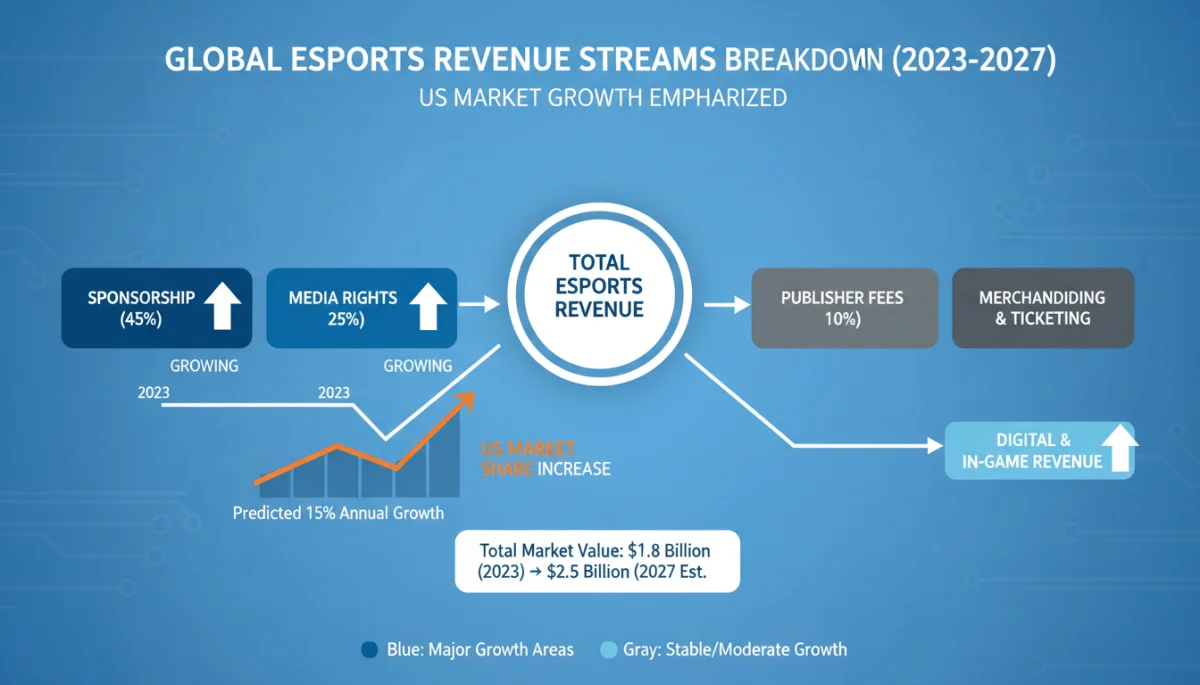
- Sponsorships and advertising: This is by far the largest component, encompassing brand deals, endemic and non-endemic advertising, and promotional campaigns during live events and broadcasts.
- Media rights: Deals with streaming platforms (like Twitch, YouTube Gaming) and traditional broadcasters for exclusive content distribution rights.
- Publisher fees: Royalties or licensing fees paid by tournament organizers to game publishers for the right to host competitions using their intellectual property.
- Merchandise and ticket sales: Income from branded apparel, accessories, and tickets to live esports events.
- Prize pools: While often funded by publishers or sponsors, a portion can sometimes come from crowdfunding or direct contributions from teams/organizations.
The shift towards a more robust and varied revenue model has provided stability and predictability, making esports an increasingly attractive investment for major corporations. This multifaceted approach is critical for the projected 15% surge in US esports revenue.
In conclusion, the current esports revenue landscape is characterized by its diversity and increasing sophistication. Sponsorships and media rights now dominate, signaling a maturation of the industry that moves beyond reliance on singular income sources, paving the way for continued expansion.
The driving force: New sponsorship models
The projected 15% surge in esports revenue growth in the US is inextricably linked to the emergence and refinement of innovative sponsorship models. Brands are no longer content with simple logo placements; they seek deeper, more integrated engagements that resonate authentically with the esports audience.
Anúncios
Traditional advertising often struggled to connect with the digitally native, ad-averse demographic that constitutes a significant portion of esports fans. This challenge has pushed brands and esports organizations to co-create more dynamic and impactful partnerships, moving beyond passive exposure to active participation and content integration.
Evolution of brand engagement
The evolution of sponsorship in esports can be seen in several key shifts. Early sponsorships were often basic, but as the audience grew and became better understood, strategies became more sophisticated.
- From passive to active integration: Brands are now embedded within game content, team narratives, and fan experiences, rather than just appearing as static banners.
- Data-driven partnerships: Utilizing audience analytics to tailor campaigns, ensuring relevance and maximizing ROI for sponsors.
- Creator and influencer collaborations: Leveraging popular streamers and esports personalities to promote products and services in an authentic, relatable manner.
These evolving strategies allow brands to tap into the passionate and highly engaged esports community more effectively. The authenticity of these collaborations is paramount; fans are quick to spot inauthentic endorsements, making genuine integration a key to success.
Furthermore, the rise of non-endemic brands (companies outside the gaming industry, such as automotive, food and beverage, or financial services) entering the esports space has significantly expanded the sponsorship market. These brands bring substantial marketing budgets and a desire to connect with a younger, tech-savvy demographic that is often difficult to reach through traditional media.
Ultimately, the ingenuity in crafting new sponsorship models is a primary engine behind the impressive financial forecast for US esports. These models prioritize engagement and authenticity, providing a win-win for both brands and the esports ecosystem.
Technological advancements bolstering growth
Technological innovation plays a pivotal role in driving esports revenue growth, creating new avenues for content delivery, fan engagement, and monetization. The rapid pace of development in areas like streaming technology, virtual reality, and artificial intelligence continues to expand the reach and appeal of competitive gaming.
Improved streaming platforms have made esports more accessible than ever, allowing millions to watch live competitions from anywhere in the world. High-definition broadcasts, interactive features, and multi-platform availability contribute to a premium viewing experience, attracting both casual observers and dedicated fans.
Impact of streaming and interactive platforms
Streaming services are the lifeblood of esports viewership, providing the primary conduit for fans to consume content. Their continuous evolution directly impacts the industry’s commercial viability.
- Enhanced viewer experience: Higher resolutions, lower latencies, and interactive chat features make watching esports more engaging.
- Monetization opportunities: Subscriptions, donations, and integrated advertising within streams provide direct revenue for content creators and platforms.
- Global reach: Platforms allow esports events to transcend geographical boundaries, cultivating a massive international fanbase.
Beyond streaming, advancements in virtual reality (VR) and augmented reality (AR) offer potential for immersive fan experiences, though their widespread adoption in esports is still nascent. Imagine watching a game from a player’s perspective in VR, or having AR overlays provide real-time statistics and insights during a live event. These technologies promise to deepen fan engagement and open new sponsorship opportunities.
Artificial intelligence (AI) is also beginning to make its mark, from optimizing matchmaking and player performance analysis to personalizing content recommendations for viewers. AI can help identify emerging talent, predict game outcomes, and even create dynamic advertising placements that are highly targeted to individual viewers.
In essence, technology acts as a powerful catalyst, continually expanding the possibilities for how esports content is created, consumed, and monetized, thereby fueling its significant revenue expansion.
Audience engagement and demographic shifts
The sustained esports revenue growth in the US is not solely about corporate deals; it’s fundamentally driven by a deeply engaged and expanding audience. Understanding the demographics and behaviors of esports fans is crucial for tailoring content, attracting sponsors, and ensuring the long-term viability of the industry.
Esports viewership has seen consistent growth, attracting a diverse demographic that often skews younger and is highly digitally literate. This audience is not just passive consumers; they are active participants, creators, and advocates within their chosen gaming communities.
Key audience characteristics
The esports audience presents a unique proposition for brands due to its distinct characteristics and engagement patterns.
- Youthful demographic: A significant portion of esports fans are Gen Z and Millennials, a highly sought-after consumer group for advertisers.
- High digital literacy: This audience is comfortable with online platforms, streaming services, and digital interactions, making them receptive to innovative digital marketing.
- Strong community ties: Esports fans often identify strongly with specific games, teams, and players, fostering deep loyalty and engagement.
The interactive nature of esports, particularly through live chat functions during streams and social media discussions, cultivates a strong sense of community. This active participation translates into higher engagement rates with content and, by extension, with the brands associated with esports.
Moreover, the increasing acceptance of gaming as a mainstream form of entertainment has led to a broader demographic appeal. While still predominantly male, female viewership is steadily rising, further diversifying the audience and expanding market potential. This demographic shift makes esports an even more attractive platform for a wider array of brands looking to connect with a modern, engaged consumer base.
Ultimately, the vibrant and growing esports audience, with its unique engagement patterns and expanding demographic reach, forms the bedrock upon which the industry’s impressive revenue growth is built.
Investment and infrastructure development
Significant investment and robust infrastructure development are foundational to the projected 15% surge in esports revenue growth across the US. As the industry matures, the need for professional-grade venues, training facilities, and broadcast studios becomes increasingly paramount.
Major investment from venture capitalists, media conglomerates, and even traditional sports organizations has poured into the esports sector. This capital is not just funding prize pools; it’s building the very framework that supports a sustainable and scalable professional league ecosystem.
Building the professional ecosystem
The professionalization of esports demands infrastructure that can support high-stakes competition and deliver a polished viewing experience.
- Dedicated arenas and venues: Purpose-built or adapted facilities for live esports events, offering a superior fan experience.
- Team training facilities: State-of-the-art centers for professional players to practice, analyze, and improve their skills, akin to traditional sports facilities.
- Broadcast and production studios: High-tech environments for producing professional-quality esports broadcasts, complete with expert commentators and analysts.
Beyond physical infrastructure, investment also extends to the development of robust league structures, standardized rulesets, and player welfare programs. These elements contribute to the legitimacy and longevity of esports as a professional sport, attracting further investment and talent.
The involvement of traditional sports organizations, such as NBA team owners investing in NBA 2K League franchises, has also lent credibility and brought valuable experience in managing large-scale sports enterprises. This cross-pollination of expertise helps in professionalizing the operational aspects of esports, from marketing to talent management.
Therefore, the continuous flow of investment into infrastructure and the professionalization of the ecosystem are critical components that underpin and accelerate the financial expansion of esports in the US.
Challenges and future outlook for US esports
While the forecast for esports revenue growth in the US is overwhelmingly positive, projecting a 15% surge by 2026, the industry is not without its challenges. Addressing these hurdles will be crucial for sustaining momentum and realizing its full potential.
One primary challenge is maintaining audience engagement amidst an ever-increasing array of entertainment options. The competitive nature of the digital entertainment landscape means esports must continuously innovate to capture and retain viewer attention.
Navigating industry hurdles
Several factors require careful consideration and strategic planning to ensure continued growth and stability.
- Maintaining audience retention: Preventing viewer fatigue and keeping fans engaged with new content, formats, and narratives.
- Regulatory complexities: Navigating varying state and federal regulations concerning gambling, player contracts, and intellectual property.
- Talent development and welfare: Ensuring a sustainable pipeline of new talent while addressing issues like player burnout, mental health, and fair compensation.
Another significant aspect is the fragmentation of the esports ecosystem, with numerous games, leagues, and platforms competing for attention. While diversity can be a strength, it can also make it challenging for casual viewers to follow the scene or for brands to identify optimal investment opportunities.
However, the future outlook remains incredibly bright. The industry’s adaptability, coupled with ongoing technological advancements and increasing mainstream acceptance, positions esports for sustained expansion. Further consolidation of leagues, greater collaboration between publishers and organizers, and continued innovation in fan engagement models are expected.
The ability of the esports industry to address these challenges head-on while continuing to innovate will dictate the extent of its long-term success and ensure that the projected revenue growth is not just a temporary spike but a foundation for enduring prosperity.
| Key Aspect | Brief Description |
|---|---|
| Projected Growth | 15% surge in US esports revenue expected by end of 2026. |
| Primary Driver | New and innovative sponsorship models are redefining brand engagement. |
| Key Enablers | Technological advancements, diverse audience engagement, and significant investment. |
| Future Challenges | Audience retention, regulatory complexities, and talent welfare. |
Frequently asked questions about esports revenue
The primary driver for the projected 15% surge in US esports revenue is the evolution of new sponsorship models. Brands are increasingly engaging in deeper, more integrated partnerships that resonate authentically with the esports audience, moving beyond traditional advertising methods.
New sponsorship models in esports focus on active integration within game content, team narratives, and fan experiences, rather than passive logo placements. They are often data-driven and involve collaborations with popular streamers and influencers for more authentic promotion.
Technological advancements, particularly in streaming platforms, enhance viewer experience and expand global reach, opening new monetization avenues. Innovations in VR, AR, and AI also promise more immersive engagement and targeted advertising, further fueling revenue expansion.
The esports audience primarily consists of a youthful, digitally literate demographic (Gen Z and Millennials) with strong community ties. Their high engagement, receptiveness to digital marketing, and increasing diversity make them a highly sought-after consumer group for a wide range of brands.
Key challenges include maintaining audience retention amidst diverse entertainment options, navigating regulatory complexities, and ensuring player welfare. Addressing these issues through continuous innovation and strategic planning is vital for long-term growth and stability in the industry.
Conclusion
The projected 15% surge in esports revenue growth in the US by the end of 2026 underscores a pivotal moment for the industry. This remarkable expansion is a testament to the dynamic interplay of innovative sponsorship models, continuous technological advancements, an ever-growing and deeply engaged audience, and substantial strategic investments. While challenges such as audience retention and regulatory complexities persist, the industry’s inherent adaptability and increasing mainstream acceptance position it for sustained prosperity. The future of esports in the US is bright, characterized by a maturing ecosystem that promises even greater integration into the broader entertainment and sports landscape.