Protecting Your Smart Home: Essential Security Measures 2026

Anúncios
Implementing robust network security, secure device configurations, vigilant privacy settings, and proactive threat detection are paramount to effectively protect your smart home against evolving cyber threats in 2026.
Anúncios
As our homes become increasingly connected, the convenience of smart technology also introduces new security challenges. Understanding how to navigate these evolving threats is crucial. This article delves into smart home security 2026, outlining six essential measures to safeguard your digital sanctuary against potential breaches and ensure your privacy remains intact.
Establishing a Robust Home Network Foundation
The foundation of any secure smart home begins with a strong and well-protected home network. Your Wi-Fi router is the gateway to all your connected devices, and if it’s compromised, your entire smart ecosystem could be at risk. It’s not just about setting a password; it’s about creating a fortified digital perimeter.
Think of your home network as the central nervous system of your smart home. Every device, from your smart thermostat to your security cameras, relies on this network. Therefore, ensuring its integrity is the first and most critical step in protecting your smart home.
Securing your Wi-Fi router
- Change default credentials: Always change the default username and password for your router immediately after installation. Default credentials are often publicly known or easily guessed.
- Enable WPA3 encryption: Utilize the strongest available encryption protocol, WPA3, for your Wi-Fi network. This provides enhanced protection against eavesdropping and unauthorized access.
- Update firmware regularly: Router manufacturers frequently release firmware updates that patch security vulnerabilities. Enable automatic updates or check manually to ensure your router is always running the latest software.
Beyond these basic steps, consider segmenting your network. Creating a separate guest network for visitors is a good practice, but for smart devices, a dedicated IoT network can offer an additional layer of security. This isolates your smart devices from your main personal network, limiting potential damage if an IoT device is compromised. A strong network foundation is the bedrock upon which all other security measures are built, providing a safe environment for your digital life.
Implementing Secure Device Configuration and Management
Once your network is secure, the next critical step involves properly configuring and managing each smart device within your home. Many smart devices come with default settings that prioritize ease of use over security, making them potential weak points if not addressed. Proper configuration goes a long way in mitigating these risks.
Every smart device, from light bulbs to refrigerators, can be a potential entry point for cybercriminals. Taking the time to adjust their settings and understand their functionalities is an investment in your home’s overall security posture. Neglecting this step can leave your smart home vulnerable to unwanted intrusions and data breaches.
Anúncios
Best practices for device security
- Strong, unique passwords: Use complex, unique passwords for every smart device, avoiding common phrases or personal information. A password manager can help you keep track of these.
- Disable unnecessary features: Turn off any features or services on your smart devices that you don’t actively use. For example, if a smart camera has a microphone you don’t need, disable it.
- Regular software updates: Just like your router, smart devices receive firmware updates to fix bugs and security vulnerabilities. Enable automatic updates whenever possible or check for them manually.
It’s also vital to research the security track record of smart device manufacturers before purchasing. Opt for reputable brands known for their commitment to security and regular updates. Furthermore, periodically review the access permissions granted to smart device apps on your smartphone. Restrict permissions to only what is absolutely necessary for the device to function. Diligent device configuration and ongoing management are key to maintaining a resilient smart home defense.
Prioritizing Data Privacy and Access Control
In the age of connected devices, data privacy is paramount. Smart home devices collect a vast amount of personal information, from your daily routines to your conversations. Understanding who has access to this data and how it’s being used is a fundamental aspect of protecting your smart home.
Your smart home ecosystem generates a continuous stream of data about your habits, preferences, and even your physical presence. This data, if not properly secured, can be exploited by malicious actors or even misused by companies. Taking control of your data privacy is not just a recommendation; it’s a necessity.
Managing privacy settings effectively
Most smart devices and their accompanying apps offer detailed privacy settings. Take the time to review these settings for each device. Understand what data is being collected, how it’s stored, and who it’s shared with. Adjust these settings to minimize data collection to only what is essential for the device’s functionality. For example, some smart speakers record conversations; ensure you know how to delete these recordings or disable this feature if you’re uncomfortable with it.
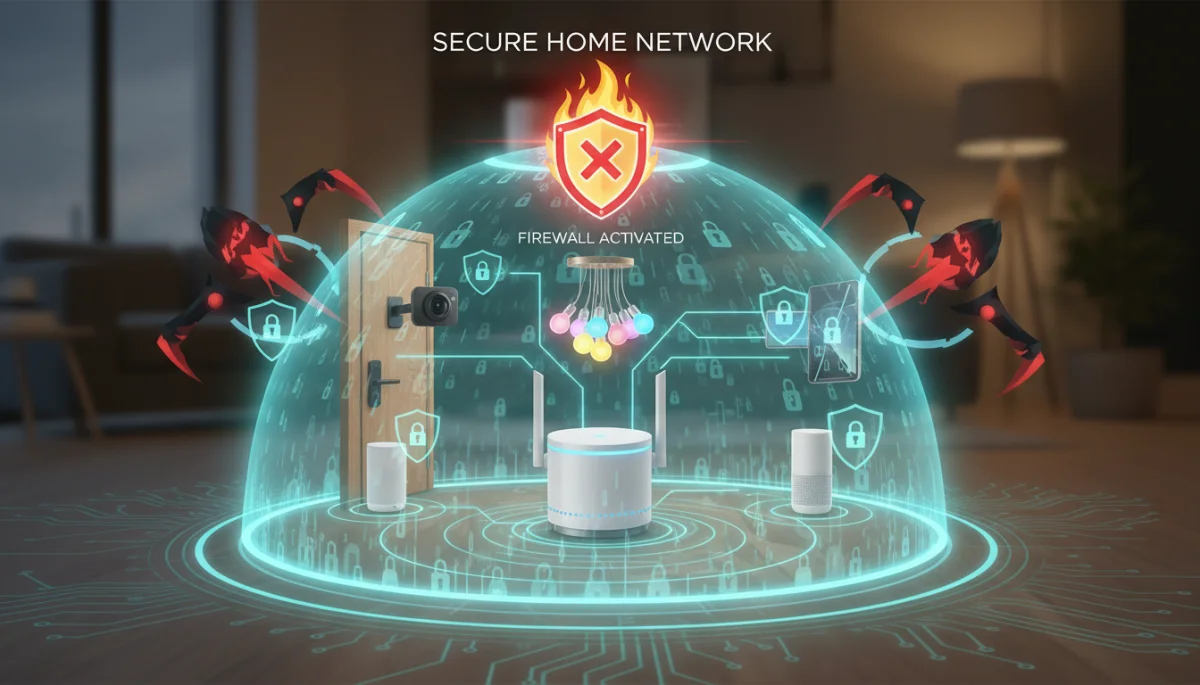
Consider the permissions you grant to third-party integrations. Many smart home platforms allow integration with other services, which can be convenient but also expand the attack surface for your data. Carefully evaluate the necessity of each integration and the data access it requires. Regularly audit these permissions and revoke access for any services you no longer use or trust.
Ultimately, prioritizing data privacy involves a proactive approach to understanding and controlling the information generated by your smart home. By being vigilant about privacy settings and access controls, you can significantly reduce the risk of your personal data falling into the wrong hands, ensuring your smart home remains a private sanctuary.
Implementing Multi-Factor Authentication (MFA) Universally
Multi-Factor Authentication (MFA) is one of the most effective security measures you can implement to protect your smart home accounts. While a strong password is a good first step, MFA adds another layer of verification, making it significantly harder for unauthorized users to gain access even if they manage to steal your password.
Imagine a burglar having your house key, but then needing a fingerprint scan to actually open the door. That’s essentially what MFA does for your digital accounts. It requires two or more pieces of evidence to verify your identity, drastically reducing the risk of a successful breach.
Why MFA is crucial for smart homes
Many smart home platforms and individual device accounts now support MFA. This typically involves using something you know (your password), something you have (like your smartphone for a verification code), or something you are (like a fingerprint or facial scan). Implementing MFA across all your smart home accounts ensures that even if a password is compromised, an attacker cannot gain access without the second factor.
- Enhanced account security: MFA provides a critical barrier against credential stuffing attacks and phishing attempts, where attackers try to use stolen passwords.
- Protects against weak passwords: Even if you accidentally use a weaker password for a smart device, MFA can still provide significant protection.
- Industry best practice: MFA is widely recognized as a fundamental security measure for protecting online accounts across all sectors, including smart home technology.
Make it a habit to enable MFA on every smart home account that offers it. This includes your smart home hub, individual device apps, and any cloud services they connect to. While it might add a few extra seconds to your login process, the peace of mind and enhanced security it provides are invaluable. Universal MFA adoption is a non-negotiation step for comprehensive smart home protection in 2026.
Regular Security Audits and Vulnerability Scans
Just as you perform regular maintenance on your physical home, your smart home requires periodic security audits. The digital landscape is constantly evolving, with new threats and vulnerabilities emerging regularly. A proactive approach to identifying and addressing these weaknesses is essential for long-term security.
Security is not a one-time setup; it’s an ongoing process. Regular audits help you stay ahead of potential issues, ensuring that your smart home remains resilient against new forms of cyberattacks. Neglecting this can leave your system exposed to vulnerabilities that didn’t even exist when you first set up your devices.
Conducting smart home security checks
Performing a security audit involves reviewing all your smart devices and network settings. This includes checking for outdated firmware, reviewing privacy settings, and ensuring all unnecessary ports are closed on your router. Some smart home hubs or third-party security tools offer built-in vulnerability scanning capabilities that can identify weak points in your system.
Consider using network scanners that can identify all devices connected to your network, including any unauthorized or unknown devices. These tools can highlight open ports, weak passwords, or unpatched vulnerabilities on your smart devices. Addressing these findings promptly is crucial. A comprehensive audit should also include reviewing the logs of your smart home hub or individual devices for any suspicious activity.
- Firmware check: Verify all devices are running the latest firmware.
- Network device scan: Use tools to identify all connected devices and open ports.
- Permission review: Regularly check app and device permissions.
- Log analysis: Look for unusual login attempts or data transfers.
By conducting regular security audits and vulnerability scans, you can identify and patch potential weaknesses before they can be exploited. This proactive stance is a cornerstone of effective smart home security, providing continuous protection against the ever-changing threat landscape.
Leveraging AI and Machine Learning for Threat Detection
As cyber threats become more sophisticated, traditional security measures alone may not be enough. The integration of Artificial Intelligence (AI) and Machine Learning (ML) into smart home security systems represents a significant leap forward in proactive threat detection and response. These technologies can analyze patterns, detect anomalies, and even predict potential attacks before they occur.
AI and ML empower your smart home to learn from its environment and identify deviations that could indicate a security breach. Instead of simply reacting to known threats, these intelligent systems can adapt and evolve, offering a more dynamic and robust defense against emerging cyber risks. This is particularly vital in 2026, where threats are increasingly complex.
How AI/ML enhances smart home security
AI-powered security cameras, for example, can differentiate between familiar faces and strangers, or distinguish between a pet and an intruder, reducing false alarms. ML algorithms can monitor network traffic patterns to identify unusual data transfers or communication with suspicious servers, signaling a potential compromise. Some advanced systems can even learn your daily routines and flag any significant deviations as potential security incidents.
Many modern smart home hubs and security solutions now incorporate AI/ML capabilities. These features can provide real-time alerts for suspicious activities, automate responses like locking doors or activating alarms, and offer detailed insights into your home’s security posture. When choosing smart home devices or platforms, look for those that prominently feature advanced AI/ML-driven security functions. This ensures your smart home is not just reacting to threats, but intelligently anticipating and preventing them.
By embracing AI and Machine Learning, smart home owners can equip their residences with an intelligent defense system that continuously learns and adapts. This advanced layer of security is becoming increasingly indispensable for truly protecting your smart home against the sophisticated cyber threats of today and tomorrow, offering a level of vigilance that human monitoring simply cannot match.
| Key Measure | Brief Description |
|---|---|
| Network Foundation | Secure your Wi-Fi router with WPA3, strong passwords, and regular firmware updates. |
| Device Configuration | Configure each smart device with unique passwords and disable unnecessary features. |
| Data Privacy | Review and adjust privacy settings to minimize data collection and third-party access. |
| Multi-Factor Auth | Enable MFA on all smart home accounts for an extra layer of security. |
Frequently asked questions about smart home security
The most critical first step is to secure your home Wi-Fi network. Change default router credentials, enable WPA3 encryption, and keep its firmware updated. This forms the essential backbone for all other smart device security.
You should update your smart home device firmware as soon as updates are available. Many devices offer automatic updates, which should be enabled. Otherwise, manually check for updates at least once a month to patch vulnerabilities and improve performance.
While not strictly necessary for every user, a separate Wi-Fi network for smart devices (often called an IoT network) is highly recommended. It isolates your smart devices from your main personal network, limiting potential damage if an IoT device is compromised.
AI and Machine Learning enhance smart home security by enabling proactive threat detection. They analyze patterns, identify anomalies, and can even predict potential attacks. This allows for more intelligent monitoring and automated responses to evolving cyber threats.
Disabling voice assistants can enhance privacy by preventing accidental recordings or data collection. If you use them, review their privacy settings carefully to understand data usage, delete recordings regularly, and consider muting the microphone when not in active use.
Conclusion
The landscape of smart home technology is continuously evolving, bringing unparalleled convenience but also new security challenges. By diligently implementing these six essential security measures—fortifying your network, configuring devices securely, prioritizing data privacy, universally adopting MFA, conducting regular audits, and leveraging AI for threat detection—you can create a robust defense for your connected living space. Staying informed and proactive is key to enjoying the benefits of a smart home without compromising your digital privacy and security in 2026 and beyond. Your peace of mind in a connected world depends on these vigilant practices.