2026 Digital Privacy Audit: 7 Steps to Secure Your Data
Anúncios
A 2026 digital privacy audit is essential for individuals to proactively secure their personal data online by evaluating current security practices and implementing advanced protection strategies against emerging threats.
Anúncios
The digital landscape is constantly evolving, and with it, the complexities of protecting our personal information. As we look towards 2026, understanding and implementing a robust digital privacy audit 2026 becomes not just a recommendation, but a necessity. This comprehensive guide will walk you through seven essential steps to fortify your online presence and safeguard your invaluable personal data from the ever-increasing array of cyber threats and privacy intrusions.
Understanding the Evolving Threat Landscape
Before diving into specific actions, it’s crucial to grasp why a digital privacy audit in 2026 is more critical than ever. The nature of cyber threats has shifted dramatically, moving beyond simple malware to sophisticated phishing campaigns, advanced persistent threats (APTs), and state-sponsored surveillance. Data breaches are no longer isolated incidents but frequent occurrences that can expose vast amounts of sensitive information, from financial records to biometric data.
The regulatory environment is also becoming more stringent globally. While the United States has a patchwork of state-specific laws like the California Consumer Privacy Act (CCPA) and the Virginia Consumer Data Protection Act (VCDPA), federal efforts continue to evolve. International regulations, such as GDPR, also influence how U.S. companies handle data, indirectly affecting individual privacy practices. Staying informed about these changes is the first line of defense.
The Rise of AI-Powered Threats
Artificial intelligence, while offering immense benefits, also presents new avenues for cybercriminals. AI-powered phishing attacks are becoming increasingly convincing, capable of crafting highly personalized and contextually relevant messages that are difficult to distinguish from legitimate communications. Deepfake technology also poses a significant threat, capable of creating fraudulent audio and video that can be used for identity theft or social engineering.
- Phishing Evolution: AI enhances spear-phishing, making attacks more targeted.
- Deepfake Dangers: Synthetic media can compromise identity and trust.
- Automated Exploits: AI-driven tools can find and exploit vulnerabilities faster.
Understanding these nuanced threats informs the strategies we must adopt. A static approach to privacy is no longer viable; continuous vigilance and adaptation are paramount. This foundational understanding sets the stage for a proactive stance against digital vulnerabilities, ensuring that your personal data remains secure in a rapidly changing world.
Anúncios
Step 1: Inventory Your Digital Footprint
The initial step in any effective digital privacy audit is to understand exactly what personal data exists online and where it resides. Your digital footprint encompasses everything from social media profiles and online shopping accounts to email subscriptions and cloud storage. Many individuals are unaware of the sheer volume of their data scattered across the internet, making this inventory a critical starting point.
Begin by listing all online services, applications, and websites you use. Think beyond the obvious social media platforms and include less frequently used services, old accounts, and even those connected to smart home devices. Each entry on this list represents a potential entry point for data exposure or a repository of your personal information. A thorough inventory provides a clear picture of your digital presence.
Identify and Categorize Personal Data
Once you have a list of services, categorize the type of personal data associated with each. This could range from basic contact information and demographic details to more sensitive data like financial records, health information, or biometric identifiers. Understanding the sensitivity of the data linked to each service helps prioritize your security efforts.
- Basic Information: Name, address, phone number, email.
- Financial Data: Bank accounts, credit card numbers, transaction history.
- Health Data: Medical records, fitness trackers, health app data.
- Behavioral Data: Browsing history, purchase patterns, location data.
This inventory isn’t just about identifying data; it’s about recognizing potential vulnerabilities. An old forum account with a weak password, for instance, could be a gateway to more critical accounts if you reuse credentials. Cataloging your digital footprint provides the necessary foundation for the subsequent steps of your privacy audit, allowing you to target your efforts effectively.
Step 2: Strengthen Account Security
With a clear understanding of your digital footprint, the next logical step is to reinforce the security of your accounts. Weak or reused passwords are among the most common vulnerabilities exploited by cybercriminals. In 2026, relying solely on simple passwords is akin to leaving your front door unlocked in a bustling city. Robust account security is non-negotiable for protecting your personal data.
Start by implementing strong, unique passwords for every single online account. A password manager is an indispensable tool for this purpose, allowing you to generate and store complex passwords without the need to remember each one. These tools also often offer features like secure notes and automatic form filling, enhancing both security and convenience.
Embrace Multi-Factor Authentication (MFA)
Beyond strong passwords, multi-factor authentication (MFA) adds an essential layer of security. MFA requires users to provide two or more verification factors to gain access to an account, such as a password (something you know) and a code from an authenticator app or a biometric scan (something you have or are). Even if a password is compromised, MFA prevents unauthorized access.
- Authenticator Apps: Google Authenticator, Authy, Microsoft Authenticator provide time-based one-time passwords (TOTP).
- Hardware Security Keys: Physical devices like YubiKey offer robust protection against phishing.
- Biometrics: Fingerprint or facial recognition, where supported, can enhance convenience and security.
Regularly review the security settings of your accounts, especially on social media platforms and email services. Ensure that recovery options are up-to-date and secure, and be wary of granting excessive permissions to third-party applications. Strengthening your account security is a continuous process, requiring periodic review and updates to adapt to new threats and available technologies.
Step 3: Review and Adjust Privacy Settings
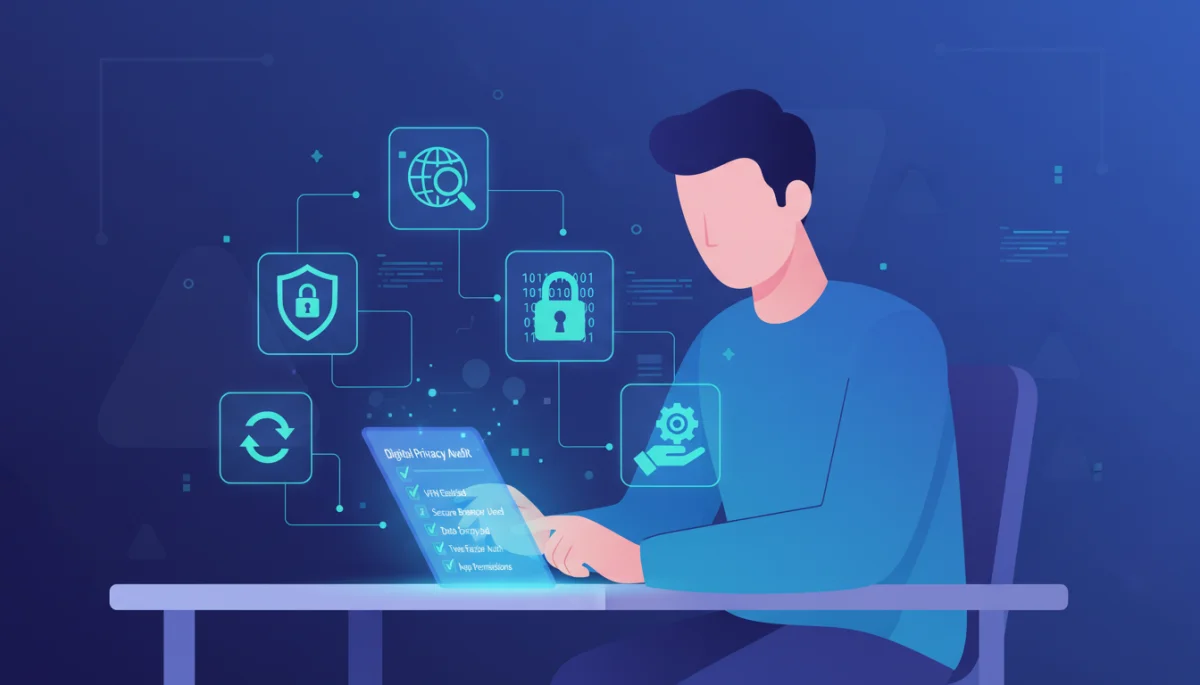
Many online services offer extensive privacy settings that, if configured correctly, can significantly limit the amount of data they collect and share about you. However, these settings are often buried deep within menus or set to less private defaults. A critical part of your digital privacy audit involves meticulously reviewing and adjusting these settings across all your platforms.
Focus on social media, search engines, and cloud services. For social media, consider who can see your posts, tags, and personal information. On search engines, explore options to limit data collection for personalized ads. In cloud storage, ensure sharing permissions are restricted to only necessary individuals or groups. This step empowers you to take control of your data’s visibility.
Understanding Data Sharing and Ad Personalization
Companies often collect data to personalize your experience and deliver targeted advertisements. While this can sometimes be convenient, it often means your data is being shared with numerous third parties. Most platforms provide options to opt-out of personalized ads or limit data sharing. It’s important to understand the implications of these settings.
- Third-Party Apps: Review permissions granted to apps connected to your main accounts.
- Location Tracking: Disable precise location tracking for apps that don’t absolutely need it.
- Ad Preferences: Adjust settings to reduce or eliminate targeted advertising.
Privacy policies are lengthy and often complex, but making an effort to understand the key sections related to data collection, usage, and sharing is beneficial. By actively managing your privacy settings, you reduce your exposure to data exploitation and ensure that your online interactions align with your personal privacy preferences. This proactive approach is fundamental to a comprehensive digital privacy audit.
Step 4: Secure Your Devices and Network
Your personal devices – smartphones, tablets, laptops, and smart home gadgets – are the primary gateways to your digital life. Ensuring their security is paramount to protecting your personal data. A robust digital privacy audit extends beyond online accounts to the physical and virtual security of your hardware and network infrastructure.
Begin by keeping all operating systems and applications updated. Software updates often include critical security patches that address newly discovered vulnerabilities. Neglecting updates leaves your devices exposed to exploits that cybercriminals can readily leverage. Enable automatic updates whenever possible to ensure timely protection.
Utilize VPNs and Secure Wi-Fi Practices
When connecting to the internet, especially on public Wi-Fi networks, using a Virtual Private Network (VPN) is crucial. A VPN encrypts your internet traffic, creating a secure tunnel between your device and the internet, thereby protecting your data from eavesdropping. Additionally, ensure your home Wi-Fi network is secured with a strong, unique password and WPA3 encryption, if available.
- Antivirus/Antimalware: Install and regularly update reputable security software on all devices.
- Firewall Protection: Ensure your device and network firewalls are enabled and configured correctly.
- Device Encryption: Encrypt your hard drives and mobile devices to protect data if they are lost or stolen.
Smart home devices, while convenient, can also introduce privacy risks. Review the privacy policies and security settings of these devices, and consider segmenting them onto a separate network if your router supports it. Securing your devices and network forms a crucial perimeter defense, safeguarding your personal data from unauthorized access and malicious attacks.
Step 5: Practice Data Minimization and Deletion
One of the most effective strategies for enhancing digital privacy is data minimization – the principle of collecting and retaining only the data that is absolutely necessary. For individuals, this translates to actively reducing the amount of personal data you share and deleting data that is no longer needed or wanted. Less data out there means less data at risk.
Review your online accounts for redundant or unnecessary information. Do old social media posts or photos still serve a purpose? Are you subscribed to newsletters you never read? Periodically auditing and pruning your digital presence can significantly reduce your attack surface. This process involves a conscious effort to evaluate the utility versus the risk of retaining certain data.
Leverage Data Deletion Requests
Many privacy regulations, such as CCPA, grant individuals the right to request that companies delete their personal data. If you’ve identified services you no longer use or want to remove your data from, explore their data deletion options. While not all requests are guaranteed to be fulfilled immediately or entirely, making the effort is a vital step in reclaiming your privacy.
- Unsubscribe from Lists: Regularly clean out your email subscriptions.
- Close Unused Accounts: Deactivate or delete accounts you no longer use.
- Review Cloud Storage: Remove old files and photos from cloud services.
Data minimization isn’t a one-time task; it’s an ongoing habit. By regularly assessing and reducing your digital footprint, you not only enhance your privacy but also simplify your online life. This disciplined approach ensures that your personal data is only where it needs to be, with minimal exposure to potential threats.
Step 6: Monitor for Data Breaches and Identity Theft
Even with the most stringent privacy measures, the reality is that data breaches can occur, often due to vulnerabilities outside your direct control. Therefore, an essential component of the 2026 digital privacy audit is proactive monitoring for signs of data breaches and potential identity theft. Early detection can significantly mitigate the damage.
Subscribe to reputable data breach notification services. These services often track publicly disclosed breaches and can alert you if your email address or other personal information appears in compromised databases. While they don’t prevent breaches, they provide crucial early warnings, allowing you to take immediate action, such as changing passwords or monitoring financial accounts.
Regularly Review Financial Statements and Credit Reports
Financial accounts are prime targets for identity thieves. Make it a habit to regularly review your bank statements, credit card statements, and credit reports for any suspicious activity. Unauthorized transactions or unfamiliar accounts can be strong indicators of compromise. The quicker you identify these issues, the faster you can report them and protect your assets.
- Credit Monitoring Services: Consider services that alert you to changes in your credit report.
- Dark Web Scans: Some services offer to scan the dark web for your personal information.
- Email Alerts: Set up alerts for unusual activity on critical online accounts.
If you suspect your data has been compromised, act swiftly. Change affected passwords, notify relevant financial institutions, and consider placing a fraud alert or freeze on your credit. Being vigilant and proactive in monitoring your digital footprint post-audit is as important as the audit itself, providing a continuous layer of protection against evolving threats.
Step 7: Educate Yourself and Stay Informed
The digital world is in a constant state of flux, with new technologies, threats, and privacy regulations emerging regularly. The final, and perhaps most crucial, step in maintaining robust digital privacy is a commitment to continuous learning and staying informed. Your 2026 digital privacy audit isn’t a one-time event but rather the beginning of an ongoing journey.
Follow reputable cybersecurity news sources, privacy advocacy groups, and technology blogs. Understanding the latest trends in cybercrime, new privacy-enhancing technologies, and legislative developments will empower you to adapt your privacy practices accordingly. Knowledge is your most powerful tool in the fight to protect your personal data online.
Participate in Privacy-Focused Communities
Engaging with online communities dedicated to digital privacy and security can provide valuable insights and practical advice. These forums often feature discussions on emerging threats, best practices, and new tools. Sharing experiences and learning from others can help you refine your own strategies and discover solutions to common privacy challenges.
- Attend Webinars: Participate in online seminars on digital security and privacy.
- Read Research Papers: Explore academic and industry reports on data protection.
- Test New Tools: Experiment with privacy-focused browsers, search engines, and communication apps.
By embracing a mindset of continuous learning, you transform from a passive user into an active guardian of your digital self. This ongoing education ensures that your personal data remains secure not just in 2026, but for years to come, adapting to whatever new challenges the digital future may bring. Staying informed is the ultimate long-term privacy strategy.
| Key Audit Step | Brief Description |
|---|---|
| Inventory Digital Footprint | Identify all online accounts and the personal data associated with them. |
| Strengthen Security | Implement strong, unique passwords and multi-factor authentication (MFA). |
| Data Minimization | Reduce shared data and delete unnecessary information from online services. |
| Stay Informed | Continuously educate yourself on new threats and privacy technologies. |
Frequently Asked Questions About Digital Privacy in 2026
A digital privacy audit in 2026 is crucial due to the rapid evolution of AI-powered cyber threats, increasingly sophisticated data exploitation techniques, and the ongoing development of complex privacy regulations. Proactive measures are necessary to safeguard personal data against these advanced challenges.
In 2026, significant threats include highly personalized AI-driven phishing attacks, deepfake technology used for identity fraud, and automated exploits that rapidly target software vulnerabilities. These threats demand advanced protective strategies beyond traditional security measures.
MFA significantly enhances data security by requiring multiple forms of verification, such as a password and a fingerprint or a code from an app. This means that even if a cybercriminal obtains your password, they cannot access your account without the second factor.
Data minimization is vital in 2026 because it reduces your overall digital footprint. By only sharing and retaining essential personal data, you decrease the amount of information vulnerable to breaches or exploitation, thereby lowering your risk profile considerably.
Given the dynamic nature of digital threats and privacy regulations, a full digital privacy audit should ideally be conducted at least once a year. Regular, smaller reviews of account settings and data usage should occur quarterly to maintain optimal protection.
Conclusion
In conclusion, navigating the complex digital landscape of 2026 demands a proactive and systematic approach to personal data protection. By meticulously following these seven steps, from inventorying your digital footprint to continuously educating yourself on emerging threats, you can significantly fortify your online security posture. A comprehensive digital privacy audit is not merely a task to complete but an ongoing commitment to safeguarding your most valuable digital assets. Embrace these practices to ensure your peace of mind and maintain control over your personal information in an increasingly interconnected world.